Service
Water Heater Repair
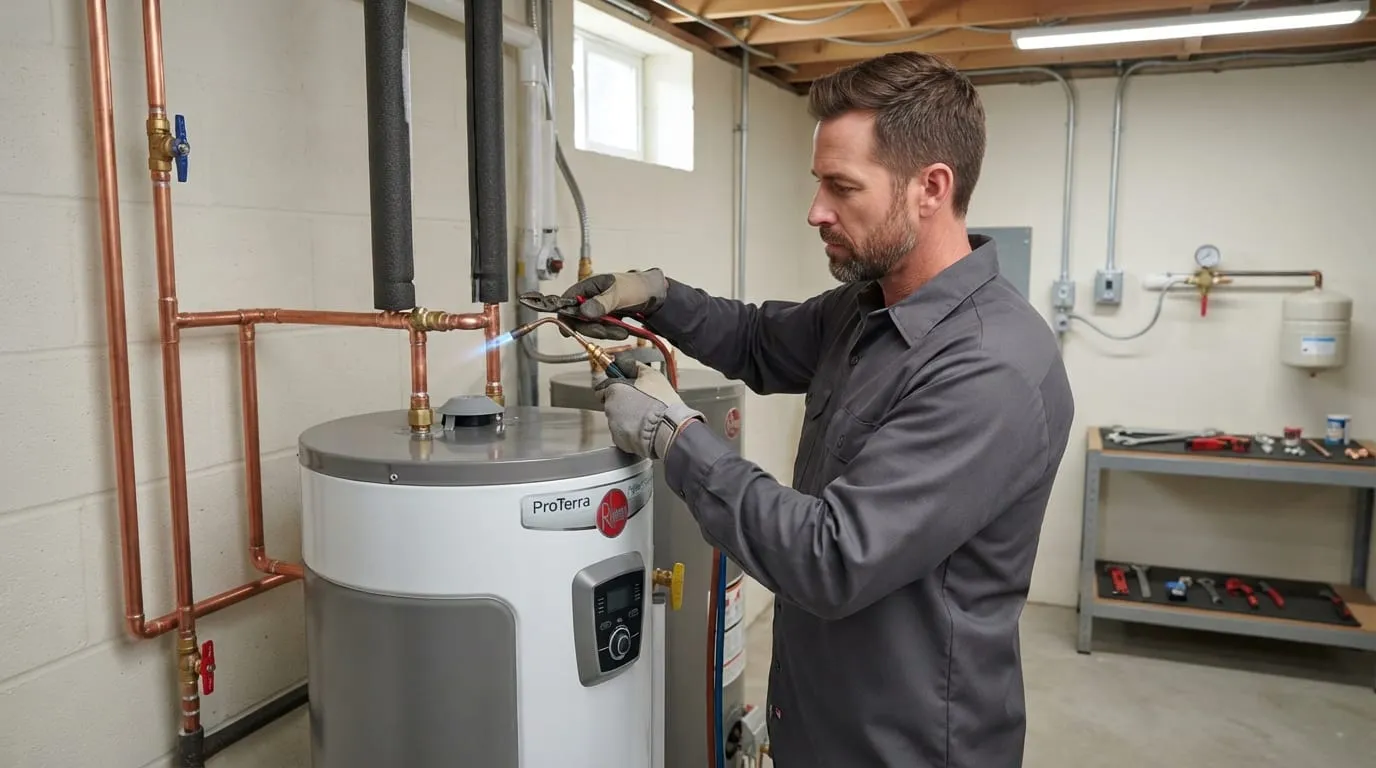
Diagnosis and repair of gas, electric and tankless water heaters, including no-hot-water calls, leaks, pilot problems and sediment flushing.
Free call-routing service. An independent licensed plumber does the work and quotes you directly.
- Licensed and insured
- Price agreed before work
- A plumber who works your area
Water heaters fail in predictable ways, and most of those failures are repairable if they are caught before the tank itself corrodes. Our water heater repair service connects you with a licensed plumber who can diagnose gas, electric and tankless units, tell you honestly whether a repair makes sense, and get hot water back the same visit whenever the parts allow.
Common failures we repair
On electric tank heaters, heating elements and thermostats are the usual culprits, and both are inexpensive to replace. On gas heaters, the thermocouple or flame sensor, the gas control valve and the burner assembly account for most no-hot-water calls. Tankless units add flow sensors, igniters and scale-clogged heat exchangers to the list, which is why they need periodic descaling in hard-water regions.
Sediment is the quiet problem behind many symptoms. Minerals settle at the bottom of a tank, insulate the burner from the water, and cause the rumbling that many homeowners hear. Flushing the tank restores efficiency and capacity, but in areas with very hard water it has to be done regularly to matter.
Repair or replace
A leaking tank body cannot be fixed. Everything else usually can. The decision comes down to the age of the heater, the cost of the repair, and how hard your water is. A plumber who works in your area knows how long tanks tend to last there and will tell you when a repair is throwing money at a unit that is near the end.
Safety matters more than speed
Gas water heaters need correct venting and combustion air, and electric units need a properly sized circuit. Every repair visit includes a check of the relief valve, the venting and the gas or electrical connections, because those are the parts that cause harm when they fail. If your heater sits in a garage or closet and has never been inspected, the visit is a good opportunity to have it checked.
Does this sound familiar?
Problems this service solves
- No hot water, or hot water that runs out far sooner than it used to
- Water that is too hot or fluctuates in temperature
- Rumbling, popping or banging sounds from the tank
- Pilot light that will not stay lit on a gas heater
- Tripped breaker or burned-out heating element on an electric heater
- Water pooling at the base of the tank or dripping from the relief valve
- Rusty or discolored hot water
- Error codes and ignition faults on tankless units
Signs you need water heater repair
If more than one of these is true, the problem is usually past the point a plunger or a store-bought cleaner will fix.
- Hot water takes far longer to arrive or runs out during one shower
- You hear the tank rumble or pop while heating, which is sediment boiling under water
- The temperature and pressure relief valve discharges regularly
- Rust streaks or moisture around fittings, the drain valve or the bottom seam
- The unit is more than ten years old and has never been flushed
What to expect
How the visit works
Safety check and symptom review
The plumber shuts off gas or power as needed, checks for leaks and venting problems, and asks about what changed and when.
Test the components that fail most
Thermostats, heating elements, thermocouples and gas valves, igniters and flow sensors on tankless units, and the anode rod and drain valve on tanks.
Repair or recommend replacement honestly
A failed element, thermocouple or valve is a repair. A leaking tank wall is not repairable and the plumber says so, with a replacement estimate on the spot.
Flush, relight and verify
Sediment is flushed where it is the cause, the unit is refired, and the temperature is checked at the tap so you leave with hot water you can trust.
What's included
What you get on every job, whoever we send.
- Plumbers who work on the brands and fuel types common in your region
- Clear repair-versus-replace advice based on the unit's age and condition
- Sediment and scale handled correctly for local water hardness
- Correct venting, gas and relief-valve checks that DIY fixes skip
Local pages
Water Heater Repair by city
Local pages for this service, covering the problems, housing and water conditions specific to each area.
Questions
Water Heater Repair questions
Why do I run out of hot water faster than before?
On a tank heater the usual causes are a failed lower heating element on electric models, a broken dip tube that lets cold water mix at the top of the tank, or a thick layer of sediment that has displaced several gallons of capacity. All three are repairable, though heavy sediment in an older tank sometimes signals that replacement is close.
My water heater is making a popping noise. Is that dangerous?
Popping or rumbling is water boiling underneath a layer of sediment at the bottom of the tank. It is not immediately dangerous, but it overheats the tank bottom, wastes energy and shortens the heater's life. Flushing the tank fixes it if the sediment has not hardened. In hard-water areas this can build up within a couple of years.
Can a leaking water heater be repaired?
It depends on where the leak is. Leaks from the drain valve, the relief valve, the inlet and outlet fittings or the element gaskets are repairable. A leak from the tank body itself means the steel has corroded through, and the only fix is replacement. The plumber will show you where the water is coming from.
How long should a water heater last?
A conventional tank heater typically lasts about eight to twelve years, and less where water is very hard or the anode rod has never been replaced. Tankless units often last fifteen to twenty years with annual descaling. Age alone is not a reason to replace a heater that is working, but it does change the math on an expensive repair.
Should I repair or replace an old unit?
A good rule is to compare the repair cost with the age of the heater. A repair costing more than half the price of a new unit on a heater past its tenth year is rarely worth it, especially since a tank that old can start leaking soon after. The plumber will give you both numbers so the decision is yours.
Related services
Water Heater Installation
Sizing, permitting and installing replacement tank, tankless and heat pump water heaters, with proper venting, expansion tanks and code-required safety devices.
See what this coversLeak Detection
Locating hidden water leaks under slabs, inside walls, in yards and at the meter using acoustic, thermal and pressure-testing equipment, then repairing them.
See what this coversPipe Repair
Repair and replacement of burst, leaking, frozen, corroded or noisy water pipes, from a single fitting to a whole-house repipe in copper or PEX.
See what this coversSewer Line Repair
Camera-verified repair and replacement of cracked, collapsed, root-damaged or bellied sewer laterals, including trenchless lining and pipe bursting.
See what this covers

Get it fixed
Water Heater Repair, handled locally
Call with your ZIP code and what you are seeing. We route you to a licensed plumber in your area who does water heater repair every week.
Free call-routing service. An independent licensed plumber does the work and quotes you directly.
- Licensed and insured
- Answered 24/7
- Price before work