Service category
Plumbing Installation
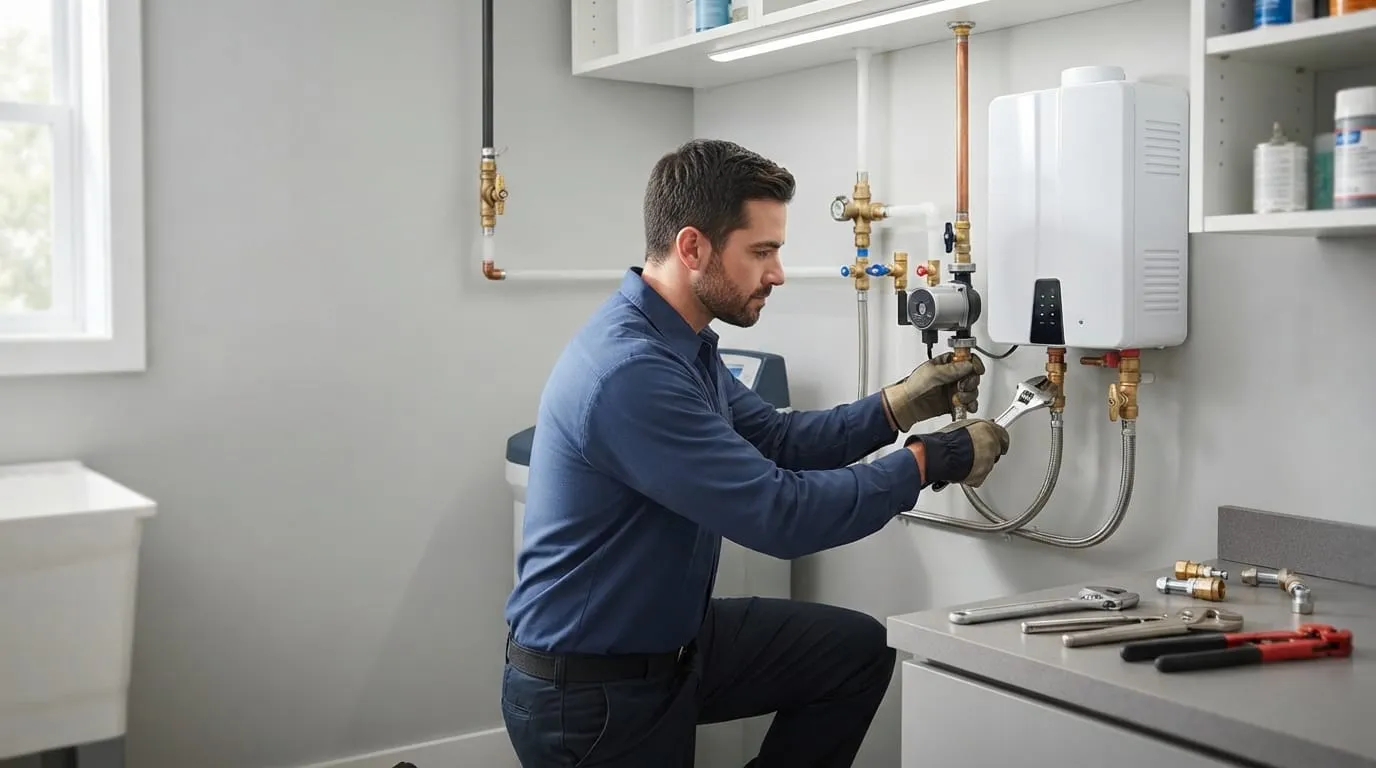
New plumbing and fixture installation for kitchens, bathrooms and appliances, including dishwashers, ice makers and washing machine hookups.
Free call-routing service. An independent licensed plumber does the work and quotes you directly.
- Licensed and insured
- Price agreed before work
- A plumber who works your area
Installation work is judged years later, by whether anything leaked. The parts that matter are the ones that get covered up: shutoffs that are actually reachable, connections that are accessible, and drainage that was vented properly rather than just connected.
The parts you cannot see later
Installation is judged years afterwards, by whether anything leaked and whether the next repair was straightforward or destructive.
That makes the covered-up details the ones worth caring about. Isolating valves at each fixture, so a future repair does not mean shutting off the whole property. Connections placed where they can be reached again without demolition. Drainage vented properly rather than merely connected.
Venting is the most common thing done badly, because it is invisible once the wall is closed. Drainage needs air behind it to flow, and a waste that is connected correctly but vented poorly gurgles, drains slowly, and can siphon a trap dry, which lets sewer gas into the room.
Permits are about the covered work
Moving or adding supply and drainage usually needs a permit. Swapping a fixture for another in the same position usually does not.
The distinction is worth understanding rather than resenting. Rough-in work disappears behind finished surfaces, and the inspection is the only point at which anyone independent looks at it before that happens. Work that skipped it tends to surface at the point of sale, which is the worst time to find out.
A plumber should tell you which category your job falls into before the work starts, not after.
In this category
Plumbing Installation jobs we handle
Plumbing Fixture Installation
Fitting taps, basins, toilets, showers and baths, including the shutoff valves and connectors that decide whether the job stays trouble-free.
See what this coversWater Softener Installation
Installing water softeners, sized to your measured hardness and household use, with a drain for the regeneration discharge and a bypass for servicing.
See what this coversWater Filtration Installation
Installing water filtration, from a single drinking water filter to a whole-house system, chosen against what a test shows is actually in the water.
See what this coversDishwasher Installation
Connecting dishwashers, including the high loop or air gap that stops drain water siphoning back and the shutoff that makes future work possible.
See what this coversWashing Machine Hookup
Connecting washing machines, including the standpipe height that stops siphoning and the supply hoses that are a leading cause of household flooding.
See what this coversIce Maker Line Installation
Running a supply line to a refrigerator ice maker, with a proper valve rather than the self-piercing saddle valve that causes so many slow leaks.
See what this coversOutdoor Faucet Installation
Fitting outside taps, including frost-proof sillcocks and the backflow protection that a hose connection needs by code in most places.
See what this covers
Does this sound familiar?
Problems this covers
- A new appliance that needs a water supply run to it
- A kitchen or bathroom being reconfigured with fixtures moving
- An appliance hookup that was never fitted with its own shutoff
- A dishwasher or washing machine that needs correct drainage and an air gap
- Fixtures that need supply and waste in a position with none
- A renovation where the rough-in has to pass inspection before it is covered
Questions
Plumbing Installation questions
Does new plumbing work need a permit?
Moving or adding supply and drainage generally does, and swapping a fixture for another in the same position generally does not. The reason it matters is that rough-in work gets covered by finished surfaces, and an inspection is the only point at which anyone independently checks it before that happens. Work done without one surfaces later, usually when the property is sold. A plumber should tell you which category your job falls into before starting.
Can a dishwasher or washing machine be installed anywhere?
Not quite anywhere, because both need supply, drainage and a way to prevent waste water siphoning back into the appliance. That is usually an air gap or a high loop in the drain hose depending on local requirements. Washing machines also need a drain that can take the discharge rate, which is higher than people expect. Position is usually flexible, but it is decided by where those things can be run properly rather than by where the appliance fits.
Should every fixture have its own shutoff?
Yes, and it is the detail most worth insisting on. Without a local shutoff, any repair or replacement means closing the main and taking water off the whole property. With one, the work is contained to that fixture. Isolating valves are inexpensive at installation and awkward to add afterwards, which is exactly why they get left out of cheap installations.
What is the most common installation mistake?
Venting, by a distance. Drainage needs air behind it to flow properly, and a waste that is connected correctly but vented poorly will gurgle, drain slowly and can siphon the water out of a trap, which lets sewer gas into the room. It is invisible once the wall is closed and it is the thing an inspection is really checking. Second to that is putting connections somewhere that cannot be reached again without demolition.

Get it fixed
Plumbing Installation, handled locally
Call with your ZIP code and what you are seeing. We route you to a licensed plumber in your area who does this work every week.
Free call-routing service. An independent licensed plumber does the work and quotes you directly.
- Licensed and insured
- Answered 24/7
- Price before work