Service
Washing Machine Hookup
Connecting washing machines, including the standpipe height that stops siphoning and the supply hoses that are a leading cause of household flooding.
Free call-routing service. An independent licensed plumber does the work and quotes you directly.
- Licensed and insured
- Price agreed before work
- A plumber who works your area
The hose is the risk
A washing machine connection carries a specific hazard that is worth stating plainly.
The supply hoses are under full mains pressure permanently, whether the machine is running or not. When one fails it does not weep. It delivers water at supply pressure, continuously, until somebody notices or shuts it off.
That usually happens while the house is empty, which is why burst washer hoses are among the more common causes of serious domestic water damage.
Two things reduce it to almost nothing. Braided stainless hoses instead of rubber, which cost very little. And a single-lever shutoff at the machine so both supplies can be closed between washes, which turns “good practice” into a two-second habit.
Standpipe height is a specification
The drain arrangement looks casual and is not.
Too low and the machine siphons. Water drains out of the drum by gravity during a cycle, the machine keeps refilling, and it looks like an appliance fault.
Too high and the drain pump is lifting water further than it was designed to, which strains it and can produce drain errors.
Manufacturers specify a range, and it is worth working to it rather than to whatever height the pipe happens to be.
The standpipe also needs a proper trap. Without one, the laundry connects directly to the drainage system and drain smells come back up it into the room.
Does this sound familiar?
Problems this service solves
- Connecting a washing machine in a new position
- A laundry area with no supply or drain provision
- Old rubber supply hoses that should be replaced
- A machine that siphons or will not drain properly
- Valves that no longer shut off the laundry supply
Signs you need washing machine hookup
If more than one of these is true, the problem is usually past the point a plunger or a store-bought cleaner will fix.
- A new machine is being installed
- The supply hoses are rubber and years old
- The machine drains and then refills unexpectedly
- The laundry valves are seized
What to expect
How the visit works
Provide proper valves
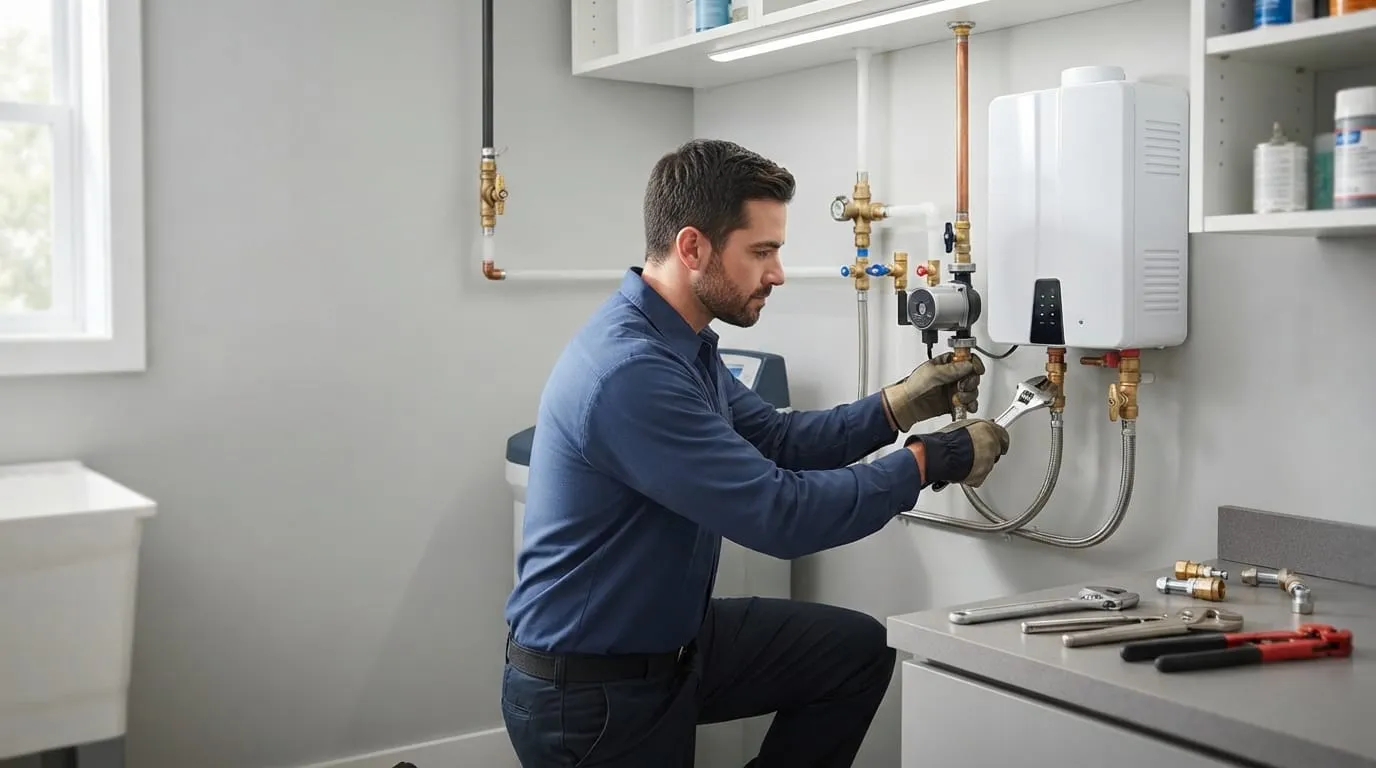
Hot and cold isolating valves at the machine, ideally with a single-lever shutoff so both can be closed easily between uses.
Fit braided steel hoses
Rubber supply hoses fail, and when they do they flood a house. Braided stainless is inexpensive and the correct default.
Set the standpipe height correctly
Too low and the machine siphons its own water out mid-cycle. Too high and the pump struggles to discharge.
Fit a proper trap and test
The standpipe needs a trap to keep drain smells out, and the installation is proved by running a full cycle rather than a fill.
What's included
What you get on every job, whoever we send.
- Braided steel hoses rather than rubber
- Isolating valves that actually close
- Standpipe height set so it neither siphons nor strains the pump
- A full cycle run before the job is finished
Questions
Washing Machine Hookup questions
Why do washing machine hoses matter so much?
Because they are under mains pressure permanently and their failure is not a drip. A burst supply hose delivers water at full pressure, continuously, and it usually happens when nobody is home. It is one of the more common causes of serious domestic water damage. Braided stainless hoses are far more resistant than rubber, they cost very little, and replacing them every few years is one of the cheapest risk reductions in a house.
What is the right standpipe height?
It has to be high enough that the machine cannot siphon its own water out during a cycle, and low enough that the drain pump is not straining to lift the water. Manufacturers specify a range, typically with a minimum around waist height and a maximum somewhat above. Getting it wrong shows up as a machine that keeps refilling, or one that reports a drain error, and both look like appliance faults.
Should the valves be turned off between washes?
It is genuinely good practice, and it is why single-lever shutoffs exist for laundry connections. Hoses fail under pressure, so a hose that is not pressurised between uses is a hose that cannot burst. A single lever closing both hot and cold makes it a two-second habit rather than a chore, and on a machine used a few times a week the reduction in risk is meaningful.
Related services
Plumbing Fixture Installation
Fitting taps, basins, toilets, showers and baths, including the shutoff valves and connectors that decide whether the job stays trouble-free.
See what this coversDishwasher Installation
Connecting dishwashers, including the high loop or air gap that stops drain water siphoning back and the shutoff that makes future work possible.
See what this coversIce Maker Line Installation
Running a supply line to a refrigerator ice maker, with a proper valve rather than the self-piercing saddle valve that causes so many slow leaks.
See what this coversWater Heater Repair
Diagnosis and repair of gas, electric and tankless water heaters, including no-hot-water calls, leaks, pilot problems and sediment flushing.
See what this covers

Get it fixed
Washing Machine Hookup, handled locally
Call with your ZIP code and what you are seeing. We route you to a licensed plumber in your area who does washing machine hookup every week.
Free call-routing service. An independent licensed plumber does the work and quotes you directly.
- Licensed and insured
- Answered 24/7
- Price before work