Service
Water Softener Installation
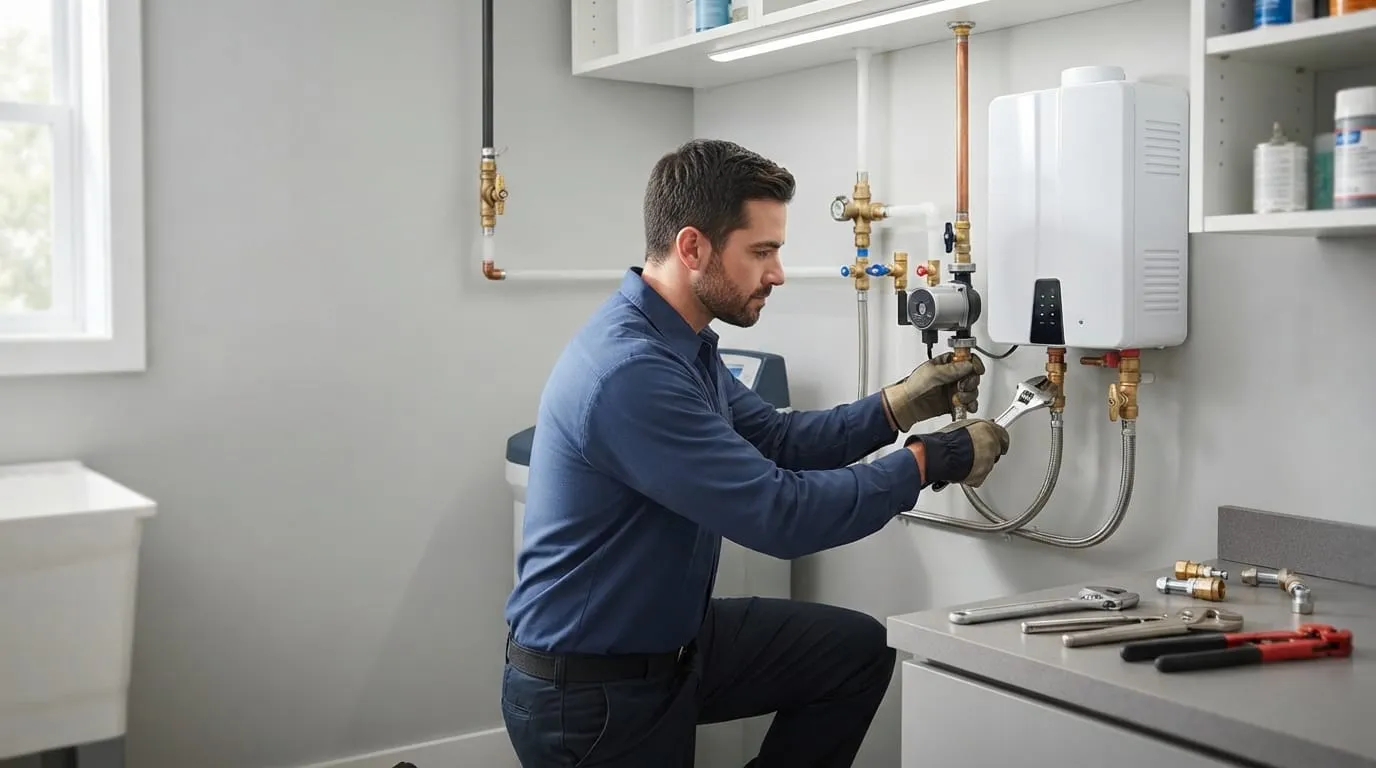
Installing water softeners, sized to your measured hardness and household use, with a drain for the regeneration discharge and a bypass for servicing.
Free call-routing service. An independent licensed plumber does the work and quotes you directly.
- Licensed and insured
- Price agreed before work
- A plumber who works your area
Test before sizing
Everything about a softener installation follows from one number: how hard your water actually is.
Your utility publishes it, and it is worth confirming at the tap, because hardness varies between supply zones and a private well is not covered by any published figure at all.
That number, multiplied by how much water the household uses, gives the capacity required.
Get it wrong in one direction and the unit regenerates constantly, consuming salt and water and wearing out early. Get it wrong in the other and it never keeps up, so you have softened water some of the time and hard water the rest, with no obvious explanation.
It is a five-minute test that determines whether the equipment does its job.
Two things people do not plan for
The drain. Regeneration flushes the resin bed with brine, and that discharge needs a drain connection with a proper air gap. A floor drain, standpipe or utility sink all work. A softener placed somewhere with no drain nearby turns a straightforward installation into a much larger one, so the position is worth deciding early.
The outside taps. These are normally left connected upstream of the softener, on hard water. Softened water does nothing useful for a garden, the sodium is unhelpful to soil, and irrigating with it means far more frequent regeneration and a great deal more salt.
Both are easy at installation and awkward afterwards.
Does this sound familiar?
Problems this service solves
- Scale building up in pipes, heaters and fixtures
- Soap that will not lather and residue on glassware
- Appliances failing early because of hard water
- Water heater efficiency lost to scale
- Dry skin and hair from very hard water
Signs you need water softener installation
If more than one of these is true, the problem is usually past the point a plunger or a store-bought cleaner will fix.
- White scale on taps, kettles and shower screens
- Soap and detergent do not lather properly
- The water heater has scaled up or become noisy
- Your utility publishes a high hardness figure
What to expect
How the visit works
Test the water first
The grains per gallon figure sets the size of the unit. Guessing produces a softener that either regenerates constantly or never keeps up.
Size for hardness and household use
Capacity follows hardness multiplied by daily water use, so the unit regenerates at a sensible interval rather than every night.
Site it with drain and power
Regeneration discharges brine, which needs a proper drain connection with an air gap. The unit also needs a power supply.
Fit a bypass and keep outside taps hard
A bypass allows servicing without shutting off the house, and outside taps and irrigation are usually left on hard water deliberately.
What's included
What you get on every job, whoever we send.
- Sized against measured hardness, not an estimate
- Drain connection made with a proper air gap
- A bypass valve so servicing does not shut off the house
- Outside taps left unsoftened, which saves salt and suits plants
Questions
Water Softener Installation questions
How do I know how hard my water is?
Your water utility publishes it, usually as grains per gallon or parts per million, and that figure is the starting point for sizing. A test at the tap is worth doing as well, because hardness varies between supply zones and a well is not covered by any utility report at all. The number matters: a softener sized for the wrong hardness will either regenerate far too often, wasting salt and water, or never keep up.
Where does the discharge go?
To a drain, via a connection with an air gap so there is no possibility of drain water being drawn back into the softener. Regeneration flushes the resin with brine and that has to go somewhere: a floor drain, a standpipe or a utility sink are all common. It is worth knowing before choosing a location, because a softener sited far from any drain is a much bigger installation than one next to a suitable connection.
Should outside taps be softened too?
Usually not, and they are normally left connected upstream of the softener. Softened water offers no benefit to a garden, the sodium is not helpful to plants or soil, and irrigating with it means regenerating far more often and buying a great deal more salt. Leaving outside taps and irrigation on hard water is the standard arrangement and it is worth confirming it has been done.
Related services
Water Softener Repair
Repairing softeners that have stopped softening, are using salt without effect, or have bridged and stopped drawing brine at all.
See what this coversHard Water Treatment
Dealing with hard water, which shortens appliance life and scales heaters, and choosing between softening and conditioning honestly.
See what this coversWater Testing
Testing what is actually in the water, which is the step that turns a filtration decision from guesswork into a specification.
See what this coversWater Heater Repair
Diagnosis and repair of gas, electric and tankless water heaters, including no-hot-water calls, leaks, pilot problems and sediment flushing.
See what this covers

Get it fixed
Water Softener Installation, handled locally
Call with your ZIP code and what you are seeing. We route you to a licensed plumber in your area who does water softener installation every week.
Free call-routing service. An independent licensed plumber does the work and quotes you directly.
- Licensed and insured
- Answered 24/7
- Price before work