Service
Water Heater Installation
Sizing, permitting and installing replacement tank, tankless and heat pump water heaters, with proper venting, expansion tanks and code-required safety devices.
Free call-routing service. An independent licensed plumber does the work and quotes you directly.
- Licensed and insured
- Price agreed before work
- A plumber who works your area
Replacing a water heater is one of the larger plumbing purchases most homeowners make, and it is easy to get wrong by simply swapping in whatever was there before. Our water heater installation service connects you with a licensed local plumber who sizes the new unit to your household, handles the permit and code requirements, and installs it so it lasts.
Tank, tankless or heat pump
A conventional storage tank is the least expensive to install and the simplest to maintain. A tankless unit heats water on demand, saves space and lasts longer, but costs more upfront and depends on adequate gas or electrical supply. A heat pump water heater uses far less electricity than a standard electric tank and is often eligible for rebates, but it needs space, air volume and a place to send condensate. The right choice depends on your fuel, your space, how much hot water you use and how long you plan to stay.
Code requirements that matter
Water heaters are regulated for good reason. Gas units need correctly sized venting and combustion air. Electric units need the right circuit and disconnect. Every unit needs a temperature and pressure relief valve piped to a safe discharge point, and many jurisdictions require a drain pan, seismic strapping or an expansion tank. A licensed plumber knows the local requirements and pulls the permit so the installation is inspected and documented.
Installation day
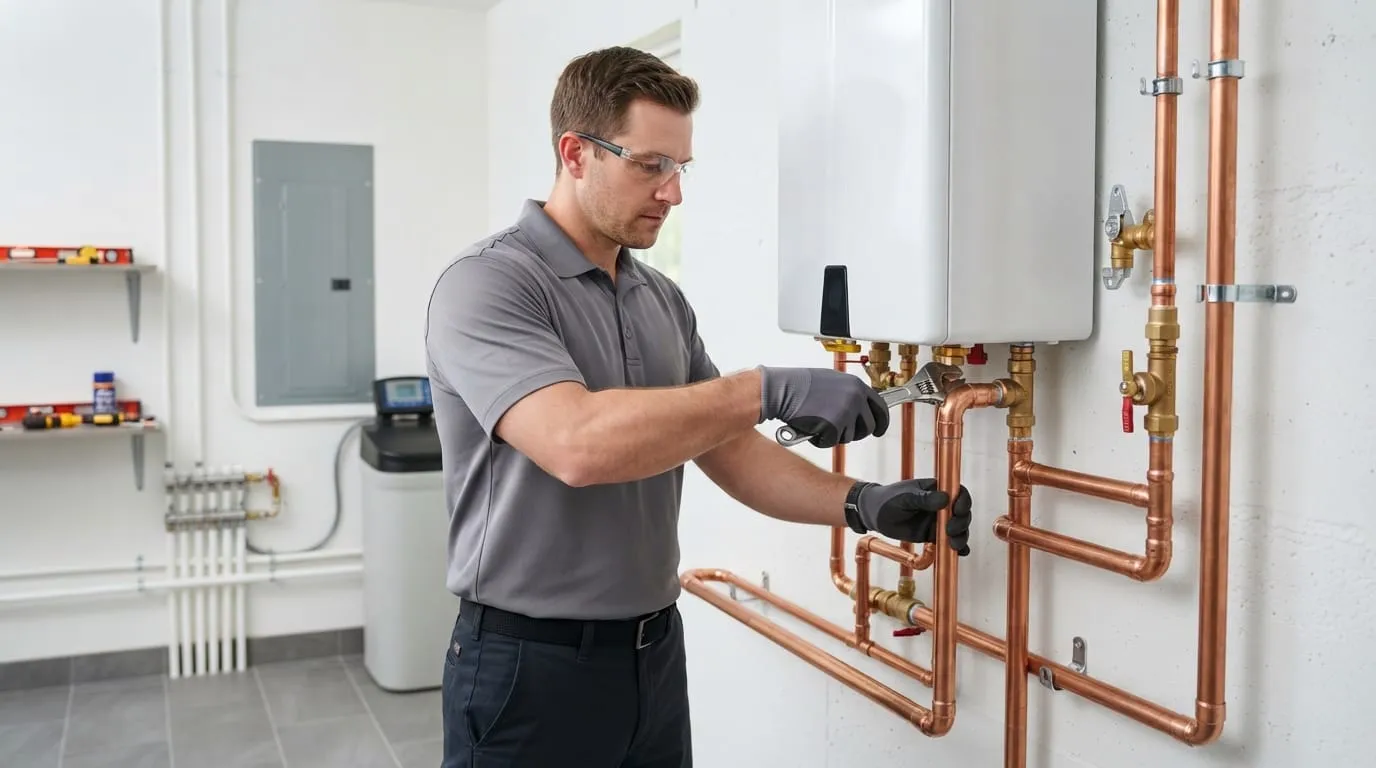
The old heater is drained and removed. The new unit is set level, connected with new supply lines and a new shutoff valve, vented or wired as required, and fitted with the safety devices your code calls for. The plumber fills and tests it, sets the temperature, and shows you how to shut it off and what maintenance it needs, such as flushing or descaling on a schedule that fits your local water.
Does this sound familiar?
Problems this service solves
- A tank that has started leaking from the body and cannot be repaired
- A heater past its expected life with repairs no longer worth the cost
- A household that has outgrown the tank size
- High energy bills from an inefficient older unit
- Upgrading from tank to tankless or heat pump for space or efficiency
- Relocating a heater out of a closet, attic or living space
Signs you need water heater installation
If more than one of these is true, the problem is usually past the point a plunger or a store-bought cleaner will fix.
- Water pooling under the tank with no leak at fittings or valves
- Rusty hot water that clears when you run cold
- The unit is more than ten to twelve years old and needs a costly repair
- Hot water runs out before everyone has showered
- Visible corrosion on the tank seams or at the top connections
What to expect
How the visit works
Size the replacement for how you actually use hot water
The plumber looks at fixtures, bathrooms, occupants and peak use, plus the fuel available and the space, to recommend a capacity or flow rate rather than defaulting to what was there.
Pull the permit and check the setup
Water heater replacement requires a permit in most jurisdictions. Venting, gas line size, electrical capacity, seismic strapping, drain pan and expansion tank requirements are all confirmed before install day.
Remove the old unit and install the new one
The old heater is drained and hauled away, the new unit is set, connected with new flex lines and shutoffs, vented correctly, and fitted with a temperature and pressure relief valve discharge line.
Test, set the temperature and walk through
The unit is filled, fired and checked for leaks and correct operation. You are shown the shutoffs, the temperature setting and the maintenance the unit needs in your area.
What's included
What you get on every job, whoever we send.
- Correct sizing so you neither run out of hot water nor pay to heat water you do not use
- Code-compliant venting, gas and electrical work that passes inspection
- Straight guidance on whether tankless or heat pump makes sense for your home
- Old unit removal and disposal included
Questions
Water Heater Installation questions
How do I choose the right size water heater?
For a tank, the key number is first-hour rating, which is how much hot water the unit can deliver in a busy hour. A two-bathroom home with three or four people usually lands around a 40 to 50 gallon gas tank or a 50 to 80 gallon electric. For tankless, sizing is by flow rate in gallons per minute at the temperature rise your incoming water requires, which is why northern homes need larger units than southern ones.
Is a tankless water heater worth it?
Tankless units save space, last longer and heat water only on demand, which lowers standby energy loss. They cost more to install, especially if the gas line or electrical service needs upsizing, and they need annual descaling in hard-water areas. They make the most sense for households that run out of hot water, have limited space, or plan to stay in the home long enough to recover the upfront cost.
Do I need a permit to replace a water heater?
In most cities and counties, yes. The permit ensures venting, gas, electrical, relief valve and strapping requirements are met and inspected. A licensed plumber pulls the permit as part of the job. Unpermitted replacements can cause problems at resale and with insurance claims.
What is an expansion tank and do I need one?
When water is heated it expands, and in a closed system with a backflow preventer or pressure regulator that expansion has nowhere to go, which stresses the tank and relief valve. An expansion tank absorbs it. Many jurisdictions now require one with every new water heater, and the plumber will include it if yours does.
How long does installation take?
A like-for-like tank replacement usually takes two to four hours. A switch to tankless, a relocation, or a job that needs new venting, gas piping or electrical work can take most of a day. The plumber gives you a time estimate along with the price.
Related services
Water Heater Repair
Diagnosis and repair of gas, electric and tankless water heaters, including no-hot-water calls, leaks, pilot problems and sediment flushing.
See what this coversPipe Repair
Repair and replacement of burst, leaking, frozen, corroded or noisy water pipes, from a single fitting to a whole-house repipe in copper or PEX.
See what this coversLeak Detection
Locating hidden water leaks under slabs, inside walls, in yards and at the meter using acoustic, thermal and pressure-testing equipment, then repairing them.
See what this coversSewer Line Repair
Camera-verified repair and replacement of cracked, collapsed, root-damaged or bellied sewer laterals, including trenchless lining and pipe bursting.
See what this covers

Get it fixed
Water Heater Installation, handled locally
Call with your ZIP code and what you are seeing. We route you to a licensed plumber in your area who does water heater installation every week.
Free call-routing service. An independent licensed plumber does the work and quotes you directly.
- Licensed and insured
- Answered 24/7
- Price before work