Service
Leak Detection
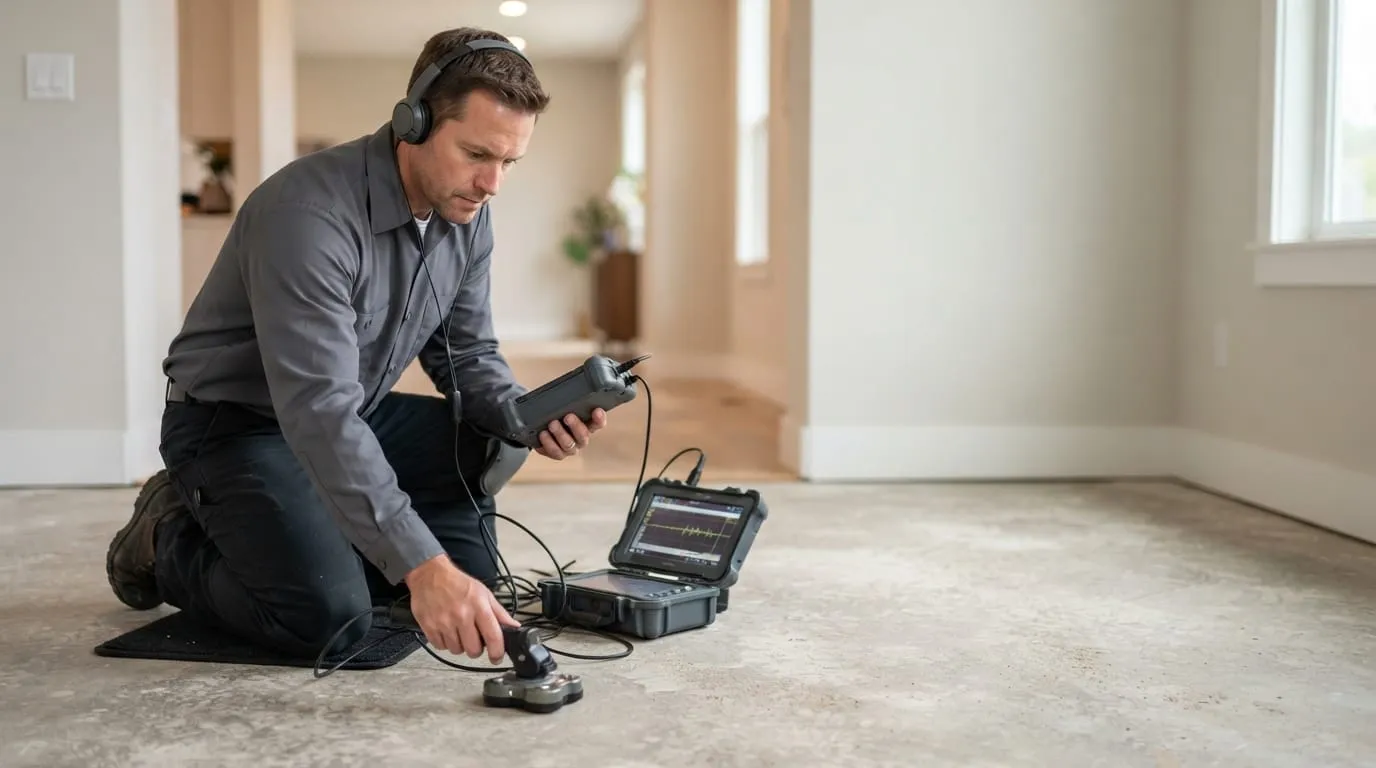
Locating hidden water leaks under slabs, inside walls, in yards and at the meter using acoustic, thermal and pressure-testing equipment, then repairing them.
Free call-routing service. An independent licensed plumber does the work and quotes you directly.
- Licensed and insured
- Price agreed before work
- A plumber who works your area
Hidden leaks waste water, raise bills and cause structural damage long before they become visible. Finding one used to mean tearing into floors and walls until water was found. Modern leak detection uses acoustic, thermal and pressure equipment to locate a leak to within a small area before anything is opened. Our leak detection service connects you with a licensed local plumber who carries that equipment and knows where leaks tend to occur in your area’s homes.
Where hidden leaks happen
Slab leaks are the classic case in regions where homes are built on concrete slabs with supply lines beneath. Copper lines beneath a slab fail from corrosion, from abrasion against concrete as the slab moves, and from the ground shifting with moisture. Leaks inside walls usually show up as stains, soft drywall or a musty odor. Leaks between the street meter and the house keep a section of yard wet and add to the bill without ever showing inside.
How detection works
The plumber first proves a leak exists by isolating the house at the meter and pressure-testing the supply lines. Hot and cold lines are tested separately because slab leaks are more often on the hot side. Once the section is known, acoustic equipment listens for the sound of pressurized water escaping, thermal imaging shows temperature differences from a hot-water leak, and line locators trace the exact route of the pipe under the slab. The result is a marked spot, not a guess.
Repair options
A single leak in an otherwise sound line can be spot repaired through a small opening. When the same line has leaked before, or the detection shows the pipe is deteriorating, rerouting the line through the attic or walls avoids the slab altogether. Homes with multiple pinhole leaks in copper, or with older galvanized or polybutylene supply lines, are usually better served by a repipe. The plumber lays out each option with its cost and disruption before any work starts.
Does this sound familiar?
Problems this service solves
- Slab leaks in supply lines running beneath concrete foundations
- Leaks inside walls and ceilings that show up as stains or soft drywall
- Underground leaks between the meter and the house
- Irrigation and hose bib line leaks that keep the yard soggy
- Pinhole leaks in aging copper lines
- Leaks behind tubs and showers that only appear when a fixture is used
Signs you need leak detection
If more than one of these is true, the problem is usually past the point a plunger or a store-bought cleaner will fix.
- A water bill that jumps without a change in household use
- The water meter moves with every fixture and appliance turned off
- A warm spot on a floor, or the sound of running water when nothing is on
- Mildew smell, peeling paint or discolored drywall with no visible source
- Low water pressure that developed gradually
- Cracks in flooring or a foundation, or a wet patch in the yard during dry weather
What to expect
How the visit works
Confirm a leak exists
The plumber isolates the house from the meter and watches for movement, then pressure-tests supply lines to prove there is a loss and roughly how large it is.
Narrow down the section
Hot and cold lines are tested separately, fixtures are isolated, and the plumber checks whether the loss is in the supply system, the drain system or an irrigation line.
Pinpoint the location
Acoustic listening equipment, thermal imaging and tracer gas or line-locating tools find the leak to within a small area so the repair opening is as small as possible.
Repair with the least disruption
Options are explained before any concrete or drywall is opened. For slab leaks that can mean a spot repair, rerouting the line overhead, or repiping if the pipe is failing in multiple places.
What's included
What you get on every job, whoever we send.
- Non-invasive location before anything is opened up
- Written findings you can give an insurance adjuster
- Reroute and repipe options when a spot repair would only delay the next leak
- Plumbers familiar with the pipe materials and soil conditions in your area
Local pages
Leak Detection by city
Local pages for this service, covering the problems, housing and water conditions specific to each area.
Guides
Read before you call
- How to Tell If Your Home Has Polybutylene Pipes, and What to Do About ItPolybutylene supply pipe went into homes from the late 1970s to the mid-1990s and fails at the fittings without warning. How to spot it and what to do next.
- What to Do in the First Ten Minutes After a Pipe BurstsA burst pipe does most of its damage before the plumber arrives. The order of operations that limits it, from the shutoff to what to photograph for insurance.
Questions
Leak Detection questions
How do I know if I have a slab leak?
The most reliable check is the meter test. Turn off every fixture and appliance, including ice makers and irrigation, then watch the meter's low-flow indicator for a few minutes. If it moves, water is leaving the system somewhere. A warm spot on the floor, the sound of water with everything off, or a foundation crack that has become damp are strong signs the leak is under the slab.
Will you have to break up my floor?
Not until the leak has been located precisely, and sometimes not at all. Modern detection equipment narrows the leak to a small area, so a spot repair needs only a small opening. In many cases the plumber will recommend rerouting the line through the attic or a wall instead of opening the slab, which avoids floor damage entirely.
What causes pipes under a slab to leak?
Copper lines fail from corrosion, from abrasion where the pipe rubs against concrete or rebar as the slab moves, and from poor original workmanship. Soil that expands and shrinks with moisture, common in much of the South and Southwest, moves the slab enough to stress rigid pipe over decades. Aggressive or very hard water accelerates internal corrosion.
Does homeowners insurance cover leak detection and repair?
Many policies cover the cost of tearing out and replacing the part of the home needed to access the leak, plus resulting water damage, but not the repair of the pipe itself. Policies differ. A written leak detection report with photos helps with a claim, and the plumber will provide one.
Can a small leak wait?
A slow leak under a slab or inside a wall does not stay small. It saturates soil and framing, invites mold, and can undermine a foundation over months. The detection visit itself is inexpensive compared with the damage from waiting, so it is worth confirming what you are dealing with early.
Related services
Pipe Repair
Repair and replacement of burst, leaking, frozen, corroded or noisy water pipes, from a single fitting to a whole-house repipe in copper or PEX.
See what this coversWater Heater Repair
Diagnosis and repair of gas, electric and tankless water heaters, including no-hot-water calls, leaks, pilot problems and sediment flushing.
See what this coversSewer Line Repair
Camera-verified repair and replacement of cracked, collapsed, root-damaged or bellied sewer laterals, including trenchless lining and pipe bursting.
See what this coversWater Heater Installation
Sizing, permitting and installing replacement tank, tankless and heat pump water heaters, with proper venting, expansion tanks and code-required safety devices.
See what this covers

Get it fixed
Leak Detection, handled locally
Call with your ZIP code and what you are seeing. We route you to a licensed plumber in your area who does leak detection every week.
Free call-routing service. An independent licensed plumber does the work and quotes you directly.
- Licensed and insured
- Answered 24/7
- Price before work