Houston, Texas
Leak Detection in Houston, TX
Houston is slab leak country. The clay under the city moves a little every season, and the copper supply lines beneath a 1970s home in Alief, Westbury or Kingwood move with it until one opens. A warm spot on the tile, a water bill that doubled or a meter that will not stop are how most Houston homeowners find out. Leak detection plumbers in our network locate the leak precisely before anything is cut, and often reroute the line instead of opening the floor.
Free call-routing service. An independent licensed plumber does the work and quotes you directly.
Local problems
Leak Detection problems we see in Houston
Slab leaks in Beaumont clay
Houston's expansive clay swells in wet months and shrinks in dry ones, flexing slabs and the copper beneath them. Hot-side lines fail most often. The plumber pressure-tests hot and cold separately, then uses acoustic and thermal equipment to pinpoint the spot.
Leaks between the meter and the house
Long yard runs in Houston's larger lots, in clay that shifts, develop leaks that keep a patch of lawn green in August and add to the bill without ever showing inside. Line locating and acoustic detection find them without trenching the yard.
Wall leaks in pier-and-beam homes
In the Heights, Montrose and the East End, supply lines run through walls and crawl spaces in houses a century old. Stains, soft drywall and a musty smell are the signs, and the plumber can usually confirm the source from the crawl space before opening a wall.
Leaks after foundation repair
Foundation piering is common across Houston, and lifting a slab pulls on the pipes attached to it. A pressure test after foundation work is the way to catch a joint that opened during the lift before it becomes a slab leak months later.
Post-freeze leaks that did not show immediately
A pipe that cracked in a freeze may not leak until pressure and warmth return. Weeks after a cold snap, a bill spike or a damp wall in an attic-fed line often traces back to it.
Why Houston leaks under the slab
Most Houston homes built since the 1960s sit on concrete slabs with copper supply lines beneath, and the Beaumont clay under those slabs is among the most expansive soils in Texas. It swells in the wet months and shrinks in a dry August, and the slab and the copper flex with it, year after year, until a joint or a worn spot gives way. Hot-side lines go first, which is why a warm patch on the tile is such a reliable early sign. Alief, Westbury, Sharpstown, Kingwood, Clear Lake and Copperfield are full of homes at exactly the age where this happens.
How the leak is found
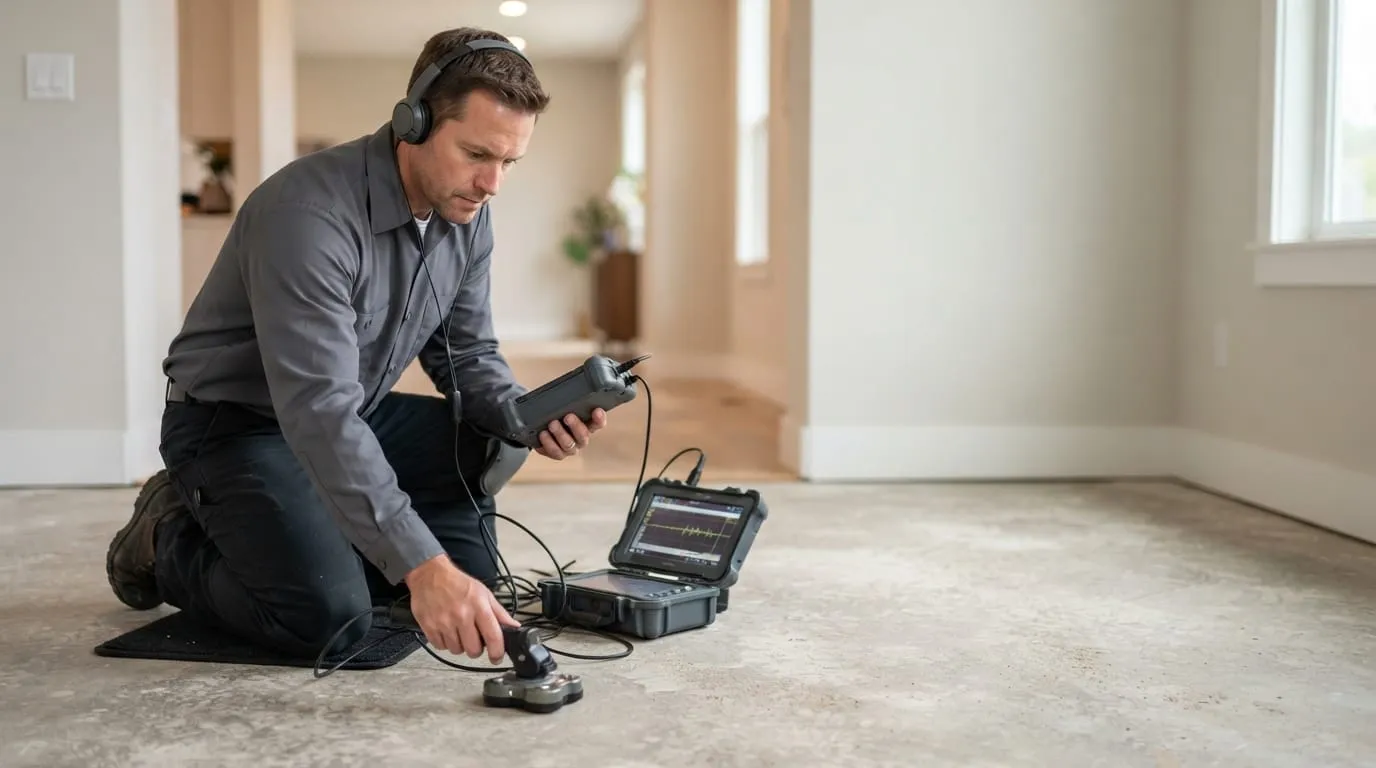
The plumber starts by proving the leak exists: the house is isolated at the meter and the supply lines are pressure-tested, hot and cold separately. Once the section is known, acoustic listening equipment picks up the sound of pressurized water escaping, thermal imaging shows the heat from a hot-water leak through the floor, and line locators trace the pipe’s route under the slab. The result is a marked spot on the floor, not a guess, and nothing is opened until then.
Yard leaks between the meter and the house, common on Houston’s larger lots, are located the same way without trenching. Wall and crawl-space leaks in the century-old homes of the Heights and Montrose are usually confirmed from below before any drywall comes off.
Fixing it without wrecking the house
A single leak in an otherwise sound line can be repaired through a small opening at the marked spot. When the copper has leaked before, or the detection shows it deteriorating, the Houston plumbers in our network usually recommend abandoning the under-slab run and rerouting through the attic, which avoids the slab entirely and ends the cycle. Homes with multiple pinhole leaks, or with galvanized or polybutylene supply lines, are candidates for a repipe. Every option comes with its cost and disruption before anything starts, and every visit ends with a written report you can hand to your insurer.
Why leak detection matters in Houston
- Houston's soil makes slab leaks a matter of time for many homes built from the 1960s to 1990s, and rerouting through the attic is often cheaper and cleaner than opening a slab in this climate.
- Foundation repair is common in Harris County, and a plumbing pressure test before and after it prevents the most avoidable slab leaks in the city.
- Humid Houston hides wall and crawl-space leaks behind mold and musty smells that residents attribute to the climate, so detection catches damage earlier.
Signs you need leak detection
- A water bill that jumps without a change in household use
- The water meter moves with every fixture and appliance turned off
- A warm spot on a floor, or the sound of running water when nothing is on
- Mildew smell, peeling paint or discolored drywall with no visible source
- Low water pressure that developed gradually
- Cracks in flooring or a foundation, or a wet patch in the yard during dry weather
What to expect
What happens when you call
Confirm a leak exists
The plumber isolates the house from the meter and watches for movement, then pressure-tests supply lines to prove there is a loss and roughly how large it is.
Narrow down the section
Hot and cold lines are tested separately, fixtures are isolated, and the plumber checks whether the loss is in the supply system, the drain system or an irrigation line.
Pinpoint the location
Acoustic listening equipment, thermal imaging and tracer gas or line-locating tools find the leak to within a small area so the repair opening is as small as possible.
Repair with the least disruption
Options are explained before any concrete or drywall is opened. For slab leaks that can mean a spot repair, rerouting the line overhead, or repiping if the pipe is failing in multiple places.
Other plumbing services in Houston
- Water Heater Repair in HoustonDiagnosis and repair of gas, electric and tankless water heaters, including no-hot-water calls, leaks, pilot problems and sediment flushing.
- Sewer Line Repair in HoustonCamera-verified repair and replacement of cracked, collapsed, root-damaged or bellied sewer laterals, including trenchless lining and pipe bursting.
- Emergency Plumber in HoustonBurst pipes, sewage backups, no water and major leaks handled around the clock by licensed local plumbers who can be dispatched today.
- Drain Cleaning in HoustonProfessional clearing of slow or blocked kitchen, bathroom, laundry and floor drains using cabling, hydro jetting and camera inspection.
Leak Detection near Houston
We also serve Pasadena, Pearland, Sugar Land, Missouri City, Katy, Cypress, Spring, Humble, Baytown, League City, Bellaire and the surrounding Harris County area.
Questions
Leak Detection questions from Houston homeowners
How do I check for a slab leak in my Houston home?
Turn off every fixture and appliance, including the ice maker and irrigation, and watch the water meter at the curb for a few minutes. If the low-flow indicator moves, water is leaving the system. A warm spot on the floor, the sound of running water with everything off, or a foundation crack that has become damp all point under the slab. The plumber confirms with pressure tests and then pinpoints the location.
Will you have to break my floor?
Often not. Once the leak is located precisely, the plumber lays out the options. A spot repair needs a small opening at the marked location. In many Houston homes the better answer is to abandon the failed line and reroute through the attic, which avoids the slab entirely and, if the copper is failing in more than one place, ends the cycle of leaks.
Why are hot-water lines the ones that usually leak under a slab?
Hot water accelerates corrosion inside copper, and the hot line expands and contracts with every use, rubbing against the concrete or the soil where it passes through. Add Houston's clay movement and the hot line fails first in most slab leaks. That is also why a warm floor is such a reliable sign.
Does homeowners insurance cover a slab leak in Texas?
Many Texas policies cover the cost of accessing the leak and the resulting water damage, but not the repair of the pipe itself, and policies differ on slab leaks specifically. A written leak detection report with photos is what the adjuster wants, and the plumbers in our network provide one.
Should I have the plumbing tested before foundation repair?
Yes. A hydrostatic test on the drains and a pressure test on the supply lines before the piers go in gives a baseline, and the same tests afterward show whether the lift opened anything. Houston foundation contractors expect it, and catching a break that week is far cheaper than finding it as a slab leak in six months.
Learn more about leak detection nationwide, or see all Texas plumbers.
Get it fixed
Leak Detection in Houston, ready now
Call with your Houston ZIP code and what you are seeing. A licensed local plumber is dispatched and you get clear guidance in the meantime.
Free call-routing service. An independent licensed plumber does the work and quotes you directly.
- Licensed and insured
- Answered 24/7
- Price before work