Mesa, Arizona
Leak Detection in Mesa, AZ
Mesa's slabs sit on some of the most active clay in the Valley, and the copper beneath them is thirty to fifty years old and carrying some of the hardest water in Arizona. Slab leaks follow. Mesa leak detection plumbers in our network prove the leak with pressure testing, locate it with acoustic and thermal equipment, and usually recommend rerouting through the attic rather than opening the floor.
Free call-routing service. An independent licensed plumber does the work and quotes you directly.
Local problems
Leak Detection problems we see in Mesa
Slab leaks in aging copper over moving clay
Dobson Ranch, Superstition Springs, Alta Mesa and the rest of Mesa's 1970s to 1990s subdivisions have copper under the slab that hard water pits from inside while East Valley clay stresses it from outside. A warm tile, a doubled bill or running water you cannot find is the sign.
Leaks that follow the monsoon
Clay pockets across Mesa swell during the monsoon and shrink in the summer heat, and slab leaks here often appear a few weeks after the season, when the soil has moved the pipe. A bill spike in September or October is worth a meter check.
Polybutylene fittings inside walls
Homes from the late 1970s to mid-1990s in parts of Superstition Springs, Alta Mesa and similar areas carry gray polybutylene that fails at a fitting without warning. The plumber locates the failed fitting and talks through a repipe.
Irrigation and drip system leaks
Nearly every Mesa lot has an irrigation system, and heat and UV make exposed PVC and drip tubing brittle. The plumber isolates irrigation from the house supply first, because a yard leak runs the meter just as fast as one under the floor.
Leaks in vacant snowbird homes
Leisure World, Sunland Village, Dreamland Villa and Mesa's manufactured home parks empty out every summer, and a small leak in a vacant house runs for months. A bill that arrives while the owner is away is the only warning, and a seasonal shutoff prevents it.
Why Mesa leaks under the slab
Mesa built out in a hurry between the 1970s and the 1990s, and nearly all of it sits on concrete slabs with copper supply lines beneath. That copper is now thirty to fifty years old. It has been carrying water that often tests harder than Phoenix proper the whole time, and hard water pits copper from the inside, hot lines first. Beneath the slab, more of Mesa sits on expansive clay than central Phoenix does, and that clay swells during the monsoon and shrinks in the summer heat, moving the slab and stressing the pipe from outside. Dobson Ranch, Superstition Springs, Red Mountain Ranch and Alta Mesa are all at the age where slab leaks happen, and they often appear a few weeks after the monsoon when the soil has moved.
How a Mesa slab leak gets found
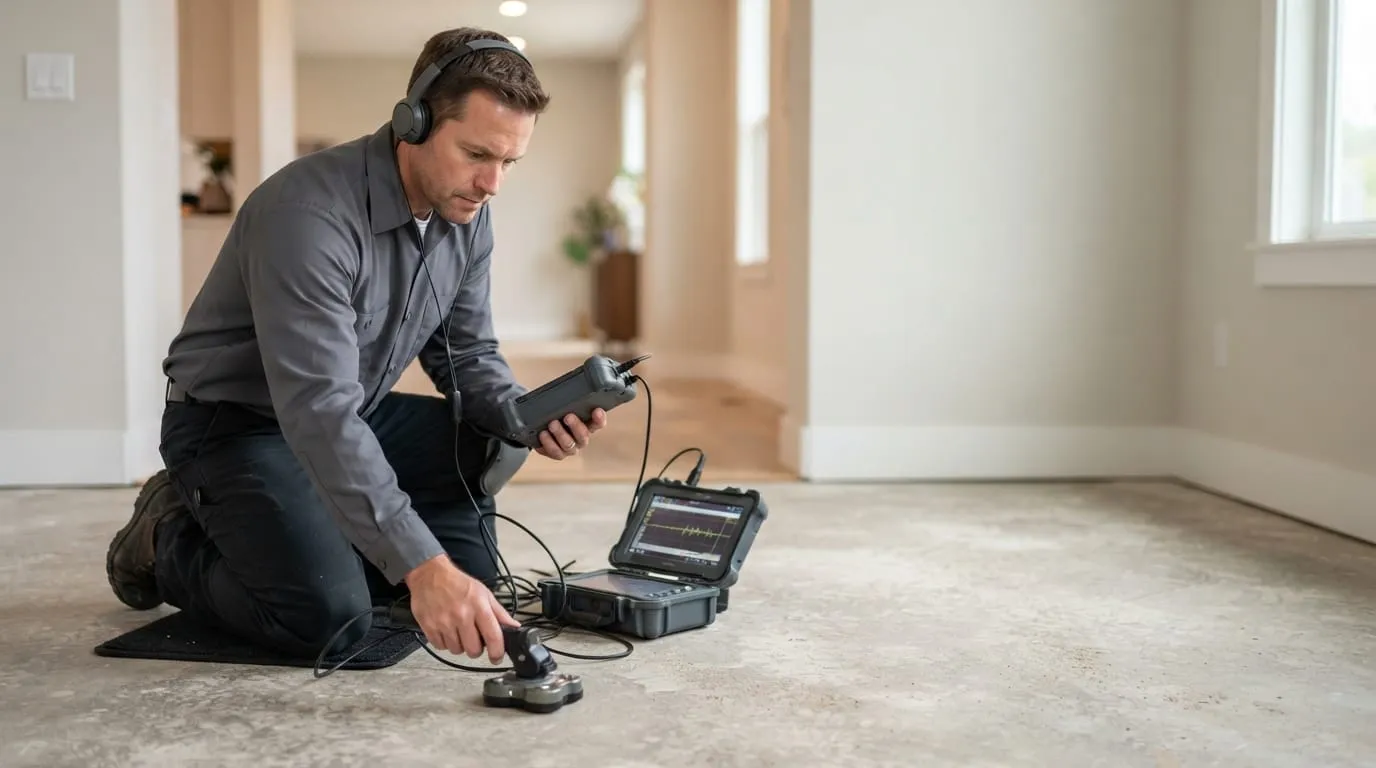
Irrigation comes off first. Nearly every Mesa lot has a drip system, and after a summer of sun its tubing and valves leak enough to move a meter on their own. With the yard isolated, the plumber proves the house is losing water, then splits the question in two by testing the hot and cold lines separately, since in Mesa the hot line is the usual culprit. From there it is listening and looking: a ground microphone picks up pressurized water hissing into the soil, a thermal camera shows the warm plume of a hot-side leak spreading under the tile, and a locator traces exactly where the copper runs so the two can be lined up. What you get is a mark on the floor and a written finding, and no one cuts anything before that.
Vacant homes and rerouting
Mesa’s age-restricted communities and manufactured home parks empty out every summer, and a leak in a vacant house runs unwatched for months. Mesa leak detection plumbers in our network are often the first to see the damage, and they do seasonal shutoff checks for exactly these homes. Whatever the house, the usual repair in Mesa is to abandon the failed under-slab run and reroute through the attic, because copper that has pitted once in this water will pit again. Homes with polybutylene inside the walls are better served by a full PEX repipe. Every option comes with its cost before anything starts, and every visit ends with a written report for your insurer.
Why leak detection matters in Mesa
- Mesa combines aging copper, very hard water and East Valley clay, which makes slab leaks more common here than the age of the housing alone would predict.
- The city's seasonal population means leaks run unwatched for months in vacant homes, and detection is often the first step in assessing damage nobody saw happen.
- Irrigation on nearly every lot means separating the yard from the house is the first job in every Mesa leak call.
Signs you need leak detection
- A water bill that jumps without a change in household use
- The water meter moves with every fixture and appliance turned off
- A warm spot on a floor, or the sound of running water when nothing is on
- Mildew smell, peeling paint or discolored drywall with no visible source
- Low water pressure that developed gradually
- Cracks in flooring or a foundation, or a wet patch in the yard during dry weather
What to expect
What happens when you call
Confirm a leak exists
The plumber isolates the house from the meter and watches for movement, then pressure-tests supply lines to prove there is a loss and roughly how large it is.
Narrow down the section
Hot and cold lines are tested separately, fixtures are isolated, and the plumber checks whether the loss is in the supply system, the drain system or an irrigation line.
Pinpoint the location
Acoustic listening equipment, thermal imaging and tracer gas or line-locating tools find the leak to within a small area so the repair opening is as small as possible.
Repair with the least disruption
Options are explained before any concrete or drywall is opened. For slab leaks that can mean a spot repair, rerouting the line overhead, or repiping if the pipe is failing in multiple places.
Leak Detection near Mesa
We also serve Tempe, Chandler, Gilbert, Apache Junction, Queen Creek, San Tan Valley, Scottsdale and the surrounding Maricopa County area.
Questions
Leak Detection questions from Mesa homeowners
How do I check for a slab leak in my Mesa home?
Start with the meter, but in Mesa start with the irrigation valve before that, because a drip system baked brittle by August is the most common false alarm. With irrigation off and every tap closed, a meter dial that still creeps means the house is losing water. Then walk the tile in socks: a warm patch is a hot-side slab leak nine times out of ten. Bring those two facts to the plumber and the pressure test that follows will tell you which line and roughly where.
Why are slab leaks so common in Mesa?
Three things line up. Most Mesa homes were built between the 1970s and 1990s with copper under a concrete slab, and that copper is now thirty to fifty years old. Mesa's water is very hard and pits copper from the inside. And much of the East Valley sits on clay that swells in the monsoon and shrinks in the heat, moving the slab and stressing the pipe. Detection finds the leak without opening the floor, and an attic reroute is usually the better repair.
Will you have to cut my floor?
Probably not, and in a Mesa home from the boom years the plumber will usually argue against it. Copper that has pitted once in this water is going to pit again, so cutting the tile to fix one spot tends to buy a couple of years before the next warm patch appears. Running a new line through the attic to the same fixtures leaves the slab alone, keeps the dust out of the house, and retires the failing run for good. A spot repair still makes sense for a single leak in otherwise sound pipe, and the plumber will say which case you have.
I am leaving Mesa for the summer. How do I prevent a leak while I am gone?
Turn off the main water supply at the house, set the water heater to vacation mode or shut it off, and turn off the ice maker and any RO system. Ask a neighbor or a service to run water briefly every few weeks so traps do not dry out. If you would rather leave the water on, a smart leak detector with an automatic shutoff valve at the main is the next best protection.
Does homeowners insurance cover slab leaks in Arizona?
Read the policy, because Arizona carriers differ more on slab leaks than on almost anything else. The common pattern is that tearing out and putting back the floor to reach the leak is covered, the pipe repair is not, and resulting water damage is covered only if the leak was sudden. That last word matters in Mesa's snowbird communities, where a leak that ran unnoticed from May to October can be called long-term and denied. The plumber's dated detection report, with meter readings and photos, is your best evidence of when it started.
Learn more about leak detection nationwide, or see all Arizona plumbers.
Get it fixed
Leak Detection in Mesa, ready now
Call with your Mesa ZIP code and what you are seeing. A licensed local plumber is dispatched and you get clear guidance in the meantime.
Free call-routing service. An independent licensed plumber does the work and quotes you directly.
- Licensed and insured
- Answered 24/7
- Price before work