Mesa, Arizona
Water Heater Repair in Mesa, AZ
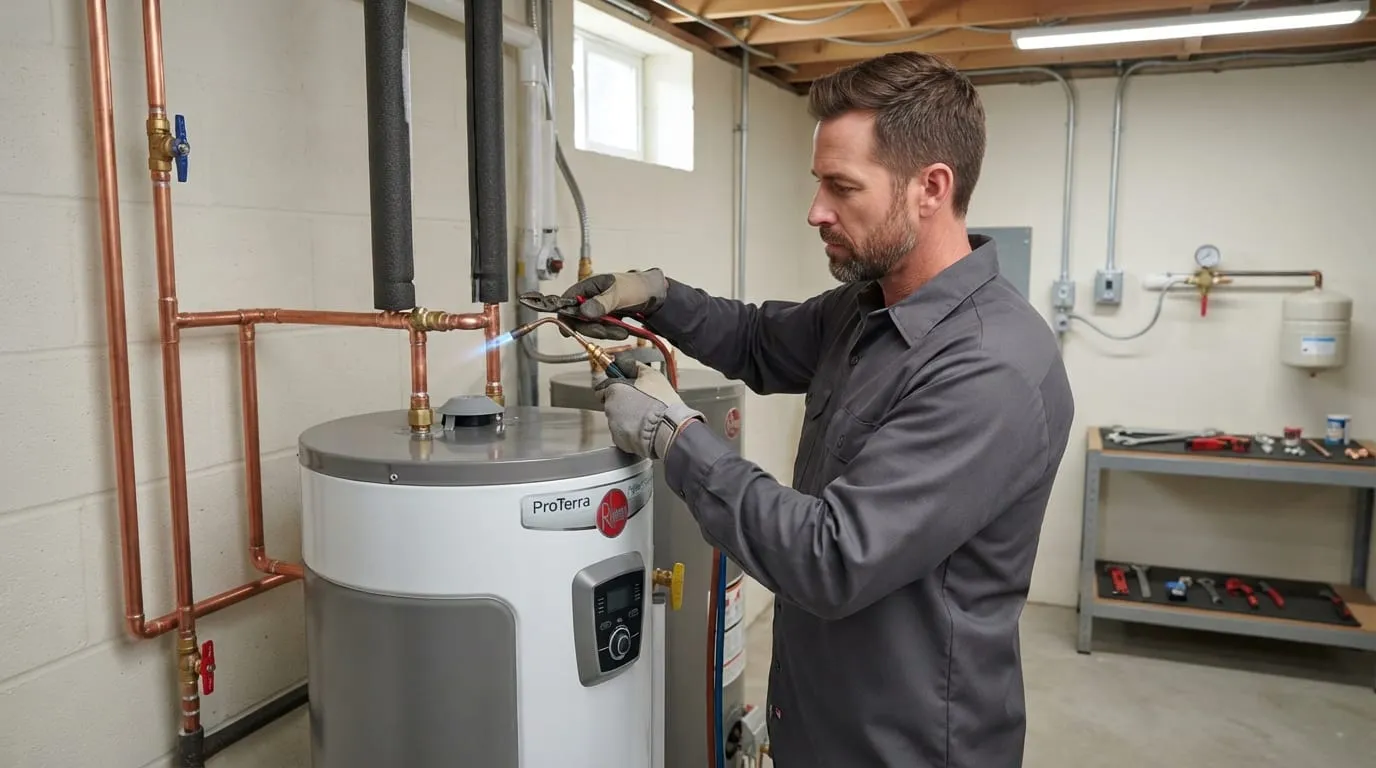
Mesa water is hard even by Valley standards, and it shows first in the water heater. Sediment fills tanks within a couple of years, tankless units scale, and the softeners that are supposed to protect them wear out faster than their ratings. Mesa water heater repair plumbers in our network flush, descale and repair tank and tankless units, test the softener that feeds them, and tell you plainly when a tank is done.
Free call-routing service. An independent licensed plumber does the work and quotes you directly.
Local problems
Water Heater Repair problems we see in Mesa
Sediment from very hard blended water
Mesa blends SRP, CAP and groundwater into a supply that often tests harder than Phoenix. Sediment settles on the tank bottom fast, and rumbling, slow recovery and lost capacity follow within two years. Flushing restores it if the sediment has not hardened.
Softeners that stopped softening
Most Mesa homes have a softener, and most owners assume it is working. Exhausted resin, a stuck valve or a bridged salt tank means the heater has been taking full-hardness water for months. The plumber tests hardness at the heater's inlet on every visit.
Anode rods consumed early
The sacrificial rod that protects the tank from corrosion is eaten in two or three years in Mesa water rather than five. Replacing it on time is the cheapest way to get a Mesa tank past ten years.
Tankless units scaled by the East Valley's water
Tankless heaters in Las Sendas, Eastmark and the newer subdivisions scale inside the exchanger within a year without a softener. Error codes, temperature swings and reduced flow are the symptoms, and annual descaling is the fix.
Heaters left on in vacant, sealed garages
Snowbird homes in Leisure World, Sunland Village and Dreamland Villa often leave a water heater running all summer in a garage above 120 degrees. Controls and seals age fast, and a tank that failed while nobody was home is a familiar fall call.
Mesa water, inside the tank
Mesa blends Salt River Project water, Colorado River water from the CAP canal and groundwater into a supply that often tests harder than Phoenix proper. Heat is what makes those dissolved minerals drop out of solution, so the water heater is where they collect first. Sediment settles on the tank bottom within a couple of years, insulates the burner or element from the water, and forces the unit to run hotter and longer. The tank rumbles, recovers slowly and runs out sooner. In a tankless unit the same minerals coat the heat exchanger until it shuts down with an error code. The sacrificial anode rod that protects the tank from corrosion is consumed in two or three years rather than five. Put the tank in a garage that reaches 120 degrees every summer afternoon and it is working against heat from both sides.
The softener is part of the water heater
In Mesa the two cannot be treated separately. A water heater downstream of a working softener is in a different climate from one downstream of a softener that quietly died a year ago, and the second case is common: the salt tank bridges, the resin gives out early in this water, or the timer valve stops regenerating, and the taps keep running so nobody notices. Mesa water heater repair plumbers in our network carry a hardness kit and test at the heater’s inlet before touching the tank. If the reading is high, the softener gets fixed first, because a freshly flushed tank fed full-hardness Mesa water is back where it started within a year.
Snowbird homes
Leisure World, Sunland Village, Dreamland Villa and Mesa’s many manufactured home parks empty out every summer, and a water heater left running in a sealed garage for four months ages faster than it would in a year of normal use. A tank that failed while nobody was home is a familiar fall call. Vacation mode or a shutoff and drain in May, and a flush and anode check in October, prevent most of it, and the plumbers in our network do those seasonal visits.
What the plumbers in our network repair, and when they say replace
Flushing, anode rod replacement and tankless descaling are the routine services. Elements and thermostats on electric units, thermocouples and gas control valves on gas units, and relief valves and expansion tanks on both are ordinary repairs. A leak from the tank body is always a replacement, and a tank past eight years in Mesa with a repair costing more than half of a new unit is usually a poor bet. Plumbers in our network give you both numbers and let you decide, and whichever you choose, a working softener is the single biggest factor in how long the heater lasts.
Why water heater repair matters in Mesa
- Mesa's water is among the hardest in the Valley, and the maintenance schedule from a water heater's manual is too slow here.
- Softeners are nearly universal in Mesa and their failure is the hidden cause behind many premature water heater deaths, so a local plumber checks the softener first.
- The city's seasonal residents leave water heaters unattended in extreme heat for months, which produces failures a year-round household would have caught.
Signs you need water heater repair
- Hot water takes far longer to arrive or runs out during one shower
- You hear the tank rumble or pop while heating, which is sediment boiling under water
- The temperature and pressure relief valve discharges regularly
- Rust streaks or moisture around fittings, the drain valve or the bottom seam
- The unit is more than ten years old and has never been flushed
What to expect
What happens when you call
Safety check and symptom review
The plumber shuts off gas or power as needed, checks for leaks and venting problems, and asks about what changed and when.
Test the components that fail most
Thermostats, heating elements, thermocouples and gas valves, igniters and flow sensors on tankless units, and the anode rod and drain valve on tanks.
Repair or recommend replacement honestly
A failed element, thermocouple or valve is a repair. A leaking tank wall is not repairable and the plumber says so, with a replacement estimate on the spot.
Flush, relight and verify
Sediment is flushed where it is the cause, the unit is refired, and the temperature is checked at the tap so you leave with hot water you can trust.
Water Heater Repair near Mesa
We also serve Tempe, Chandler, Gilbert, Apache Junction, Queen Creek, San Tan Valley, Scottsdale and the surrounding Maricopa County area.
Questions
Water Heater Repair questions from Mesa homeowners
How often should I flush my water heater in Mesa?
Every year, and it is worth doing even with a softener. Mesa water builds sediment fast enough that waiting longer lets it harden into a layer that flushing cannot remove. Have the anode rod checked at the same visit. Tankless units need descaling on the same annual schedule.
I have a softener. Why is my water heater still full of sediment?
Three possibilities, in order of likelihood in Mesa. The softener quietly quit: a salt bridge, a stuck valve or resin that Mesa's water wore out early, and nobody noticed because the water still comes out of the tap. The softener was never sized for the hardness at your address, which can be double the Valley average in some delivery zones. Or the heater was plumbed upstream of the softener loop, which happens in remodels. A hardness test at the heater's inlet sorts out which, and the plumber fixes the cause before flushing the tank so the sediment does not come straight back.
Should I repair or replace my water heater?
In Mesa the calendar decides more than it does elsewhere. A tank under eight years old with a failed element, thermostat, valve or anode is a repair, and a good one. Past eight years, ask what the tank looks like inside: if it has never been flushed, the sediment has likely hardened and the steel underneath it has been overheating for years, and money spent on that unit is money spent on a tank that is about to leak. A leak from the tank body itself ends the discussion. The plumber shows you the numbers and the condition, and the choice is yours.
What should I do with my water heater before leaving Mesa for the summer?
Set it to vacation mode, or shut it off and, if it is in a hot garage, drain it. A tank left heating in a sealed garage above 120 degrees for four months ages faster than it would in a year of normal use. Turn off the main water supply as well, so a leak cannot run unwatched. In the fall, the plumber can flush the tank and check the anode before you turn it back on.
Will a water softener really make my water heater last longer?
In Mesa it is the single biggest lever you have. Take the minerals out of the water and there is nothing left to settle on the tank bottom, nothing to plate the inside of a tankless exchanger, and far less for the anode rod to sacrifice itself against. Plumbers here routinely see softened tanks at twelve years and unsoftened ones dead at six. The catch is sizing: a softener rated for average Valley water can be overwhelmed in Mesa's harder delivery zones, so have the hardness measured at your tap and the unit sized to it.
Learn more about water heater repair nationwide, or see all Arizona plumbers.
Get it fixed
Water Heater Repair in Mesa, ready now
Call with your Mesa ZIP code and what you are seeing. A licensed local plumber is dispatched and you get clear guidance in the meantime.
Free call-routing service. An independent licensed plumber does the work and quotes you directly.
- Licensed and insured
- Answered 24/7
- Price before work