Orlando, Florida
Leak Detection in Orlando, FL
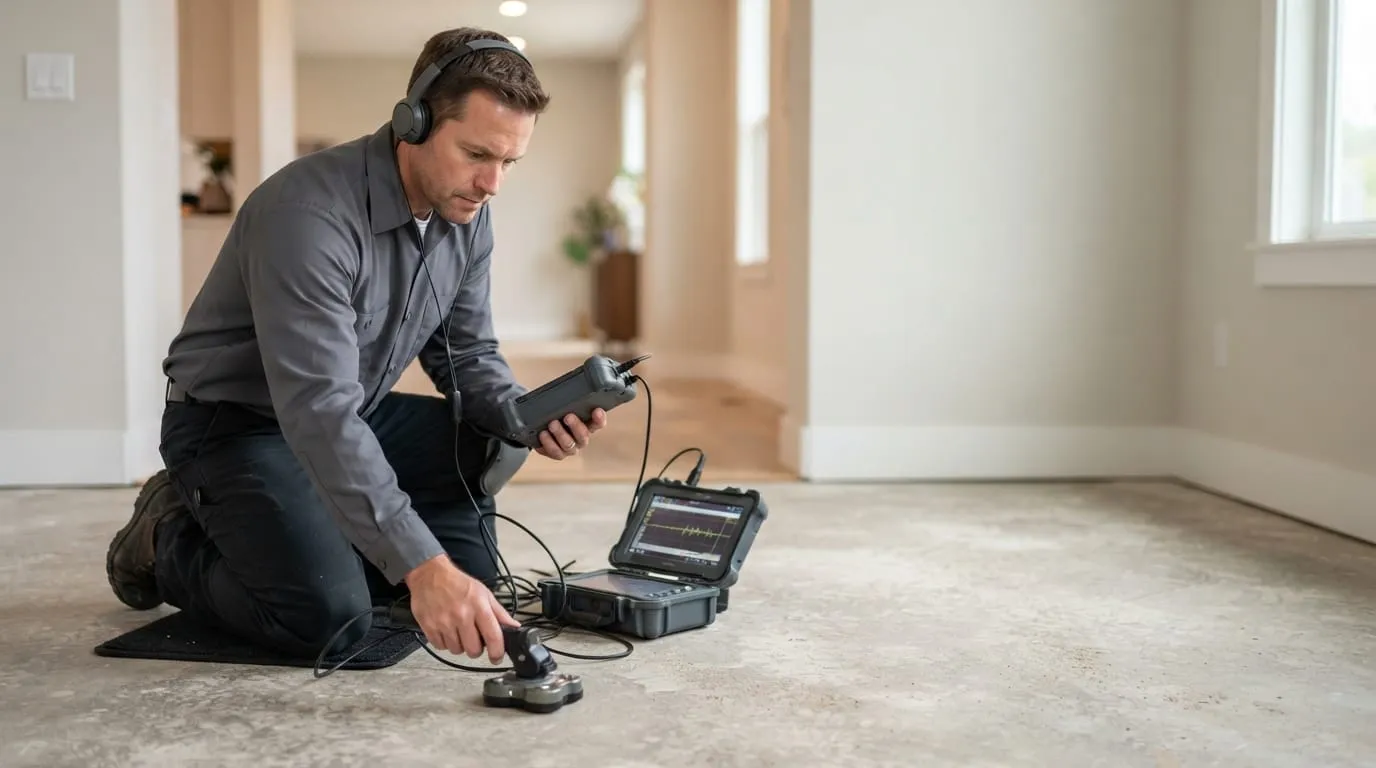
Orlando's leaks hide in wet sand and inside concrete block walls. The water table around the city's lakes means a leak under a slab rarely leaves a puddle, and the polybutylene in a generation of 1980s homes fails at fittings buried in walls and ceilings. Orlando leak detection plumbers in our network prove the leak with pressure testing, locate it with acoustic and thermal equipment, and mark the spot before anyone opens anything.
Free call-routing service. An independent licensed plumber does the work and quotes you directly.
Local problems
Leak Detection problems we see in Orlando
Polybutylene fittings failing out of sight
Homes built from the late 1970s to mid-1990s in MetroWest, Hunter's Creek, Southchase, Conway and Pine Hills carry gray polybutylene that fails at the fittings. A stain, soft drywall or a musty smell is the sign. The plumber locates the failed fitting and talks through a repipe, because others will follow.
Slab leaks that never show a puddle
Copper supply lines under Orlando's 1970s to 1990s slabs fail at joints and pinholes, and because the sand beneath is often wet, the water simply joins the groundwater. A spinning meter, a warm spot on the floor from a hot-side leak or a bill that jumped is the evidence.
Leaks inside concrete block walls
Orlando's block construction runs supply lines through the cells of the wall, where a leak saturates the block and shows up as a damp patch or efflorescence long before it drips. Thermal imaging locates it without opening the wall in more than one place.
Irrigation and yard line leaks
Nearly every Orlando lot has an irrigation system, and its PVC leaks as readily as anything in the house. The plumber isolates irrigation from the house supply first, then uses line locating and acoustic equipment to find the loss.
Drain leaks from corroding cast iron
Under the pre-1960s homes of College Park, Colonialtown and Lake Eola Heights, cast iron that has lost its bottom leaks wastewater into the soil. Sewer odor and a damp or sinking floor are the signs. A hydrostatic test proves the loss and a camera shows where.
Leaks in a city of lakes and block walls
Orlando’s leaks hide well. The water table around the city’s hundreds of lakes sits close to the surface, so a leaking supply line under a slab joins the groundwater rather than pooling. The concrete block walls of most Orlando homes carry supply lines through their cells, where a leak saturates the block and shows up as a damp patch or a white bloom of efflorescence long before it drips. And in the subdivisions built from the late 1970s to the mid-1990s, gray polybutylene supply lines fail at fittings buried in walls and above ceilings. The evidence is indirect: a meter that keeps turning, a bill that jumped, a warm tile, a stain. Orlando leak detection plumbers in our network prove the leak with pressure tests before anything else, then locate it with acoustic listening equipment, thermal imaging and line locators, and mark the spot before anyone opens anything.
Three systems, one meter
Every Orlando house has three plumbing systems that can lose water, and the meter cannot tell them apart. So the plumber does. The irrigation comes off first at its valve, because a sprinkler zone with a cracked fitting in the St. Augustine grass is the most common reason an Orlando meter creeps. Then the supply lines are put under test pressure, hot and cold on their own, which narrows a slab or wall leak to one line and one side of the house. If the supply holds, attention turns to the drains: in the pre-1960s homes of College Park, Colonialtown and Lake Eola Heights, cast iron that has rusted through underneath lets wastewater seep into the sand, and a hydrostatic test on the drain system followed by a camera shows whether that is what the sewer smell has been about.
Repairs that fit Orlando construction
A supply leak under a slab can be spot repaired through a small opening at the marked location, or the failed line can be abandoned and rerouted overhead, which avoids the slab and the wet sand. A failed polybutylene fitting is repaired to stop the damage, and the plumber prices the PEX repipe that will prevent the next one. Wall leaks in block construction are opened at the one spot thermal imaging identified. Over limestone that is still dissolving, prompt repair also protects the ground under the house. Every option comes with its cost before anything starts, and every visit ends with a written report for your insurer.
Why leak detection matters in Orlando
- Orlando's boom-era housing puts polybutylene in thousands of homes, and locating a failed fitting is the first step in a conversation about repiping the rest.
- The water table around the lakes hides leaks that would be obvious in a drier city, so instrument-based detection is the only reliable way to confirm and locate them.
- Over limestone that is still dissolving, a long-running leak can accelerate settlement, and prompt detection protects the ground under the house.
Signs you need leak detection
- A water bill that jumps without a change in household use
- The water meter moves with every fixture and appliance turned off
- A warm spot on a floor, or the sound of running water when nothing is on
- Mildew smell, peeling paint or discolored drywall with no visible source
- Low water pressure that developed gradually
- Cracks in flooring or a foundation, or a wet patch in the yard during dry weather
What to expect
What happens when you call
Confirm a leak exists
The plumber isolates the house from the meter and watches for movement, then pressure-tests supply lines to prove there is a loss and roughly how large it is.
Narrow down the section
Hot and cold lines are tested separately, fixtures are isolated, and the plumber checks whether the loss is in the supply system, the drain system or an irrigation line.
Pinpoint the location
Acoustic listening equipment, thermal imaging and tracer gas or line-locating tools find the leak to within a small area so the repair opening is as small as possible.
Repair with the least disruption
Options are explained before any concrete or drywall is opened. For slab leaks that can mean a spot repair, rerouting the line overhead, or repiping if the pipe is failing in multiple places.
Leak Detection near Orlando
We also serve Winter Park, Altamonte Springs, Apopka, Ocoee, Winter Garden, Kissimmee, Oviedo, Sanford, Lake Mary and the surrounding Orange County area.
Questions
Leak Detection questions from Orlando homeowners
How do I check for a hidden leak in my Orlando home?
Two checks you can do yourself. First, with the irrigation timer off at its valve and every tap closed, look at the small triangle or star on the water meter; if it turns, the house is losing water somewhere. Second, walk the house looking for what does not belong: a white bloom on a block wall, a baseboard that has darkened, a ceiling stain in a 1980s house, a musty smell in a closet. In Orlando the lakes keep the ground wet enough that a slab leak almost never shows as a puddle, so those indirect signs are the whole case until the plumber's instruments confirm it.
My house has polybutylene. Should I fix the leak or repipe?
Fix the leak to stop the damage, then plan the repipe. Polybutylene fails at its fittings without warning, and once one has gone in a house from the late 1970s to mid-1990s, the others are on the same clock. Insurers increasingly ask about it. A PEX repipe is typically a one- to three-day job, and the plumber can price it at the same visit.
Will you have to break my floor or wall?
Not until the leak is located, and often not at all. Once the spot is pinpointed, a supply leak can be repaired through a small opening or, in many Orlando slab homes, the failed line is abandoned and rerouted overhead. Wall leaks in block construction are opened at the one spot thermal imaging identified.
Can a plumbing leak cause a sinkhole in Orlando?
A leak alone does not create a sinkhole, but Central Florida's limestone is riddled with voids and a long-running water or sewer leak washes sand down into them, which can accelerate settlement. That is why a warm floor or a jump in the water bill is worth checking promptly rather than watching for months, and why insurers ask about plumbing leaks in sinkhole claims.
Does homeowners insurance cover leak detection and repair in Florida?
Florida policies have tightened on water losses more than almost any other state's, so read yours. The typical shape is that sudden damage is covered, the cost of opening walls or floors to reach the leak is covered, the pipe repair itself is not, and anything the carrier can call gradual or a known material defect, which is how polybutylene is often treated, is excluded. The plumber's dated report with photos and meter readings is what establishes when the leak began, and it is worth more to your claim than anything else you can hand the adjuster.
Learn more about leak detection nationwide, or see all Florida plumbers.
Get it fixed
Leak Detection in Orlando, ready now
Call with your Orlando ZIP code and what you are seeing. A licensed local plumber is dispatched and you get clear guidance in the meantime.
Free call-routing service. An independent licensed plumber does the work and quotes you directly.
- Licensed and insured
- Answered 24/7
- Price before work