Phoenix, Arizona
Water Heater Repair in Phoenix, AZ
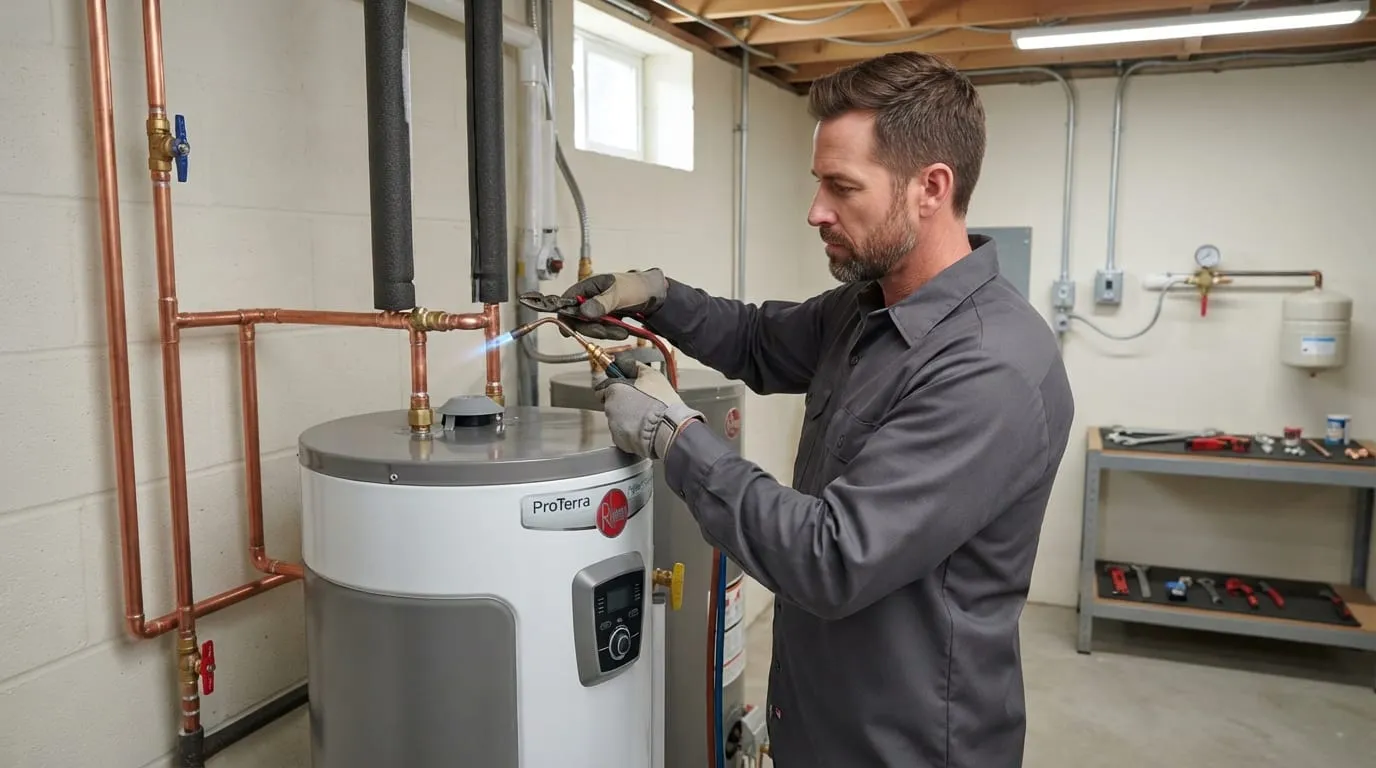
Phoenix is the hardest place in the country to be a water heater. Very hard water fills the tank with sediment, and the garage it sits in reaches 120 degrees every summer afternoon. Units that last twelve years elsewhere often fail at six to ten here. Phoenix water heater repair plumbers in our network flush, descale and repair tank and tankless units, replace anode rods and elements, and tell you plainly when a tank is done.
Free call-routing service. An independent licensed plumber does the work and quotes you directly.
Local problems
Water Heater Repair problems we see in Phoenix
Sediment rumbling and lost capacity
Twelve to twenty grains per gallon drops calcium and magnesium onto the tank bottom fast. Within two or three years the tank rumbles when heating, recovers slowly and runs out sooner. Flushing restores it if the sediment has not hardened into a solid layer.
Anode rods consumed early
The sacrificial anode rod that protects the tank from corrosion is eaten faster in Phoenix's mineral-heavy water. A rod that would last five years elsewhere is often gone in two or three. Replacing it is the single cheapest way to extend a Valley water heater's life.
Tankless units scaled and throwing error codes
Tankless heaters are popular in newer Phoenix homes and scale inside the heat exchanger quickly here. Error codes, fluctuating temperature and reduced flow are the symptoms. Annual descaling keeps them running; a unit that has never been descaled may need a flush and a new flow sensor.
Relief valves discharging in summer
Phoenix's incoming water is warm in summer and expansion in a closed system pushes the relief valve open. The plumber checks pressure and the expansion tank, which many older installations lack, before assuming the valve or the tank is the problem.
Heat-stressed components in garage installations
Thermostats, gas control valves and the insulation and seals of a tank age faster at the temperatures a Phoenix garage reaches. Intermittent no-hot-water calls in July often trace to a control that has given up in the heat.
The two forces working on every Phoenix water heater
Phoenix water arrives at the tank carrying twelve to twenty grains per gallon of dissolved calcium and magnesium, and heat is exactly what makes those minerals drop out of solution. They settle on the tank bottom, insulate the burner or element from the water, and force the unit to run hotter and longer to do the same job. The tank rumbles, recovers slowly and runs out of hot water sooner. Meanwhile the garage or utility closet where most Valley heaters sit reaches 120 degrees or more every summer afternoon, cooking thermostats, gas controls and seals from the outside. A unit that would last twelve years in a cooler, softer-water city often fails at six to ten here.
What the Phoenix plumbers in our network repair
Flushing removes sediment that has not yet hardened, and it is the most common water heater service in the Valley. Anode rod replacement is the most valuable: the sacrificial rod that keeps the tank from corroding is consumed in two or three years here rather than five, and replacing it on time is what gets a Phoenix tank past ten years. On the repair side, elements and thermostats on electric units, thermocouples and gas control valves on gas units, and relief valves and expansion tanks on both are routine. Tankless units, popular in Desert Ridge, Anthem and the newer subdivisions, need annual descaling and occasionally a flow sensor or an inlet filter.
When the answer is replacement
A leak from the tank body cannot be repaired. A tank past eight years in Phoenix with a repair costing more than half of a new unit is usually a poor bet, because the tank itself is close to the end. Plumbers in our network give you both numbers and let you decide. Whatever you choose, a softener is the single biggest factor in how long the next heater lasts, and they can size and install one at the same time.
Why water heater repair matters in Phoenix
- Phoenix combines the hardest water and the hottest storage locations of any major city, and the maintenance schedule that works elsewhere is too slow here.
- Anode rod replacement, rarely done in most cities, is the highest-value repair a Valley water heater can get.
- Tankless units are common in Phoenix's newer subdivisions and depend on annual descaling that many owners were never told about.
Signs you need water heater repair
- Hot water takes far longer to arrive or runs out during one shower
- You hear the tank rumble or pop while heating, which is sediment boiling under water
- The temperature and pressure relief valve discharges regularly
- Rust streaks or moisture around fittings, the drain valve or the bottom seam
- The unit is more than ten years old and has never been flushed
What to expect
What happens when you call
Safety check and symptom review
The plumber shuts off gas or power as needed, checks for leaks and venting problems, and asks about what changed and when.
Test the components that fail most
Thermostats, heating elements, thermocouples and gas valves, igniters and flow sensors on tankless units, and the anode rod and drain valve on tanks.
Repair or recommend replacement honestly
A failed element, thermocouple or valve is a repair. A leaking tank wall is not repairable and the plumber says so, with a replacement estimate on the spot.
Flush, relight and verify
Sediment is flushed where it is the cause, the unit is refired, and the temperature is checked at the tap so you leave with hot water you can trust.
Other plumbing services in Phoenix
- Leak Detection in PhoenixLocating hidden water leaks under slabs, inside walls, in yards and at the meter using acoustic, thermal and pressure-testing equipment, then repairing them.
- Emergency Plumber in PhoenixBurst pipes, sewage backups, no water and major leaks handled around the clock by licensed local plumbers who can be dispatched today.
- Sewer Line Repair in PhoenixCamera-verified repair and replacement of cracked, collapsed, root-damaged or bellied sewer laterals, including trenchless lining and pipe bursting.
- Drain Cleaning in PhoenixProfessional clearing of slow or blocked kitchen, bathroom, laundry and floor drains using cabling, hydro jetting and camera inspection.
Water Heater Repair near Phoenix
We also serve Scottsdale, Tempe, Glendale, Mesa, Chandler, Gilbert, Peoria, Avondale, Goodyear, Surprise and the surrounding Maricopa County area.
Questions
Water Heater Repair questions from Phoenix homeowners
Why did my Phoenix water heater fail after only seven years?
Hard water and heat. Sediment on the tank bottom insulates the burner or element from the water and forces the unit to run hotter and longer, and a garage above 120 degrees stresses the tank and its controls from outside. Six to ten years is normal here without maintenance. Annual flushing, anode replacement and a softener can push that well past ten.
How often should I flush my water heater in Phoenix?
Every year. At Phoenix hardness, a tank collects enough sediment in twelve months to matter, and waiting longer lets it harden into a layer that flushing cannot remove. Have the anode rod checked at the same visit. Tankless units need descaling on the same annual schedule.
Should I repair or replace my water heater?
Compare the repair cost with the unit's age and condition. An element, thermostat, thermocouple or valve on a heater under eight years old is worth repairing. A repair costing more than half the price of a new unit on a heater past its eighth year in Phoenix usually is not, because the tank itself is near the end. A leak from the tank body is always a replacement. The plumber gives you both numbers.
My tankless heater shows an error code. Is it broken?
Probably scaled. Hard water builds mineral inside the heat exchanger and on the flow sensor, and the unit reads it as a fault. Descaling with a pump and a mild acid solution clears it in most cases, and the plumber checks the sensor and the inlet filter at the same time. If the unit has never been descaled and is several years old, the exchanger may be too far gone, and the plumber will tell you.
Will a water softener help my water heater last longer?
Yes, significantly. Softened water deposits far less sediment in the tank and scale in a tankless exchanger, and it slows anode rod consumption. In Phoenix a softener is the single biggest factor in whether a water heater reaches its rated life. The plumber can size one for your household and confirm the loop is set up correctly.
Learn more about water heater repair nationwide, or see all Arizona plumbers.
Get it fixed
Water Heater Repair in Phoenix, ready now
Call with your Phoenix ZIP code and what you are seeing. A licensed local plumber is dispatched and you get clear guidance in the meantime.
Free call-routing service. An independent licensed plumber does the work and quotes you directly.
- Licensed and insured
- Answered 24/7
- Price before work