Phoenix, Arizona
Sewer Line Repair in Phoenix, AZ
Phoenix sewer laterals fail differently from those in wetter cities. Hard water scales cast iron and clay from the inside, caliche makes excavation slow and expensive, and in the flood-irrigated older neighborhoods roots find joints the desert would otherwise leave alone. Phoenix sewer line repair plumbers in our network put a camera in the line first, show you what is there, and lay out the trenchless and open-trench options with their costs.
Free call-routing service. An independent licensed plumber does the work and quotes you directly.
Local problems
Sewer Line Repair problems we see in Phoenix
Scale and corrosion in cast iron
Under the 1950s to 1970s homes of Maryvale, Sunnyslope, Alhambra and the historic districts, cast iron drains and laterals carry decades of mineral scale from very hard water on top of internal corrosion. The pipe narrows and roughens until it catches everything, and eventually the bottom channels out.
Roots under flood-irrigated lots
Arcadia, North Central and other neighborhoods on flood irrigation keep the soil wet year-round, and the mature ash, mulberry and citrus above send roots into every joint of the clay and cast iron laterals beneath. Backups that return after cleaning are the sign.
Offset joints in East Valley clay
In south Phoenix and toward the East Valley, expansive clay swells in the monsoon and shrinks in the summer, shifting laterals at the joints. Waste catches on the offset, roots enter the gap, and a camera shows the step clearly.
Storm water infiltration during the monsoon
Cracked laterals admit runoff during monsoon storms, adding to a sewer system that is already surcharging. Repairing or lining the line removes your lateral's contribution and reduces backups into the house.
Crushed lines under driveways and RV pads
Phoenix lots often carry heavy vehicles, boats and RVs over the lateral route. Shallow lines in rocky soil crack under the load, and the damage is usually confined to one section that can be spot repaired.
How Phoenix laterals fail
The sewer lateral carries everything from your house to the city main, and in Phoenix it fails in a few characteristic ways. Under the 1950s to 1970s homes of Maryvale, Sunnyslope, Alhambra and the historic districts, cast iron has spent decades scaling from the inside in very hard water while corroding beneath the scale. The pipe narrows, roughens and eventually loses its bottom. In Arcadia, North Central and the other older neighborhoods still on flood irrigation, the soil never dries and the mature trees above send roots into every joint of the clay and cast iron beneath. In south Phoenix and toward the East Valley, expansive clay shifts laterals at the joints with each monsoon and each summer. And across the city, shallow lines under driveways and RV pads crack under the weight parked on them.
Each of these produces the same complaint, a backup that returns after cleaning, and each needs a different repair. That is why the Phoenix sewer line repair plumbers in our network run a camera before recommending anything, and why you should ask to see the recording.
Trenchless makes sense in caliche
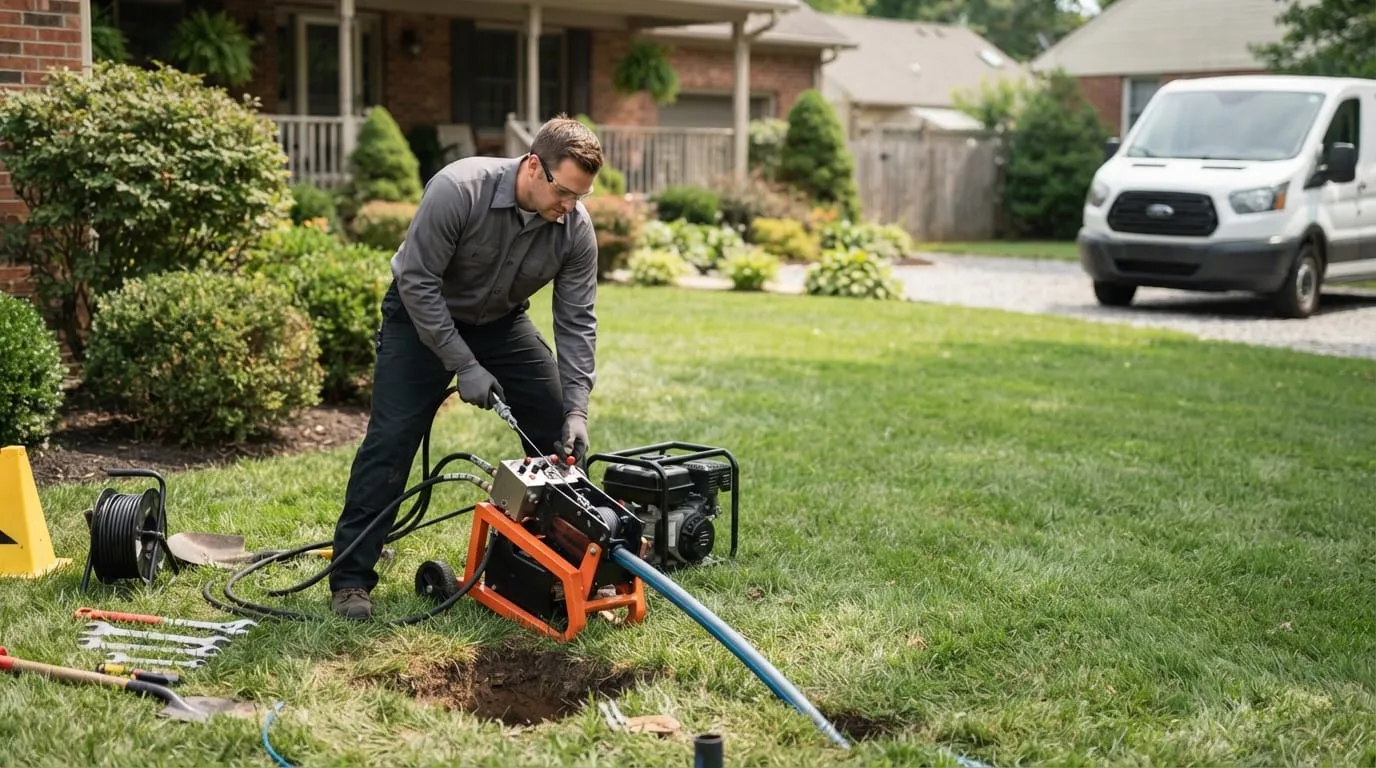
Digging in Phoenix means cutting through caliche and rocky alluvium, which is slow, expensive and hard on the landscaping. That tilts the economics toward trenchless methods. Cured-in-place lining creates a new pipe inside the old one from the cleanout, seals root entry points and smooths a scaled wall, with no trench. Pipe bursting replaces the whole run along the same route with two small access pits. Both require the old pipe to hold enough shape and slope, which the camera determines. A crushed section under a driveway or a belly in clay still needs excavation at that spot, and the plumber will say so.
Permits, locates and the final camera
Sewer work in Phoenix requires a permit and inspection, and utility locating before any digging. Plumbers in our network hold Arizona Registrar of Contractors licenses and handle all of it. When the work is finished, a final camera run confirms the repair and the flow, and you keep the recording.
Why sewer line repair matters in Phoenix
- Caliche and rocky desert soil make open-trench excavation in Phoenix slow and costly, so trenchless lining and pipe bursting earn their keep here more than in soft-soil cities.
- Hard-water scale inside older cast iron makes Phoenix laterals fail from narrowing as often as from breaks, which changes the repair choice.
- Flood irrigation in the older neighborhoods produces root intrusion that the desert climate would not otherwise support, and a local plumber knows which streets to expect it on.
Signs you need sewer line repair
- Backups that return within weeks of a professional cleaning
- Multiple drains in the house slow or gurgling at the same time
- Sewage odor in the yard, basement or near cleanouts
- Unusually green or soggy patches of lawn over the lateral route
- Sinkholes, depressions or cracks along the path of the sewer line
- Pest or rodent activity that suddenly increases around the house
What to expect
What happens when you call
Camera inspection and locating
A camera is run through the line to record the defect, its depth and its distance from the cleanout, so the repair is planned for the exact spot rather than a guess.
Options laid out with costs
Spot repair through a small excavation, cured-in-place lining, pipe bursting to install new pipe along the old route, or full replacement, each explained with what it fixes and what it does not.
Permits and utility locates
Sewer work requires a permit in most jurisdictions and utility locating before digging. The plumber handles both and coordinates any required inspection.
Repair, test and final camera
The repaired line is tested, inspected where required, and a final camera run confirms the defect is gone and flow is unrestricted.
Other plumbing services in Phoenix
- Leak Detection in PhoenixLocating hidden water leaks under slabs, inside walls, in yards and at the meter using acoustic, thermal and pressure-testing equipment, then repairing them.
- Drain Cleaning in PhoenixProfessional clearing of slow or blocked kitchen, bathroom, laundry and floor drains using cabling, hydro jetting and camera inspection.
- Emergency Plumber in PhoenixBurst pipes, sewage backups, no water and major leaks handled around the clock by licensed local plumbers who can be dispatched today.
- Water Heater Repair in PhoenixDiagnosis and repair of gas, electric and tankless water heaters, including no-hot-water calls, leaks, pilot problems and sediment flushing.
Sewer Line Repair near Phoenix
We also serve Scottsdale, Tempe, Glendale, Mesa, Chandler, Gilbert, Peoria, Avondale, Goodyear, Surprise and the surrounding Maricopa County area.
Questions
Sewer Line Repair questions from Phoenix homeowners
Who is responsible for the sewer lateral in Phoenix?
The homeowner owns and maintains the lateral from the house to the connection at the city main, including the section under the sidewalk or street in most cases. The City of Phoenix maintains the main. The camera run shows where the defect is, and if it is at or beyond the connection, the plumber will tell you it is the city's to fix.
Can my Phoenix sewer line be fixed without digging through the caliche?
Often, yes. Cured-in-place lining creates a new pipe inside the old one from the cleanout with no trench, and pipe bursting replaces the run along the same route using two small access pits. Both need the old pipe to hold enough shape and slope, which the camera determines. Given how hard Phoenix soil is to dig, trenchless methods are usually the more economical choice when the pipe allows them.
Why does my sewer back up every year even after cleaning?
Because cleaning removes what is in the pipe but not the openings it came through. In a flood-irrigated neighborhood, roots regrow through the same joints. In scaled cast iron, the rough wall catches debris again within months. A camera inspection shows which it is, and lining the pipe, which seals joints and smooths the wall, is what ends the cycle.
Does sewer repair in Phoenix require a permit?
Yes. Sewer lateral repair and replacement in Phoenix require a permit and inspection, and the contractor must hold an Arizona Registrar of Contractors license. Utility locating is required before any excavation. Plumbers in our network handle all of it as part of the job.
How long does a sewer line repair take?
A spot repair or a lining job is usually finished in a day. Pipe bursting or full replacement takes one to three days depending on depth, how hard the soil is, and the inspection schedule. The plumber tells you in advance whether you can use your drains during the work.
Learn more about sewer line repair nationwide, or see all Arizona plumbers.
Get it fixed
Sewer Line Repair in Phoenix, ready now
Call with your Phoenix ZIP code and what you are seeing. A licensed local plumber is dispatched and you get clear guidance in the meantime.
Free call-routing service. An independent licensed plumber does the work and quotes you directly.
- Licensed and insured
- Answered 24/7
- Price before work