Austin, Texas
Water Heater Repair in Austin, TX
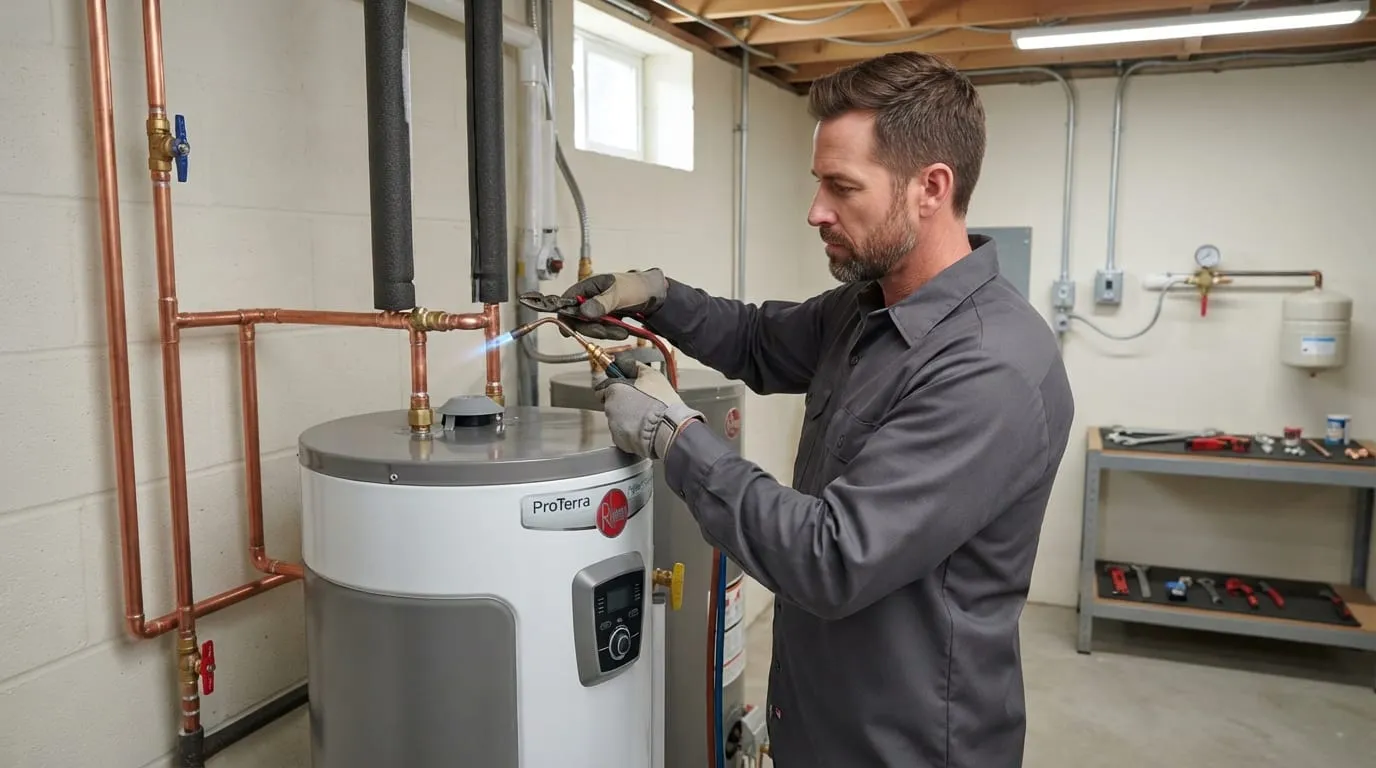
Austin's water comes off the Highland Lakes hard and treated with chloramine, and both work on a water heater. Sediment fills tanks and scales the tankless units that are popular in the city's newer homes, and chloramine ages the rubber seals and gaskets faster than chlorine would. Austin water heater repair plumbers in our network flush, descale and repair gas, electric and tankless units, and tell you plainly when a tank is past the point where repair makes sense.
Free call-routing service. An independent licensed plumber does the work and quotes you directly.
Local problems
Water Heater Repair problems we see in Austin
Sediment from hard Highland Lakes water
At roughly ten to eleven grains per gallon, Austin water drops minerals onto the tank bottom quickly. Rumbling, slow recovery and less hot water follow within a few years. Flushing restores capacity if the sediment has not hardened, and an annual schedule keeps it from getting there.
Tankless units scaled and throwing error codes
Tankless heaters are common in Circle C, Steiner Ranch, Mueller and the other subdivisions built since 2000, and they scale inside the exchanger quickly in Austin water. Error codes, temperature swings and reduced flow are the symptoms, and annual descaling is the fix.
Seals and gaskets aged by chloramine
Austin Water disinfects with chloramine, which degrades rubber components faster than chlorine. Weeping at the element gaskets, the drain valve and flex connectors on a heater that is not otherwise old is a familiar Austin call and is repairable.
Freeze-damaged outdoor tankless units
Tankless heaters mounted on exterior walls crack their exchangers when a hard freeze arrives and the unit's freeze protection has no power, as happened across Austin in 2021 and 2023. Leaks from the case after a cold snap are the sign, and a split exchanger is a replacement.
Missing expansion tanks in fast-built homes
Many Austin homes built quickly in the last two decades have water heaters installed without expansion tanks. Relief valves that discharge and premature tank stress are the result, and adding the expansion tank is a small repair that prevents a large one.
What Austin water does to a heater
Austin’s water comes from the Highland Lakes on the Colorado River after it has drained the limestone Hill Country, and it arrives at the tank carrying roughly ten to eleven grains per gallon of dissolved calcium and magnesium. Heat is what makes those minerals drop out of solution. They settle on the bottom of a tank heater, insulate the burner or element from the water, and force the unit to run hotter and longer. The tank rumbles, recovers slowly, runs out sooner and dies early if nobody flushes it. In a tankless unit the same minerals coat the inside of the heat exchanger until the unit throws an error code.
Austin adds a second factor most cities do not. Austin Water disinfects with chloramine, which is normal and safe but ages rubber components faster than chlorine does. Element gaskets, O-rings, flex connector seals and drain valves weep on heaters that are not otherwise old, and the Austin water heater repair plumbers in our network replace them with chloramine-resistant parts as a routine repair.
What the Austin plumbers in our network repair
Flushing removes sediment that has not hardened and is the most common water heater service in the city. Descaling is its tankless equivalent, and tankless units are common enough in Circle C, Steiner Ranch, Avery Ranch and Mueller that it is a weekly job. Elements and thermostats on electric units, thermocouples and gas control valves on gas units, and relief valves and expansion tanks on both are routine. Many Austin homes built quickly in the last two decades never got an expansion tank, and adding one stops a discharging relief valve and takes stress off the tank.
Freezes and replacements
Austin’s tankless units are often mounted on exterior walls, and the freezes of 2021 and 2023 split exchangers across the city where the unit’s freeze protection had no power. A split exchanger is a replacement, not a repair. So is a leak from a tank body. Beyond those, the decision is arithmetic: the age of the heater against the cost of the repair. Plumbers in our network give you both numbers and let you decide.
Why water heater repair matters in Austin
- Austin's hard water makes annual flushing and tankless descaling the difference between a heater that reaches its rated life and one that fails years early.
- Chloramine treatment ages rubber components in Austin water heaters on a schedule that plumbers from chlorine-treated cities would not expect.
- Outdoor tankless units are common here and vulnerable to the city's freezes, and a local plumber knows to check the exchanger after a cold snap.
Signs you need water heater repair
- Hot water takes far longer to arrive or runs out during one shower
- You hear the tank rumble or pop while heating, which is sediment boiling under water
- The temperature and pressure relief valve discharges regularly
- Rust streaks or moisture around fittings, the drain valve or the bottom seam
- The unit is more than ten years old and has never been flushed
What to expect
What happens when you call
Safety check and symptom review
The plumber shuts off gas or power as needed, checks for leaks and venting problems, and asks about what changed and when.
Test the components that fail most
Thermostats, heating elements, thermocouples and gas valves, igniters and flow sensors on tankless units, and the anode rod and drain valve on tanks.
Repair or recommend replacement honestly
A failed element, thermocouple or valve is a repair. A leaking tank wall is not repairable and the plumber says so, with a replacement estimate on the spot.
Flush, relight and verify
Sediment is flushed where it is the cause, the unit is refired, and the temperature is checked at the tap so you leave with hot water you can trust.
Water Heater Repair near Austin
We also serve Round Rock, Pflugerville, Cedar Park, Leander, Georgetown, Buda, Kyle, San Marcos and the surrounding Travis County area.
Questions
Water Heater Repair questions from Austin homeowners
How often should I flush my water heater in Austin?
Once a year. Austin's water is hard enough that a tank collects meaningful sediment in twelve months, and waiting longer lets it harden into a layer that flushing cannot remove. Tankless units need descaling on the same annual schedule. A softener stretches the interval but does not eliminate the need for the check.
My tankless heater shows an error code. Is it broken?
Probably scaled. Austin's hard water builds mineral inside the heat exchanger and on the flow sensor, and the unit reads it as a fault. Descaling with a pump and a mild acid solution clears it in most cases. If the unit is on an exterior wall and the code appeared after a freeze, the exchanger may have split, which is a replacement. The plumber tells you which within minutes of opening the case.
Why is my fairly new water heater weeping at the fittings?
Chloramine. Austin Water uses it for disinfection, and it degrades the rubber gaskets, O-rings and flex connector seals on a water heater faster than chlorine does. The fittings, gaskets and drain valve are inexpensive to replace with chloramine-resistant parts, and the tank itself is usually fine.
Can a tankless water heater be repaired after a freeze?
Sometimes. If the freeze damaged a sensor, a valve or a fitting, yes. If the heat exchanger split, which is the usual failure when an outdoor unit loses power for its freeze protection during a hard freeze, replacement is the only option. Keeping the unit powered and, where possible, adding a freeze-protection kit prevents it.
Should I repair or replace my water heater?
Compare the repair cost with the unit's age. Elements, thermostats, thermocouples, valves and gaskets on a heater under ten years old are worth repairing. A repair costing more than half the price of a new unit on a heater past its tenth year usually is not, and a leak from the tank body is always a replacement. The plumber gives you both numbers.
Learn more about water heater repair nationwide, or see all Texas plumbers.
Get it fixed
Water Heater Repair in Austin, ready now
Call with your Austin ZIP code and what you are seeing. A licensed local plumber is dispatched and you get clear guidance in the meantime.
Free call-routing service. An independent licensed plumber does the work and quotes you directly.
- Licensed and insured
- Answered 24/7
- Price before work