Miami, Florida
Water Heater Repair in Miami, FL
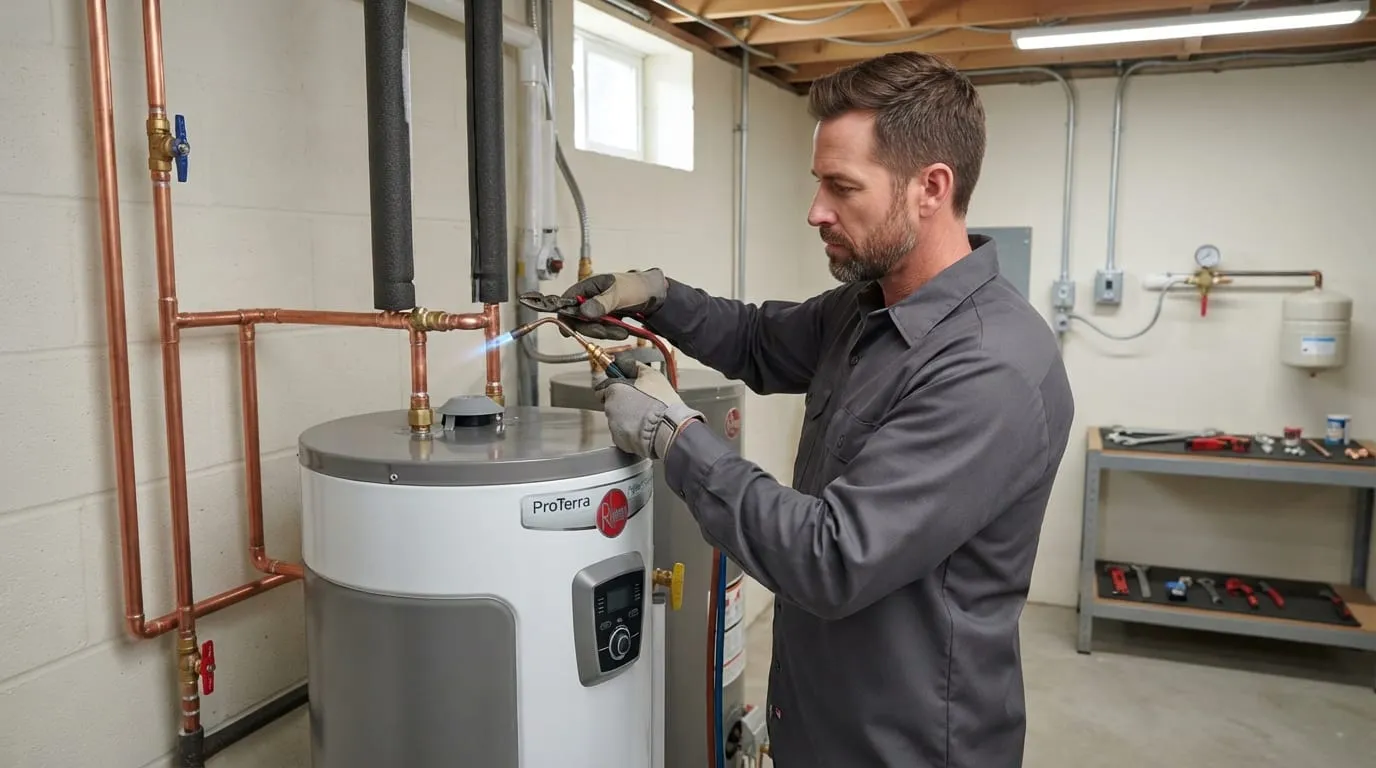
Miami water heaters live a hard life. The Biscayne Aquifer's water leaves sediment in every tank, salt air corrodes the fittings on units near the coast, and hurricane season occasionally puts a garage heater under water. Miami water heater repair plumbers in our network flush and descale tank and tankless units, replace corroded connections and failed controls, and tell you plainly when a tank has reached the point where repair is throwing money away.
Free call-routing service. An independent licensed plumber does the work and quotes you directly.
Local problems
Water Heater Repair problems we see in Miami
Sediment from hard aquifer water
Miami's water arrives hard, and heat drops the minerals onto the tank bottom. Rumbling, slower recovery and less hot water follow within a few years. Flushing restores capacity if the sediment has not hardened, and an annual schedule keeps it from getting there.
Corroded fittings and nipples near the coast
In Coconut Grove, the Upper East Side, Edgewater and anywhere near the bay, salt air attacks the steel nipples, flex connectors and relief valves on a water heater years ahead of inland schedules. A slow leak at the top of the tank is usually a corroded fitting, not the tank, and is repairable.
Water heaters submerged in storm water
Garage and ground-floor units in flood-prone neighborhoods sometimes end up under water in a storm. Once the burner, controls or electrical components have been submerged, the unit is not safe to reuse. The plumber will say so and arrange replacement.
Tankless units scaled by hard water
Tankless heaters are common in Miami's condos and newer homes and scale inside the exchanger quickly here. Error codes, fluctuating temperature and reduced flow are the symptoms, and annual descaling is the fix.
Relief valves and expansion in warm water
Miami's incoming water is warm most of the year, and expansion in a closed system pushes the relief valve open. The plumber checks pressure and the expansion tank before assuming the valve or the tank has failed.
What Miami does to a water heater
Miami’s water comes out of the Biscayne Aquifer hard, and heat is what makes dissolved minerals drop out of solution. They settle on the tank bottom, insulate the burner or element from the water, and force the unit to run hotter and longer. The tank rumbles, recovers slowly and runs out sooner, and it dies years early if nobody flushes it. Near the bay, in Coconut Grove, the Upper East Side, Edgewater and Brickell, salt air adds a second attack, corroding the steel nipples, flex connectors and relief valve at the top of the tank long before the tank itself fails. And every hurricane season, storm water reaches garage and ground-floor units in the county’s low-lying neighborhoods.
What the Miami plumbers in our network repair
Flushing removes sediment that has not hardened and is the most common water heater service in the city. Corroded fittings at the top of the tank, which look alarming and are usually the whole problem, are replaced with corrosion-resistant parts. Elements and thermostats on electric units, thermocouples and gas control valves on gas units, and relief valves and expansion tanks on both are routine. Tankless heaters, common in the city’s condos and newer homes, need annual descaling and occasionally a flow sensor or inlet filter.
When the answer is replacement
A leak from the tank body cannot be fixed. A unit that was under storm water is not safe to reuse. Beyond those, the decision is arithmetic: the age of the heater against the cost of the repair. Plumbers in our network give you both numbers and let you decide, and if you replace, they will tell you how a softener and corrosion-resistant fittings change the life of the next one.
Why water heater repair matters in Miami
- Miami's hard aquifer water fills tanks with sediment on a schedule that makes annual flushing the difference between an eight-year heater and a twelve-year one.
- Salt air near the bay corrodes the connections on a water heater long before the tank itself fails, and a local plumber knows to check the fittings before condemning the unit.
- Hurricane season produces flooded water heaters every year in low-lying Miami-Dade, and the repair-or-replace answer for a submerged unit is always replacement.
Signs you need water heater repair
- Hot water takes far longer to arrive or runs out during one shower
- You hear the tank rumble or pop while heating, which is sediment boiling under water
- The temperature and pressure relief valve discharges regularly
- Rust streaks or moisture around fittings, the drain valve or the bottom seam
- The unit is more than ten years old and has never been flushed
What to expect
What happens when you call
Safety check and symptom review
The plumber shuts off gas or power as needed, checks for leaks and venting problems, and asks about what changed and when.
Test the components that fail most
Thermostats, heating elements, thermocouples and gas valves, igniters and flow sensors on tankless units, and the anode rod and drain valve on tanks.
Repair or recommend replacement honestly
A failed element, thermocouple or valve is a repair. A leaking tank wall is not repairable and the plumber says so, with a replacement estimate on the spot.
Flush, relight and verify
Sediment is flushed where it is the cause, the unit is refired, and the temperature is checked at the tap so you leave with hot water you can trust.
Other plumbing services in Miami
- Leak Detection in MiamiLocating hidden water leaks under slabs, inside walls, in yards and at the meter using acoustic, thermal and pressure-testing equipment, then repairing them.
- Emergency Plumber in MiamiBurst pipes, sewage backups, no water and major leaks handled around the clock by licensed local plumbers who can be dispatched today.
- Sewer Line Repair in MiamiCamera-verified repair and replacement of cracked, collapsed, root-damaged or bellied sewer laterals, including trenchless lining and pipe bursting.
- Drain Cleaning in MiamiProfessional clearing of slow or blocked kitchen, bathroom, laundry and floor drains using cabling, hydro jetting and camera inspection.
Water Heater Repair near Miami
- Plumbers in Fort Lauderdale
- Plumbers in West Palm Beach
- Plumbers in Saint Petersburg
- Plumbers in Orlando
We also serve Hialeah, Coral Gables, Miami Beach, Miami Gardens, Homestead, Hollywood and the surrounding Miami-Dade County area.
Questions
Water Heater Repair questions from Miami homeowners
My water heater is rumbling. Is that serious?
Rumbling is sediment on the tank bottom boiling water underneath it. It is not an emergency, but it means the tank is running hot underneath, losing capacity and shortening its life. Have it flushed soon. In Miami's hard water, a tank that has never been flushed after several years may have a hardened layer that flushing cannot remove, and the plumber will tell you whether replacement is closer than you think.
There is a slow leak at the top of my water heater. Is the tank finished?
Usually not. Leaks at the top are almost always from the inlet and outlet nipples, the flex connectors or the relief valve, all of which corrode quickly in Miami's salt air and are inexpensive to replace. A leak from the tank body or the bottom seam is a different story and means replacement. The plumber will show you which it is.
My water heater was under water during a storm. Can it be saved?
No. If water reached the burner, gas valve, thermostat or electrical components, the unit is not safe to reuse, and the tank will contain flood contaminants. Replace it, and have the plumber check the gas or electrical connections and the supply lines for damage before the new unit goes in.
How often should I flush my water heater in Miami?
Once a year. Miami's aquifer water is hard enough that a tank collects meaningful sediment in twelve months, and waiting longer lets it harden. Tankless units need descaling on the same annual schedule. If you install a softener, the interval can stretch, but the annual check is still worth it.
Should I repair or replace my water heater?
Compare the repair cost with the unit's age. Fittings, elements, thermostats, thermocouples and valves on a heater under ten years old are worth repairing. A repair costing more than half the price of a new unit on a heater past its tenth year usually is not, and a leak from the tank body is always a replacement. The plumber gives you both numbers.
Learn more about water heater repair nationwide, or see all Florida plumbers.
Get it fixed
Water Heater Repair in Miami, ready now
Call with your Miami ZIP code and what you are seeing. A licensed local plumber is dispatched and you get clear guidance in the meantime.
Free call-routing service. An independent licensed plumber does the work and quotes you directly.
- Licensed and insured
- Answered 24/7
- Price before work