Miami, Florida
Sewer Line Repair in Miami, FL
Sewer line repair in Miami almost always means cast iron. The drain lines and laterals under the city's 1940s to early 1970s homes have corroded in humidity, groundwater and sewer gas for fifty years, and the county's high water table and king tides push against every crack. Miami sewer line repair plumbers in our network put a camera in the line first, show you the footage, and lay out lining versus replacement with honest costs for each.
Free call-routing service. An independent licensed plumber does the work and quotes you directly.
Local problems
Sewer Line Repair problems we see in Miami
Cast iron channeled through the bottom
The signature Miami failure. Corrosion eats the bottom of the pipe first, so wastewater runs along the soil beneath the slab instead of inside the pipe. The camera shows a flat, rough floor with soil visible. Lining is possible if the top of the pipe still holds its shape; otherwise the section is replaced.
Collapsed sections under the slab
When enough of the wall is gone, the pipe caves in and every drain in the house stops. Replacement means opening the slab or tunneling beneath it and installing PVC, and the camera tells the plumber exactly where and how much.
Groundwater infiltration and king-tide backflow
Cracks and separated joints let groundwater into the lateral whenever the tide or the rain raises it, adding to a county sewer system that is already surcharging. Lining seals the lateral against infiltration, and a backflow valve keeps the county's overflow out of the house.
Root intrusion under mature trees
Coconut Grove, Coral Way, the Roads and the older neighborhoods carry ficus, oak and mahogany whose roots find every joint in a clay or cast iron lateral. Ficus in particular is aggressive. Cutting roots buys a year; sealing the joints ends it.
Saltwater corrosion in coastal laterals
Near the bay and on the islands, saltwater intrusion into groundwater and sewer connections accelerates corrosion of buried metal pipe. Coastal cast iron fails sooner than inland, and the plumber factors it into the lining-versus-replacement recommendation.
Cast iron, and what Miami does to it
The drain lines and sewer laterals under Miami’s mid-century homes, in Little Havana, Shenandoah, Coral Way, Silver Bluff, the Roads, Flagami, Westchester, Coconut Grove, Morningside and the Upper East Side, are cast iron laid between the 1940s and the early 1970s. Cast iron corrodes from the inside, and Miami gives it every reason to: humid air, groundwater pressing on the outside of the pipe, hydrogen sulfide from decomposing waste inside, and near the coast, saltwater intrusion into the soil. The bottom of the pipe goes first, so waste channels along the soil beneath the slab. Then sections collapse and every drain in the house stops.
Above the lateral, ficus, oak and mahogany roots find every joint. Around it, the county’s high water table pushes in through every crack, and on king tides the county sewer pushes back. Miami sewer line repair plumbers in our network see all of this on the camera every week, and the camera is where every repair starts.
Lining or replacement
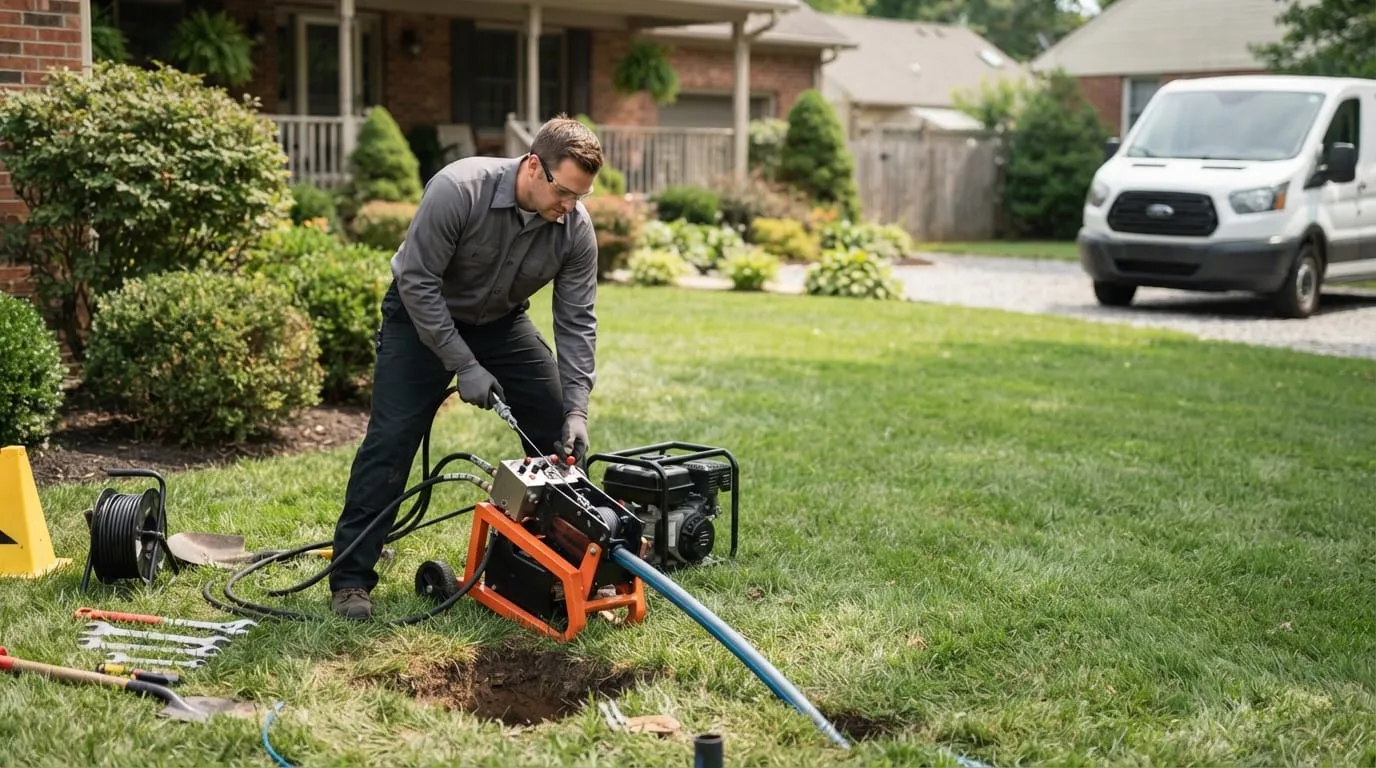
Cured-in-place lining pulls a resin-saturated liner through the existing pipe from a cleanout and hardens it into a new pipe inside the old one, with no trench and no broken slab. It seals root entry points and cracks and stops groundwater infiltration. It works when the cast iron still holds its shape. When the pipe has channeled through the bottom so far that there is nothing to line, or has collapsed, the section is replaced with PVC, which under a slab means opening the concrete or tunneling beneath it. The camera footage determines which is realistic, the cost difference is significant, and the plumbers in our network will show you the recording and explain what they see before you decide.
Backflow, permits and the final camera
In low-lying Miami-Dade, a backflow valve on the lateral is often recommended alongside the repair, because it keeps the county’s overflow out of the house on king tides regardless of your pipe’s condition. All of this work requires a Miami-Dade or City of Miami permit pulled by a Florida-licensed contractor, plus utility locating before any excavation. Plumbers in our network handle it. When the work is finished, a final camera run confirms the repair, and you keep the recording.
Why sewer line repair matters in Miami
- Miami's pre-1975 housing puts failing cast iron under a large share of the city's homes, and the choice between lining and replacement is the most expensive plumbing decision most Miami homeowners will make.
- The county's high water table and king tides turn a cracked lateral into a two-way problem, letting groundwater in and sewage back, so repair reduces backups as well as leaks.
- Aggressive ficus roots and coastal saltwater corrosion shorten lateral life here in ways a plumber from a drier city would not expect.
Signs you need sewer line repair
- Backups that return within weeks of a professional cleaning
- Multiple drains in the house slow or gurgling at the same time
- Sewage odor in the yard, basement or near cleanouts
- Unusually green or soggy patches of lawn over the lateral route
- Sinkholes, depressions or cracks along the path of the sewer line
- Pest or rodent activity that suddenly increases around the house
What to expect
What happens when you call
Camera inspection and locating
A camera is run through the line to record the defect, its depth and its distance from the cleanout, so the repair is planned for the exact spot rather than a guess.
Options laid out with costs
Spot repair through a small excavation, cured-in-place lining, pipe bursting to install new pipe along the old route, or full replacement, each explained with what it fixes and what it does not.
Permits and utility locates
Sewer work requires a permit in most jurisdictions and utility locating before digging. The plumber handles both and coordinates any required inspection.
Repair, test and final camera
The repaired line is tested, inspected where required, and a final camera run confirms the defect is gone and flow is unrestricted.
Other plumbing services in Miami
- Leak Detection in MiamiLocating hidden water leaks under slabs, inside walls, in yards and at the meter using acoustic, thermal and pressure-testing equipment, then repairing them.
- Drain Cleaning in MiamiProfessional clearing of slow or blocked kitchen, bathroom, laundry and floor drains using cabling, hydro jetting and camera inspection.
- Emergency Plumber in MiamiBurst pipes, sewage backups, no water and major leaks handled around the clock by licensed local plumbers who can be dispatched today.
- Water Heater Repair in MiamiDiagnosis and repair of gas, electric and tankless water heaters, including no-hot-water calls, leaks, pilot problems and sediment flushing.
Sewer Line Repair near Miami
- Plumbers in Fort Lauderdale
- Plumbers in West Palm Beach
- Plumbers in Saint Petersburg
- Plumbers in Orlando
We also serve Hialeah, Coral Gables, Miami Beach, Miami Gardens, Homestead, Hollywood and the surrounding Miami-Dade County area.
Questions
Sewer Line Repair questions from Miami homeowners
Should I line my cast iron pipes or replace them?
It depends on how much pipe is left. Lining installs a new epoxy pipe inside the old one from access points, without breaking the slab, and works when the cast iron still holds its shape. Replacement means opening the slab or tunneling beneath it and installing PVC, which is necessary when the pipe has collapsed or channeled so far that there is nothing to line. The camera footage determines which is realistic, and the price difference is large. Get the inspection first and ask to see the recording.
Who is responsible for the sewer lateral in Miami?
The homeowner owns and maintains the lateral from the house to the connection at the county main, including the section under the sidewalk in most cases. Miami-Dade Water and Sewer maintains the main. The camera run shows where the defect is, and if it is at or beyond the connection, the plumber will tell you it is the county's to fix.
Why does my sewer back up on king tides even though my drains are clear?
The tide raises groundwater across Miami-Dade, that groundwater enters laterals through cracks and joints, and the county mains fill and push back toward the lowest drain in nearby homes. Your drains are not the problem. A backflow valve on your lateral closes when the sewer pushes back and keeps it out of the house. Lining your lateral reduces the groundwater your line adds to the system.
Does sewer repair in Miami require a permit?
Yes. Sewer lateral repair and replacement, and cast iron drain replacement under the slab, require a Miami-Dade or City of Miami permit and inspection, pulled by a Florida-licensed plumbing contractor. Utility locating is required before any excavation. Plumbers in our network handle all of it as part of the job.
How long does cast iron replacement take?
Lining a lateral or a run of under-slab drain is usually a one- to two-day job. Replacing cast iron under the slab, which involves opening or tunneling under the concrete, can take several days to a week or more depending on how much pipe is involved and the inspection schedule. The plumber tells you in advance whether you can use your drains during the work.
Learn more about sewer line repair nationwide, or see all Florida plumbers.
Get it fixed
Sewer Line Repair in Miami, ready now
Call with your Miami ZIP code and what you are seeing. A licensed local plumber is dispatched and you get clear guidance in the meantime.
Free call-routing service. An independent licensed plumber does the work and quotes you directly.
- Licensed and insured
- Answered 24/7
- Price before work