Service
Toilet Installation
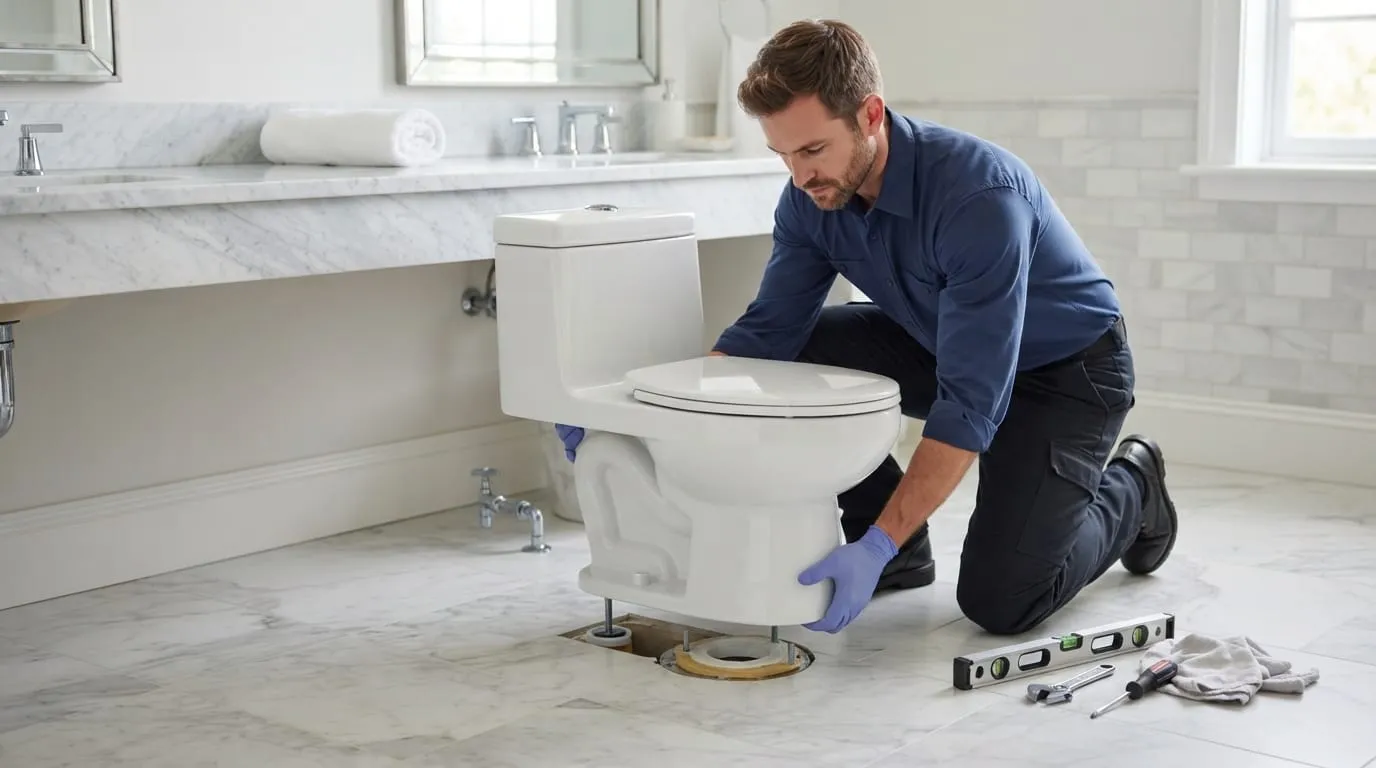
Fitting a new toilet, including the flange condition and floor level that decide whether it seals properly or rocks and leaks within a year.
Free call-routing service. An independent licensed plumber does the work and quotes you directly.
- Licensed and insured
- Price agreed before work
- A plumber who works your area
Measure the rough-in before buying anything
The most common problem with a toilet installation happens before a plumber is called.
The rough-in is the distance from the finished wall to the centre of the drain in the floor. Twelve inches is standard, but ten and fourteen inch rough-ins are common in older properties.
A toilet bought for the wrong one either will not sit against the wall or will not reach the drain. There is no adjustment to make; it is simply the wrong pan.
Measure from the wall, not the skirting, to the centre of the bolt caps on the existing toilet. That is the figure, and it takes a minute.
The flange decides whether the seal lasts
Everything about how long a toilet stays leak-free comes down to two things underneath it.
Flange height. The flange should sit at or slightly above the finished floor, so the seal compresses against a flat face. If new flooring has raised the floor around a flange that stayed put, the seal now has to bridge a gap, and a bridged seal is a slow leak with a delay on it. Flange extenders exist for exactly this.
Level. A pan that rocks works its own seal loose a fraction at a time, every time someone uses it. Bedding it so there is no movement at all is not a finishing touch, it is what determines whether the seal sees out the decade.
Does this sound familiar?
Problems this service solves
- Fitting a toilet in a new or renovated bathroom
- Replacing a pan after flooring has been changed
- A rough-in that does not match the new toilet
- A flange sitting below the finished floor level
- Wanting a comfort height or different bowl shape
Signs you need toilet installation
If more than one of these is true, the problem is usually past the point a plunger or a store-bought cleaner will fix.
- New flooring has raised the level around the pan
- The old toilet rocked or leaked at its base
- The bathroom is being renovated
- The existing toilet does not suit who uses it
What to expect
How the visit works
Check the rough-in
The distance from the wall to the drain centre decides which toilets will physically fit. Getting this wrong is the most common installation mistake.
Inspect the flange
The flange should sit at or just above the finished floor. Below it, the seal has to bridge a gap, and that is where slow leaks come from.
Set level and secure
The pan is bedded so it sits level and does not rock, because movement is what breaks a seal that was fine when it was fitted.
Connect, test and check
Supply connected, tank set, and the pan flushed and checked around the base and the connection before it is considered done.
What's included
What you get on every job, whoever we send.
- Rough-in measured before a toilet is ordered
- Flange height corrected rather than worked around
- Set level so it does not rock
- Base and connections checked under actual use
Questions
Toilet Installation questions
What is a rough-in and why does it matter?
It is the distance from the finished wall behind the toilet to the centre of the drain in the floor, and it decides which toilets will physically fit. Twelve inches is the common standard, but ten and fourteen exist, particularly in older houses. Buying a toilet without measuring it is how people end up with a pan that will not sit against the wall or will not reach the drain, and it is the single most common self-inflicted problem in this job.
My new floor raised the level. Does that matter?
Yes, more than people expect. Tile or a new floor build-up over an existing one raises the floor around the flange without raising the flange, so the flange ends up sitting below the finished surface. The seal then has to bridge that gap rather than compress against a flat face, and it usually does so imperfectly. The fix is a flange extender or resetting the flange, and it should be dealt with at installation rather than after the floor is damp.
Why does a toilet need to sit level?
Because a rocking toilet destroys its own seal. Every time someone sits down, the pan moves fractionally, and the seal underneath, which relies on being compressed evenly, gets worked loose. Water and waste then escape at floor level into the subfloor, where there is nothing to see until the floor is soft. Bedding the pan so it does not move at all is what makes the difference between a seal that lasts twenty years and one that fails in two.
Related services
Toilet Replacement
Replacing an old or damaged toilet, including removal, disposal, a new seal and any correction needed to the flange underneath.
See what this coversToilet Repair
Repair and replacement of running, leaking, clogged, weak-flushing and loose toilets, including wax rings, fill valves, flappers and flange repairs.
See what this coversToilet Leak Repair
Finding where a toilet is leaking, whether at the base seal, the tank bolts, the supply connection or between the cistern and the pan.
See what this coversWater Heater Repair
Diagnosis and repair of gas, electric and tankless water heaters, including no-hot-water calls, leaks, pilot problems and sediment flushing.
See what this covers

Get it fixed
Toilet Installation, handled locally
Call with your ZIP code and what you are seeing. We route you to a licensed plumber in your area who does toilet installation every week.
Free call-routing service. An independent licensed plumber does the work and quotes you directly.
- Licensed and insured
- Answered 24/7
- Price before work