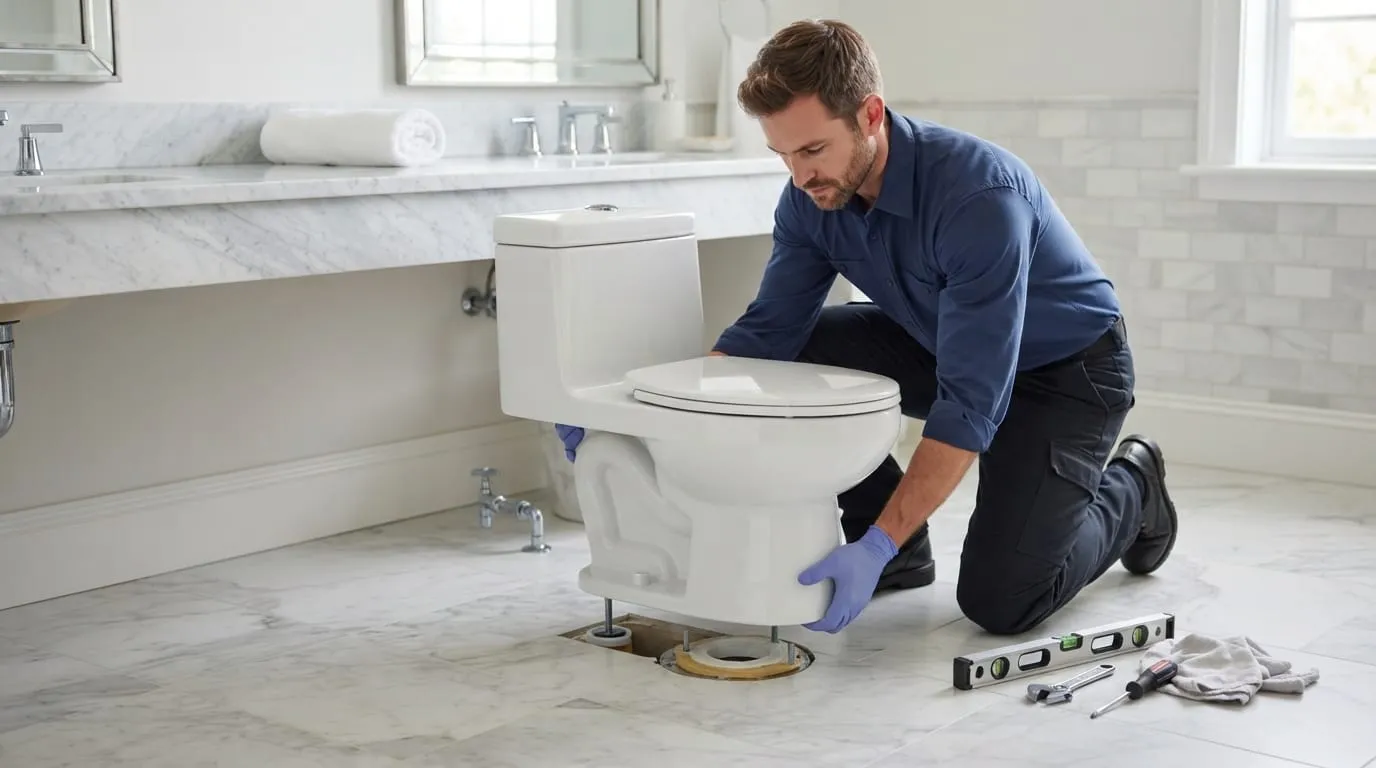
Service
Toilet Leak Repair
Finding where a toilet is leaking, whether at the base seal, the tank bolts, the supply connection or between the cistern and the pan.
Free call-routing service. An independent licensed plumber does the work and quotes you directly.
- Licensed and insured
- Price agreed before work
- A plumber who works your area
Timing identifies the leak
Four things leak on a toilet and they look identical once there is water on the floor. When the water appears separates them.
Water present without flushing. The supply side: the isolation valve, the flexible connector or the fill valve shank where it passes through the cistern. These are under constant pressure, so they leak continuously.
Water only during a flush. Either the gasket between the cistern and the pan, the tank bolts that pass through it, or the base seal. All three only see water when a flush happens.
Water at the base, after flushing, with a pan that rocks. The base seal, and the rocking is why.
Dry the floor completely, then flush once and watch. It usually answers it.
The base leak you cannot see
Of the four, the base seal is the one that does real damage, and it is the quietest.
Water escaping at the base does not run across the floor. It goes straight down into the subfloor around the flange opening, where it soaks into timber and stays there.
So there is nothing to mop up and nothing to notice, until the floor beside the toilet starts to feel soft underfoot. By then it has been wet for a long time.
A toilet that rocks is both the cause and the warning. Movement breaks the seal, the broken seal wets the subfloor, the softened subfloor lets the toilet move more. It is worth interrupting early.
Does this sound familiar?
Problems this service solves
- Water pooling around the base of a toilet
- A soft or discoloured floor beside the pan
- Damp appearing in the ceiling below a bathroom
- A weeping supply connection or isolation valve
- Water between the cistern and the pan
Signs you need toilet leak repair
If more than one of these is true, the problem is usually past the point a plunger or a store-bought cleaner will fix.
- There is water on the floor after flushing
- The floor around the base feels soft
- The toilet rocks when you sit on it
- There is a damp smell that does not clear
What to expect
How the visit works
Dry it and flush
A dry floor makes the source visible. Flushing while watching separates a base seal leak from a tank or supply leak in one go.
Check the supply side
The isolation valve, the flexible connector and the fill valve shank all leak under constant pressure, so those show water without flushing.
Check the tank to pan joint
The bolts and the gasket between cistern and pan leak only during a flush, which is a distinctive and useful pattern.
Address the base seal
Water at the base after flushing means the seal has failed, and that usually means the pan has been moving. Both get dealt with, not just the seal.
What's included
What you get on every job, whoever we send.
- Source identified by timing rather than by guesswork
- Supply-side and flush-side leaks separated
- Movement addressed, not just the seal replaced
- Subfloor condition checked where a leak has been running
Questions
Toilet Leak Repair questions
Water appears only when I flush. What does that mean?
It rules out the supply side immediately, because supply connections are under constant pressure and would leak whether you flush or not. A leak that appears only during a flush is either the gasket between the cistern and the pan, the tank bolts, or the seal at the base where the pan meets the drain. Watching carefully during one flush usually shows which, and it saves replacing parts that were never the problem.
My toilet rocks slightly. Is that causing the leak?
Almost certainly. The seal under a toilet works by being compressed evenly and staying that way. A pan that moves, even slightly, works that seal loose a fraction at a time until water starts escaping at floor level on every flush. Replacing the seal without stopping the movement simply restarts the same process. The pan needs to be bedded so it does not shift at all, and the reason it moved, loose bolts, uneven floor or a damaged flange, needs finding.
How bad is a base leak?
Worse than it looks, because of where the water goes. A leak at the base does not spread across the floor, it goes down into the subfloor, so there is often nothing visible until the floor around the toilet has gone soft. By that point the timber has been wet for months. Water at the base after flushing is worth acting on promptly rather than mopping up and monitoring.
Related services
Toilet Repair
Repair and replacement of running, leaking, clogged, weak-flushing and loose toilets, including wax rings, fill valves, flappers and flange repairs.
See what this coversToilet Replacement
Replacing an old or damaged toilet, including removal, disposal, a new seal and any correction needed to the flange underneath.
See what this coversBathroom Leak Repair
Finding and fixing bathroom leaks, including the ones that are not plumbing at all: failed grout, a bad pan, or a toilet seal letting water past.
See what this coversWater Heater Repair
Diagnosis and repair of gas, electric and tankless water heaters, including no-hot-water calls, leaks, pilot problems and sediment flushing.
See what this covers
Get it fixed
Toilet Leak Repair, handled locally
Call with your ZIP code and what you are seeing. We route you to a licensed plumber in your area who does toilet leak repair every week.
Free call-routing service. An independent licensed plumber does the work and quotes you directly.
- Licensed and insured
- Answered 24/7
- Price before work