Service
Toilet Replacement
Replacing an old or damaged toilet, including removal, disposal, a new seal and any correction needed to the flange underneath.
Free call-routing service. An independent licensed plumber does the work and quotes you directly.
- Licensed and insured
- Price agreed before work
- A plumber who works your area
The one look underneath you get
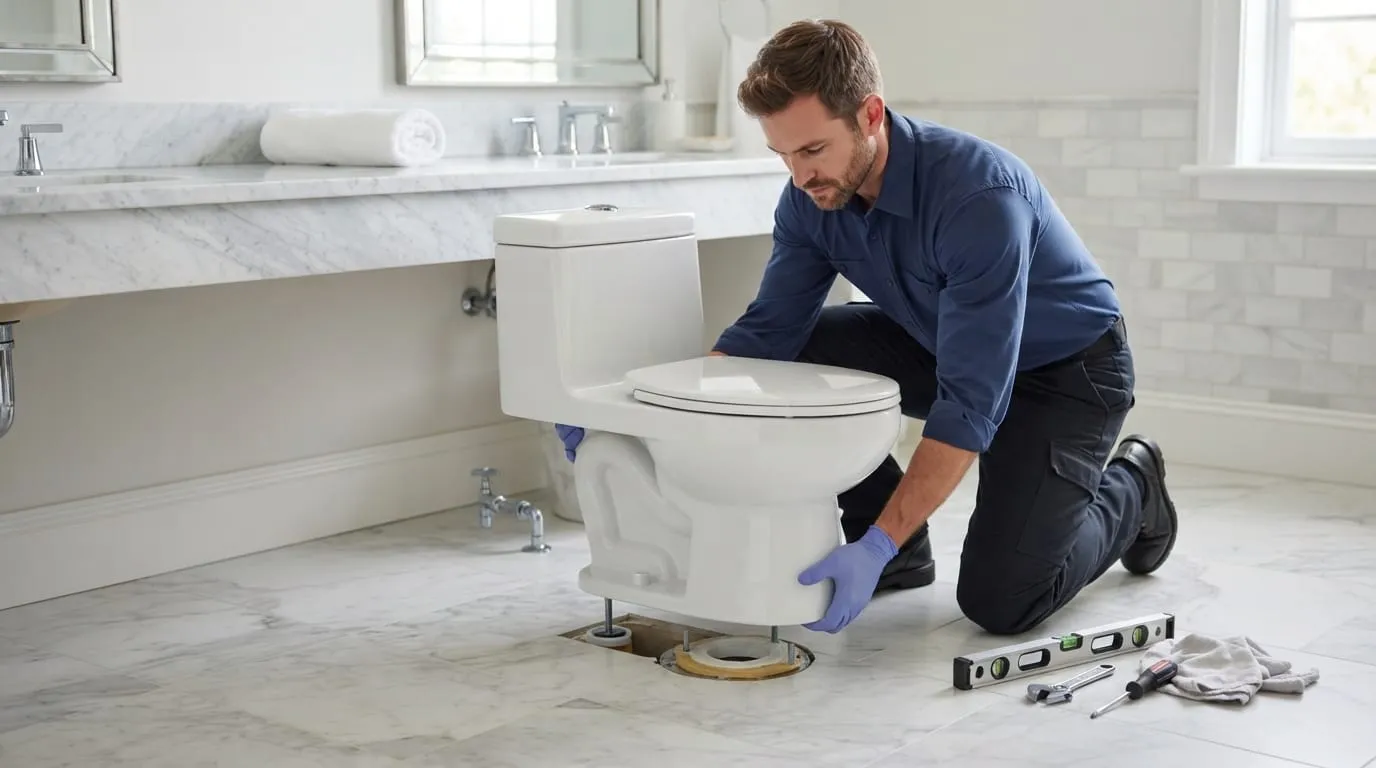
With the old toilet out and the new one not yet down, everything that matters is visible for about twenty minutes.
The flange. Cracked, corroded, broken lugs, or sitting below the finished floor. If the old toilet was leaking or rocking, this is usually why, and fixing it now costs very little.
The subfloor. Soft, dark or spongy timber around the opening means water has been getting past for a long time. Setting a new toilet on a failing subfloor produces a pan that starts rocking within months.
The old seal. How it failed tells you whether it was compressed unevenly, which points back to level, or bridged a gap, which points back to the flange.
All of it becomes inaccessible again the moment the new pan is bolted down.
Repair or replace
The distinction is straightforward and worth making before spending anything.
Worth repairing: anything internal. Fill valves, flappers, flush mechanisms and supply connectors are cheap parts and a short job, on almost any age of toilet.
Not repairable: cracked porcelain, in the pan or the cistern. There is no reliable repair for it.
Worth replacing anyway: an old high-consumption toilet. Some pre-1990s units use several times what a current one does per flush, and on a household’s annual water use that difference is not trivial. Sometimes the sensible answer is replacement even though nothing has actually broken.
Does this sound familiar?
Problems this service solves
- A cracked cistern or pan
- A toilet that leaks at its base repeatedly
- An old high-consumption toilet wasting water
- A pan that rocks despite being retightened
- Repairs that are no longer worth making on an old unit
Signs you need toilet replacement
If more than one of these is true, the problem is usually past the point a plunger or a store-bought cleaner will fix.
- There is a visible crack in the porcelain
- The floor around the base is soft or stained
- The toilet uses far more water per flush than a modern one
- It has needed repeated repairs
What to expect
How the visit works
Isolate, drain and remove
The supply is shut off, the cistern and pan emptied properly, and the old unit lifted out and taken away rather than left in the driveway.
Inspect what is underneath
Removing the toilet is the only chance to see the flange, the subfloor and any damage from a previous slow leak. It gets looked at properly.
Correct the flange
A cracked, corroded or low flange is repaired or extended now, because it is inaccessible again the moment the new pan goes down.
Fit, seal and test
The new toilet is set level with a fresh seal, connected, and flushed repeatedly with the base checked before the job is signed off.
What's included
What you get on every job, whoever we send.
- Old unit removed and disposed of
- The flange and subfloor inspected while accessible
- Flange problems corrected rather than covered up
- New seal and a level set, then tested under use
Questions
Toilet Replacement questions
Is it worth repairing an old toilet instead?
It depends on what has failed. Internal parts, the fill valve, the flapper, the flush mechanism, are inexpensive and worth replacing on almost any toilet. Cracked porcelain is not repairable and the unit has to go. And an old high-consumption toilet using several times what a modern one does can pay for itself through the water bill, which is worth weighing before spending money on parts for it.
What should be checked while the old toilet is out?
The flange, the subfloor around it, and the seal that was there. This is the only moment any of it is visible. A flange that is cracked, corroded or sitting below floor level explains a previous leak and will cause the next one if it is not corrected. Soft or discoloured subfloor means water has been getting past for some time. Both are far easier to deal with now than after a new pan is bolted down over them.
Do I need a new seal, or can the old one be reused?
New, always. A wax seal compresses permanently when the toilet is first set, so once it has been lifted it will not seal properly again no matter how carefully it is put back. It is one of the cheapest parts in the job. Anyone offering to reuse one is saving a couple of pounds against a slow leak into your subfloor.
Related services
Toilet Installation
Fitting a new toilet, including the flange condition and floor level that decide whether it seals properly or rocks and leaks within a year.
See what this coversToilet Repair
Repair and replacement of running, leaking, clogged, weak-flushing and loose toilets, including wax rings, fill valves, flappers and flange repairs.
See what this coversRunning Toilet Repair
Stopping a toilet that runs continuously or refills by itself, which is usually one inexpensive part and a surprisingly large amount of wasted water.
See what this coversWater Heater Repair
Diagnosis and repair of gas, electric and tankless water heaters, including no-hot-water calls, leaks, pilot problems and sediment flushing.
See what this covers

Get it fixed
Toilet Replacement, handled locally
Call with your ZIP code and what you are seeing. We route you to a licensed plumber in your area who does toilet replacement every week.
Free call-routing service. An independent licensed plumber does the work and quotes you directly.
- Licensed and insured
- Answered 24/7
- Price before work