Service
Sump Pump Replacement
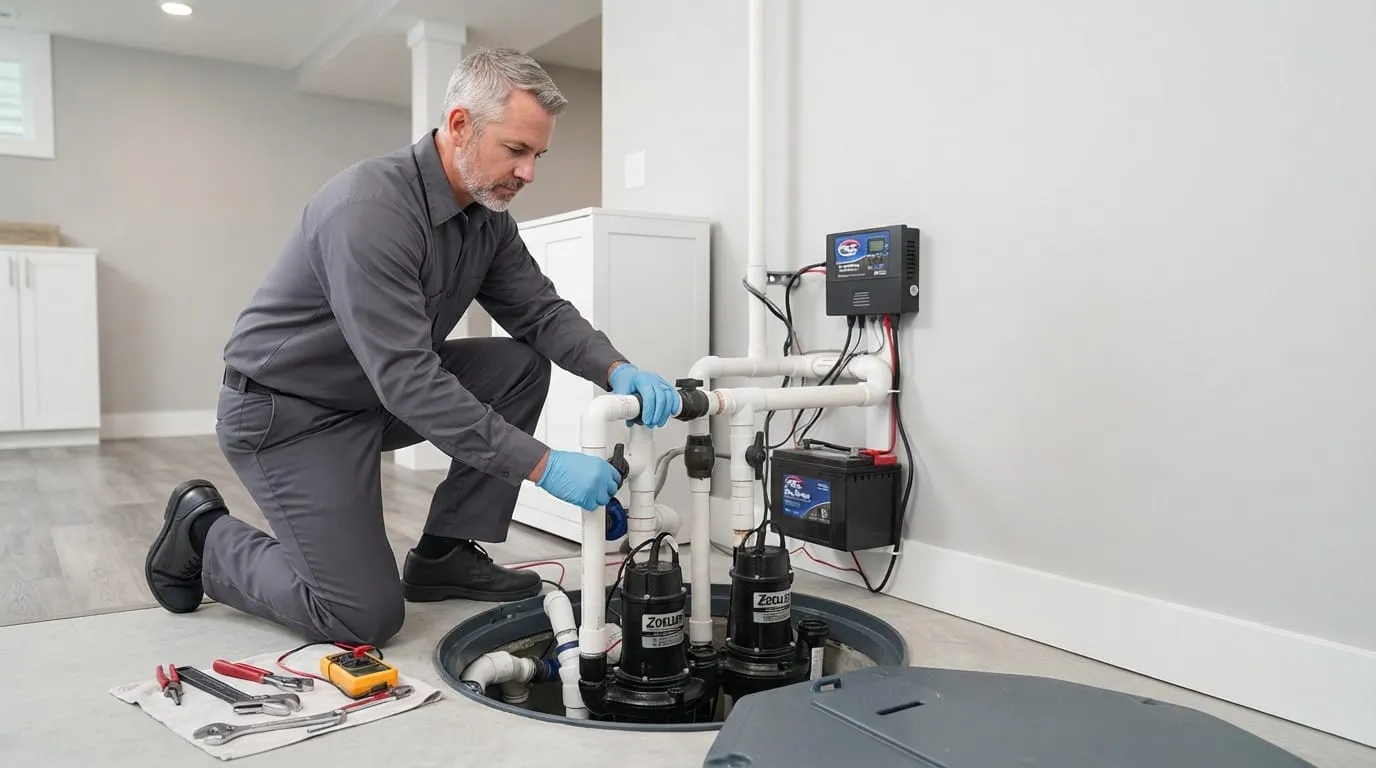
Replacing a failed or ageing sump pump, sized for how much water the pit actually takes rather than matching whatever was there before.
Free call-routing service. An independent licensed plumber does the work and quotes you directly.
- Licensed and insured
- Price agreed before work
- A plumber who works your area
Measure the inflow before choosing a pump
The useful number is not on the old pump’s label. It is how fast your pit fills.
Empty the pit, then time how long it takes the water to rise back to the switch level, ideally during a wet spell when the ground is loaded. That gives the inflow rate the new pump has to exceed comfortably.
Going bigger without checking has its own cost. An oversized pump in a small pit empties it almost instantly, shuts off, and starts again a moment later. That short-cycling is harder on the switch and the motor than steady running, and it shortens the life of the unit you paid more for.
The right pump is the one matched to the pit, which is rarely the biggest one available.
Replace before it fails, not after
Sump pumps are unusual in that failure and need coincide exactly.
They run hardest during sustained heavy rain, which is precisely when the basement depends on them. A pump at the end of its life will not fail on a dry Tuesday; it will fail on the night it is needed most.
So the sensible approach is age-based rather than symptom-based. Seven to ten years is a normal life, and much less for a pump that cycles constantly.
If yours is in that range and runs often, replacing it on a dry day is a planned, inexpensive job. Replacing it after failure usually involves a wet basement first.
Does this sound familiar?
Problems this service solves
- A pump that has failed outright
- An ageing pump nearing the end of its life
- A pump that cannot keep up during heavy rain
- A unit that has been repaired repeatedly
- A pump running constantly and wearing itself out
Signs you need sump pump replacement
If more than one of these is true, the problem is usually past the point a plunger or a store-bought cleaner will fix.
- The pump does not run at all
- It cannot keep the level down during a storm
- It is more than about seven years old
- It has needed repeated attention
What to expect
How the visit works
Confirm the pump is the problem
A switch, a check valve or a blocked discharge produces the same symptoms as a dead pump and costs far less to fix.
Size against the actual inflow
How fast the pit refills after being emptied is the figure that matters, not the rating of the unit being removed.
Replace and check the rest
The pump is changed and the check valve, the discharge and the float clearance checked while everything is accessible.
Test by filling the pit
The new installation is proved by filling the pit and watching a full cycle, not by switching it on.
What's included
What you get on every job, whoever we send.
- The pump confirmed as the fault before it is replaced
- Sized against measured inflow, not the old unit
- Check valve and discharge inspected at the same time
- Proved with a full cycle before it is left
Questions
Sump Pump Replacement questions
How long should a sump pump last?
Roughly seven to ten years, though it depends enormously on how hard it works. A pump in a pit that fills constantly runs many times more cycles per year than one that starts a few times a season, and it wears out proportionally faster. If yours runs frequently, plan for the shorter end of that range and consider replacing it before failure rather than after, since a pump that fails does so during heavy rain.
Should I fit a bigger pump?
Only if the current one genuinely cannot keep up during heavy rain, and it is worth measuring rather than assuming. Time how quickly the pit refills after the pump empties it: that inflow rate is what the pump has to exceed. An oversized pump in a small pit short-cycles, switching on and off rapidly, which wears the switch and the motor faster than steady running would.
Is it worth keeping the old pump?
As a spare, occasionally, if it still works and was replaced for age rather than failure. More useful is fitting the new pump as the primary and keeping the pit set up for a backup, whether battery or water-powered. Two pumps at different heights in the same pit gives genuine redundancy, and the second only runs when the first cannot cope or has failed.
Related services
Sump Pump Installation
Installing a sump pump and pit, including the discharge route, the check valve and the question of what happens when the power fails.
See what this coversSump Pump Repair
Repairing sump pumps that run constantly, will not start, or run without clearing the pit, before the next storm rather than during it.
See what this coversBattery Backup Sump Pump
Fitting a backup pump that runs when the power fails or the primary cannot cope, since the storms that flood basements also cut the electricity.
See what this coversWater Heater Repair
Diagnosis and repair of gas, electric and tankless water heaters, including no-hot-water calls, leaks, pilot problems and sediment flushing.
See what this covers

Get it fixed
Sump Pump Replacement, handled locally
Call with your ZIP code and what you are seeing. We route you to a licensed plumber in your area who does sump pump replacement every week.
Free call-routing service. An independent licensed plumber does the work and quotes you directly.
- Licensed and insured
- Answered 24/7
- Price before work