Service
Sump Pump Repair
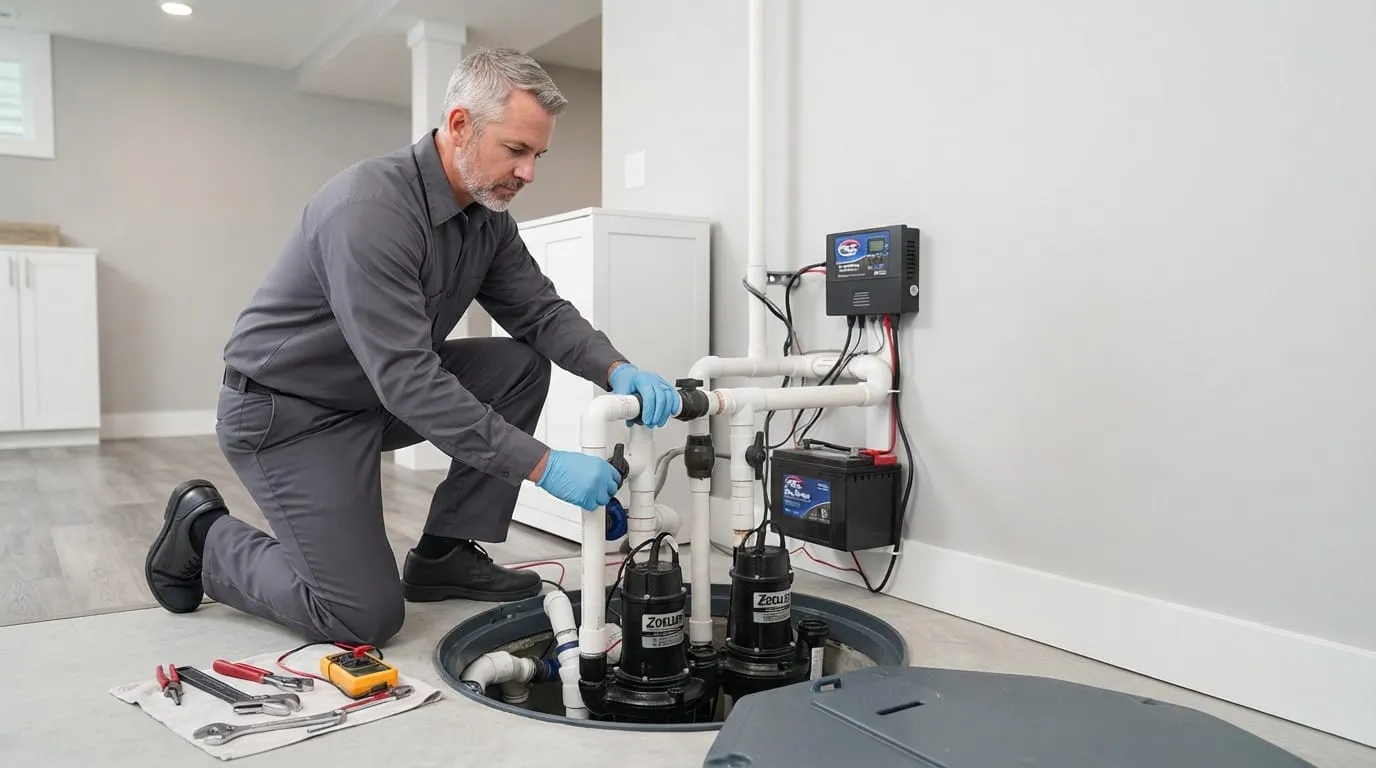
Repairing sump pumps that run constantly, will not start, or run without clearing the pit, before the next storm rather than during it.
Free call-routing service. An independent licensed plumber does the work and quotes you directly.
- Licensed and insured
- Price agreed before work
- A plumber who works your area
Test it on a dry day
A sump pump is the one piece of equipment in a house that only reveals its condition at the worst possible moment.
The test takes five minutes. Run a hose into the pit until the float rises.
Watch four things: the float rises freely without catching, the pump starts, the water level drops quickly, and the pump shuts off cleanly rather than short-cycling.
That one test exercises the switch, the motor, the impeller, the check valve and the discharge line together. Anything wrong shows up here instead of at two in the morning during a storm.
Worth doing before the wet season, every year.
Running and achieving nothing
A pump that sounds perfect while the water stays where it is has one of three faults, and they are easy to tell apart.
Blocked discharge. The pump is pushing against a closed pipe. In winter this is usually ice in the outside section; otherwise debris or a crushed line.
Failed check valve. The pump lifts the water up the discharge, then stops, and all of it falls straight back into the pit. The level barely changes and the pump cycles again immediately.
Blocked or worn impeller. Silt and gravel from the bottom of the pit get drawn in and either jam the impeller or wear it down until it cannot move water.
None of these are the motor, which is the part people assume has failed.
Does this sound familiar?
Problems this service solves
- A pump that runs but does not lower the water
- A pump that will not switch on when the pit fills
- A pump that runs constantly and never stops
- Loud noises or vibration from the pit
- Water in the basement despite a working pump
Signs you need sump pump repair
If more than one of these is true, the problem is usually past the point a plunger or a store-bought cleaner will fix.
- The pump runs with no effect on the water level
- The pit fills and nothing happens
- The pump cycles on and off every minute
- The basement has taken water with the pump apparently working
What to expect
How the visit works
Test it deliberately
Filling the pit with a hose is the only honest test. Waiting for weather means finding the fault during the flood.
Check the switch
Float switches stick, get caught on the pit wall or fail outright, and they are the most common reason a working pump does nothing.
Check the discharge and check valve
A pump that runs without lowering the water usually has a blocked discharge or a failed check valve letting everything fall straight back in.
Clean the pit and inlet
Silt and gravel in the pit block the intake and wear the impeller. Cleaning it is a repair in its own right.
What's included
What you get on every job, whoever we send.
- Tested by filling the pit, not by hoping
- Switch faults separated from pump faults
- Discharge and check valve checked, not just the pump
- The pit cleaned, since debris causes most repeat failures
Questions
Sump Pump Repair questions
The pump runs but the water does not go down. Why?
Three usual causes. The discharge line is blocked, often by ice in winter or by debris, so the pump is pushing against a closed pipe. The check valve has failed, so everything the pump lifts falls straight back into the pit when it stops. Or the impeller is blocked or worn, so it turns without moving water. All three produce a pump that sounds like it is working and achieves nothing.
The pit is full and the pump has not started. Is it dead?
Often it is the switch rather than the pump. Float switches stick, get caught against the pit wall or the discharge pipe, or simply fail with age, and the pump never receives the signal to start. Lifting the float by hand is a quick test: if the pump runs, the pump is fine and the switch is the problem. It is a much smaller repair than a replacement.
How do I test a sump pump?
Fill the pit with a hose and watch what happens. The float should rise, the pump should start, the water level should drop noticeably, and the pump should shut off cleanly. That single test checks the switch, the pump, the check valve and the discharge together. It is worth doing before the wet season rather than discovering a fault when the basement is already taking water.
Related services
Sump Pump Installation
Installing a sump pump and pit, including the discharge route, the check valve and the question of what happens when the power fails.
See what this coversSump Pump Replacement
Replacing a failed or ageing sump pump, sized for how much water the pit actually takes rather than matching whatever was there before.
See what this coversSump Pit Cleaning
Clearing silt, gravel and debris out of a sump pit, which is what wears impellers, jams float switches and shortens pump life.
See what this coversWater Heater Repair
Diagnosis and repair of gas, electric and tankless water heaters, including no-hot-water calls, leaks, pilot problems and sediment flushing.
See what this covers

Get it fixed
Sump Pump Repair, handled locally
Call with your ZIP code and what you are seeing. We route you to a licensed plumber in your area who does sump pump repair every week.
Free call-routing service. An independent licensed plumber does the work and quotes you directly.
- Licensed and insured
- Answered 24/7
- Price before work