Service
Sump Pump Installation
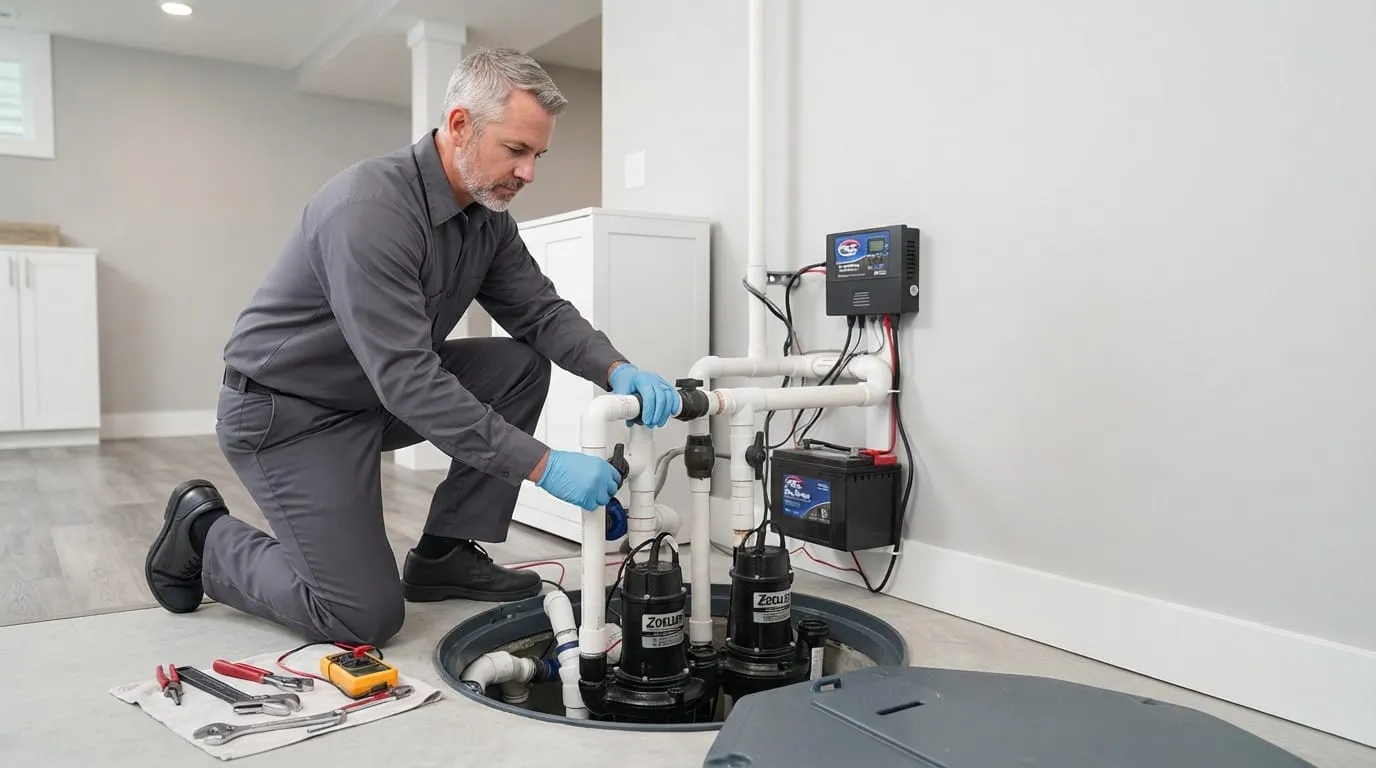
Installing a sump pump and pit, including the discharge route, the check valve and the question of what happens when the power fails.
Free call-routing service. An independent licensed plumber does the work and quotes you directly.
- Licensed and insured
- Price agreed before work
- A plumber who works your area
Find out what kind of water it is
A sump pump is the right answer to one specific problem, and fitting one to the wrong problem is expensive.
Groundwater rising under the floor as the water table comes up. This is what a sump system is for.
Surface runoff reaching the foundation because of ground that slopes toward the house, blocked gutters or a downpipe discharging next to the wall. A pump will pump it, endlessly, while the cause sits outside costing nothing to fix.
A plumbing leak. A pump conceals it while the leak continues.
All three look identical as water on a basement floor. Establishing which you have takes an hour and decides whether a pump is the solution or an expensive symptom manager.
The discharge decides whether it works
More sump installations are undermined by the discharge than by the pump.
Distance. Water put out too close to the foundation soaks straight back down, returns to the pit, and gets pumped again. The pump runs constantly, wears out early, and the basement stays wet.
Destination. Not toward a neighbour, and not into the sanitary sewer, which is prohibited in most jurisdictions and can cause backups elsewhere.
Freezing. In cold climates a discharge line that freezes means the pump runs against a blocked pipe, which either burns it out or sends the water back inside.
The pump is the part people compare. The discharge is the part that decides whether the basement stays dry.
Does this sound familiar?
Problems this service solves
- A basement or crawl space that takes water
- A property with a high water table
- Water entering during heavy rain or snowmelt
- A finished basement with no protection
- An existing pit with no pump in it
Signs you need sump pump installation
If more than one of these is true, the problem is usually past the point a plunger or a store-bought cleaner will fix.
- Water appears on the basement floor after rain
- There is an unused sump pit already in place
- The crawl space is persistently damp
- The basement is being finished
What to expect
How the visit works
Establish where the water comes from
Groundwater, surface runoff and a plumbing leak look identical on a basement floor and need different answers. A pump is the right fix for only one of them.
Set the pit correctly
Depth and position determine how often the pump cycles and how much water sits under the floor before it starts.
Route the discharge properly
Water has to leave far enough from the building that it does not return, and the line has to be protected from freezing where that applies.
Fit a check valve and test
The check valve stops discharged water falling back into the pit, and the whole installation is tested by filling the pit rather than by assumption.
What's included
What you get on every job, whoever we send.
- The water source established before a pump is fitted
- Discharge routed far enough away to not recirculate
- A check valve fitted, so the pump does not re-pump the same water
- Tested by filling the pit, not by switching it on dry
Questions
Sump Pump Installation questions
Will a sump pump fix a wet basement?
It depends why the basement is wet, and this is worth establishing first. A sump pump handles groundwater rising under the floor, which is what it is designed for. It does not fix surface water running toward the house from bad grading or blocked gutters, and it does not fix a plumbing leak. Fitting a pump to deal with runoff means paying to pump water that should never have reached the building.
Where should the discharge go?
Far enough from the foundation that the water does not simply soak back down and return to the pit, which is a surprisingly common installation fault. It also must not discharge where it will run toward a neighbour or into a sanitary sewer, which is prohibited in most jurisdictions. In cold climates the discharge line needs protection from freezing, because a frozen discharge means the pump runs against a blocked pipe.
What happens when the power goes out?
The pump stops, which is the problem, because the storms that cause basement flooding are the same storms that cause power cuts. A primary pump alone is protection that fails exactly when it is needed. This is the point at which a battery backup or a water-powered backup is worth discussing, and it is much cheaper to include at installation than to add later.
Related services
Sump Pump Replacement
Replacing a failed or ageing sump pump, sized for how much water the pit actually takes rather than matching whatever was there before.
See what this coversBattery Backup Sump Pump
Fitting a backup pump that runs when the power fails or the primary cannot cope, since the storms that flood basements also cut the electricity.
See what this coversSump Pump Repair
Repairing sump pumps that run constantly, will not start, or run without clearing the pit, before the next storm rather than during it.
See what this coversWater Heater Repair
Diagnosis and repair of gas, electric and tankless water heaters, including no-hot-water calls, leaks, pilot problems and sediment flushing.
See what this covers

Get it fixed
Sump Pump Installation, handled locally
Call with your ZIP code and what you are seeing. We route you to a licensed plumber in your area who does sump pump installation every week.
Free call-routing service. An independent licensed plumber does the work and quotes you directly.
- Licensed and insured
- Answered 24/7
- Price before work