Service
Sump Pit Cleaning
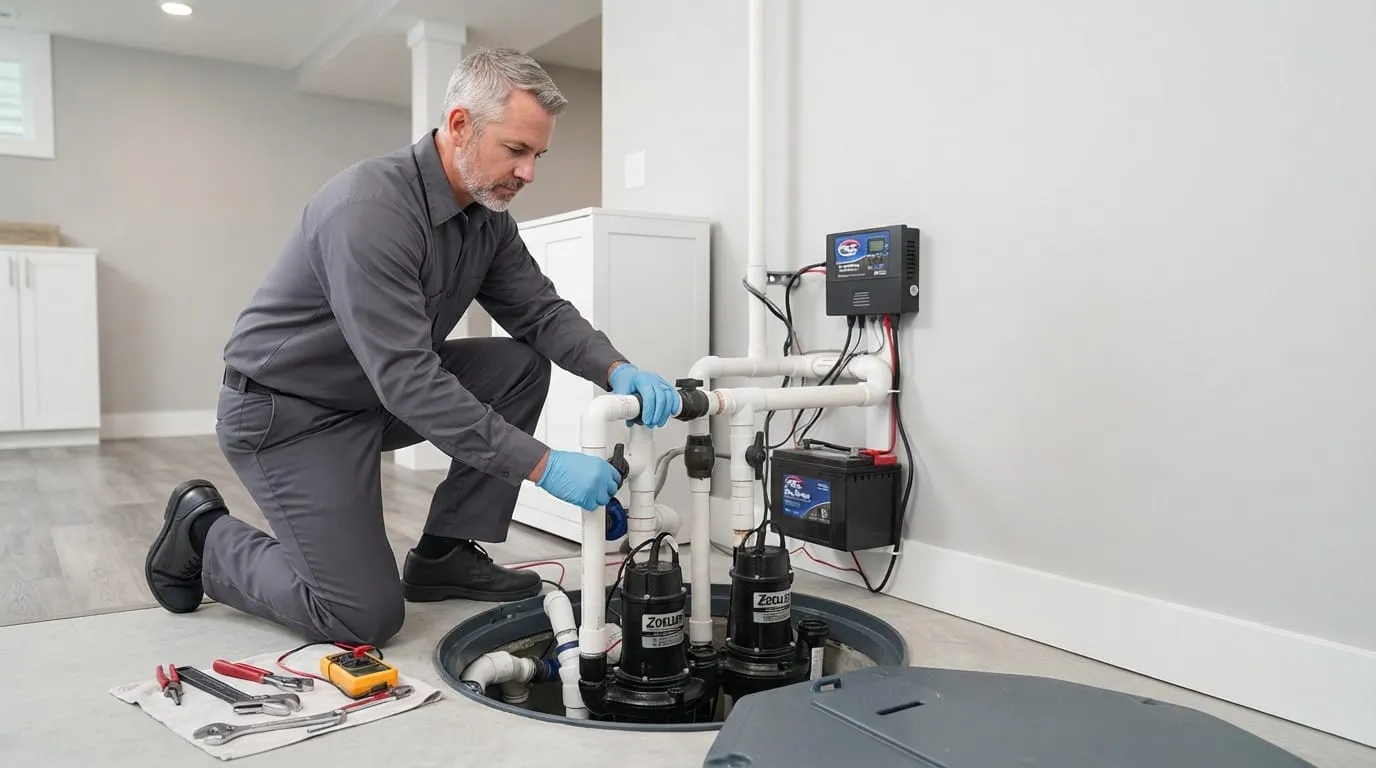
Clearing silt, gravel and debris out of a sump pit, which is what wears impellers, jams float switches and shortens pump life.
Free call-routing service. An independent licensed plumber does the work and quotes you directly.
- Licensed and insured
- Price agreed before work
- A plumber who works your area
Sediment is what kills pumps
Most sump pumps that fail early were not defective. They were worn out by what was sitting in the bottom of the pit.
Groundwater carries fine silt, sand and gravel, and all of it settles out where the water slows down, which is the pit. That layer builds up around the pump’s intake.
Three things follow. The intake screen blocks, so the pump cannot draw properly and runs hot. Abrasive material gets pulled into the impeller and grinds it down. And debris collects around the float, which is why switches stick.
Every one of those is a pump failure with a common cause, and the cause takes an hour to remove.
Look before the season, not during it
Lift the lid once a year, ideally before the wet season, and look at what is in the bottom.
If the pump is sitting in water, it is fine. If it is sitting in silt, the clock is already running on the impeller.
While the lid is off, it is worth checking the float moves freely through its full travel without catching on the pit wall, the discharge pipe or the power lead, since that is the most common reason a perfectly good pump does nothing when the pit fills.
Then fill the pit with a hose and watch a complete cycle. Cleaning and testing together take an hour and are the difference between a pump that lasts ten years and one that fails in four.
Does this sound familiar?
Problems this service solves
- A pit with visible silt or gravel in the bottom
- A float switch that catches or sticks
- A pump that has become noisy or vibrates
- An unpleasant smell coming from the pit
- A pump that has never been serviced
Signs you need sump pit cleaning
If more than one of these is true, the problem is usually past the point a plunger or a store-bought cleaner will fix.
- There is a layer of sediment in the bottom of the pit
- The pump sounds rougher than it used to
- The float does not move freely
- The pit smells stagnant
What to expect
How the visit works
Isolate and remove the pump
Power off, pump lifted out, so the pit can actually be cleared rather than stirred around.
Clear the sediment
Silt, gravel and debris are removed from the bottom, which is where the intake sits and where the damage comes from.
Clean the pump and float
The intake screen, the impeller housing and the float are cleaned, since debris on any of them causes the common failures.
Refit and test a full cycle
The pump goes back with the float clear of the walls and the discharge, and the pit is filled to prove a complete cycle.
What's included
What you get on every job, whoever we send.
- The pump lifted out so the pit is genuinely cleared
- Intake and impeller cleaned, not just the pit
- Float clearance checked on refitting
- A full cycle tested before it is left
Questions
Sump Pit Cleaning questions
Why does a sump pit need cleaning?
Because everything the groundwater carries ends up in the bottom of it. Silt, sand and fine gravel settle out and build a layer where the pump's intake sits. That sediment gets drawn into the impeller where it grinds away at it, blocks the intake screen so the pump cannot draw properly, and collects around the float so it stops moving freely. It is the main reason pumps fail early.
How often should it be done?
Once a year is a reasonable interval for most pits, ideally before the wet season along with a test. Pits that take a lot of water, or water carrying a lot of fine material, benefit from more often. If you lift the lid and can see a layer of sediment in the bottom or the pump sitting in silt rather than water, it is due regardless of when it was last done.
Why does my sump pit smell?
Usually stagnant water and organic material sitting in the bottom between cycles, particularly in a pit that only runs occasionally. Cleaning it out normally resolves it. A persistent sewage smell is different and worth investigating, because it can indicate the pit is connected to something it should not be, or that a nearby drain or trap is the actual source rather than the pit itself.
Related services
Sump Pump Repair
Repairing sump pumps that run constantly, will not start, or run without clearing the pit, before the next storm rather than during it.
See what this coversSump Pump Replacement
Replacing a failed or ageing sump pump, sized for how much water the pit actually takes rather than matching whatever was there before.
See what this coversSump Pump Installation
Installing a sump pump and pit, including the discharge route, the check valve and the question of what happens when the power fails.
See what this coversWater Heater Repair
Diagnosis and repair of gas, electric and tankless water heaters, including no-hot-water calls, leaks, pilot problems and sediment flushing.
See what this covers

Get it fixed
Sump Pit Cleaning, handled locally
Call with your ZIP code and what you are seeing. We route you to a licensed plumber in your area who does sump pit cleaning every week.
Free call-routing service. An independent licensed plumber does the work and quotes you directly.
- Licensed and insured
- Answered 24/7
- Price before work