Service
Hidden Leak Detection
Finding leaks with no visible water: behind walls, under floors, in buried supply lines, using meter isolation, acoustics and thermal imaging.
Free call-routing service. An independent licensed plumber does the work and quotes you directly.
- Licensed and insured
- Price agreed before work
- A plumber who works your area
Find out how big it is
The meter does more than confirm a leak exists; it tells you what kind of search to run.
With everything off, watch the low-flow indicator. A dial turning steadily means a substantial escape, likely a split line, and it will usually be findable acoustically.
A dial creeping round every few minutes is a small, slow leak. Those tend to be a passing toilet, a weeping valve, or a pinhole, and they need a different approach.
Sizing it first stops a slow seep being hunted with equipment meant for a burst.
Halve the problem with valves
Before any equipment comes out, isolation removes most of the house from the search using nothing but the valves already fitted.
Shut off the water heater supply. The hot system depressurises. If the meter stops, the leak is on the hot side, which is where most under-slab failures happen.
Close the main valve where the supply enters the house. If the meter still moves, the leak is in the buried service line between the meter and the building, and nothing inside needs opening at all.
Check the toilets. Food colouring in the cistern, twenty minutes, look in the bowl. A passing flapper is silent, invisible and a very common answer.
Each step is free and each one removes a large area from consideration.
Does this sound familiar?
Problems this service solves
- A high water bill with no visible leak
- A meter that turns with everything shut off
- Damp or mould with no traceable source
- Water pressure that has fallen across the property
- A leak somewhere between the meter and the house
Signs you need hidden leak detection
If more than one of these is true, the problem is usually past the point a plunger or a store-bought cleaner will fix.
- The bill has risen sharply with no change in use
- The meter moves with every fixture closed
- There is a damp smell but no wet surface
- An area of ground or lawn stays wet or grows faster
What to expect
How the visit works
Quantify it at the meter
The meter shows whether there is a leak and roughly how large. A fast-moving dial and a barely creeping one lead to different searches.
Isolate section by section
Shutting off the water heater separates hot from cold. Closing the house valve separates the property from the buried service line. Each step halves the area.
Listen for it
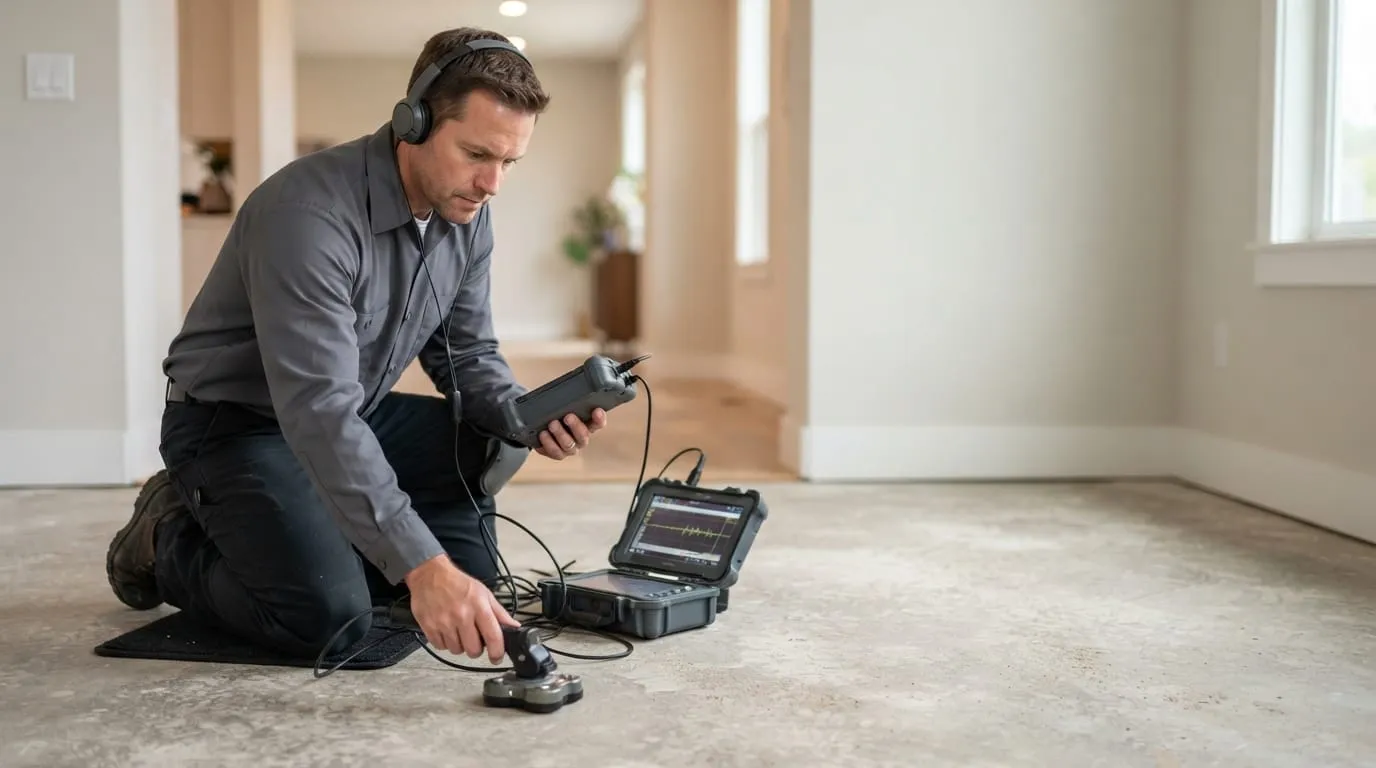
Pressurised water escaping makes a distinctive noise that carries through pipe, soil and concrete. Acoustic equipment finds it where nothing is visible.
Confirm before opening
Thermal imaging and moisture readings confirm the position, so one wall or one section of floor is opened rather than several.
What's included
What you get on every job, whoever we send.
- The leak sized as well as confirmed
- Systematic isolation rather than searching everywhere
- Acoustic and thermal methods used to confirm each other
- One opening at a located point
Questions
Hidden Leak Detection questions
My bill went up but I cannot find any water. Where is it going?
Somewhere it can leave without showing. Buried service line between the meter and the house, where it soaks into the ground. Under a slab, where it goes into the soil. Into a wall cavity, where it can run for a long time before staining anything. Or a toilet flapper passing silently, which wastes a surprising volume and leaves nothing to see. The meter test tells you it is real; isolation tells you which part of the system it is in.
What does isolation actually narrow down?
It halves the search repeatedly with nothing more than valves. Shut off the water heater and the hot system stops being pressurised: if the meter stops, the leak is on the hot side. Close the main valve at the house: if the meter still moves, the leak is in the buried service line before the house, not inside it at all. Each of those takes minutes and removes a large area from consideration.
Is a toilet a likely cause of an invisible leak?
Yes, and it is worth checking before paying for detection. A worn flapper lets water pass from the cistern into the pan continuously, and because it runs down the bowl it makes no sound and leaves no mark. Put a few drops of food colouring in the cistern, do not flush, and come back after twenty minutes. Colour in the bowl means the flapper is passing. It is a cheap part and a very common answer to a high bill.
Related services
Leak Detection
Locating hidden water leaks under slabs, inside walls, in yards and at the meter using acoustic, thermal and pressure-testing equipment, then repairing them.
See what this coversSlab Leak Detection
Locating a leak in pipework running beneath a concrete slab foundation, using acoustic and thermal equipment before any concrete is cut.
See what this coversWater Leak Repair
Repairing leaks on supply pipework once the source is confirmed, from a weeping joint to a split in a buried line under pressure.
See what this coversWater Heater Repair
Diagnosis and repair of gas, electric and tankless water heaters, including no-hot-water calls, leaks, pilot problems and sediment flushing.
See what this covers

Get it fixed
Hidden Leak Detection, handled locally
Call with your ZIP code and what you are seeing. We route you to a licensed plumber in your area who does hidden leak detection every week.
Free call-routing service. An independent licensed plumber does the work and quotes you directly.
- Licensed and insured
- Answered 24/7
- Price before work