Service
Slab Leak Detection
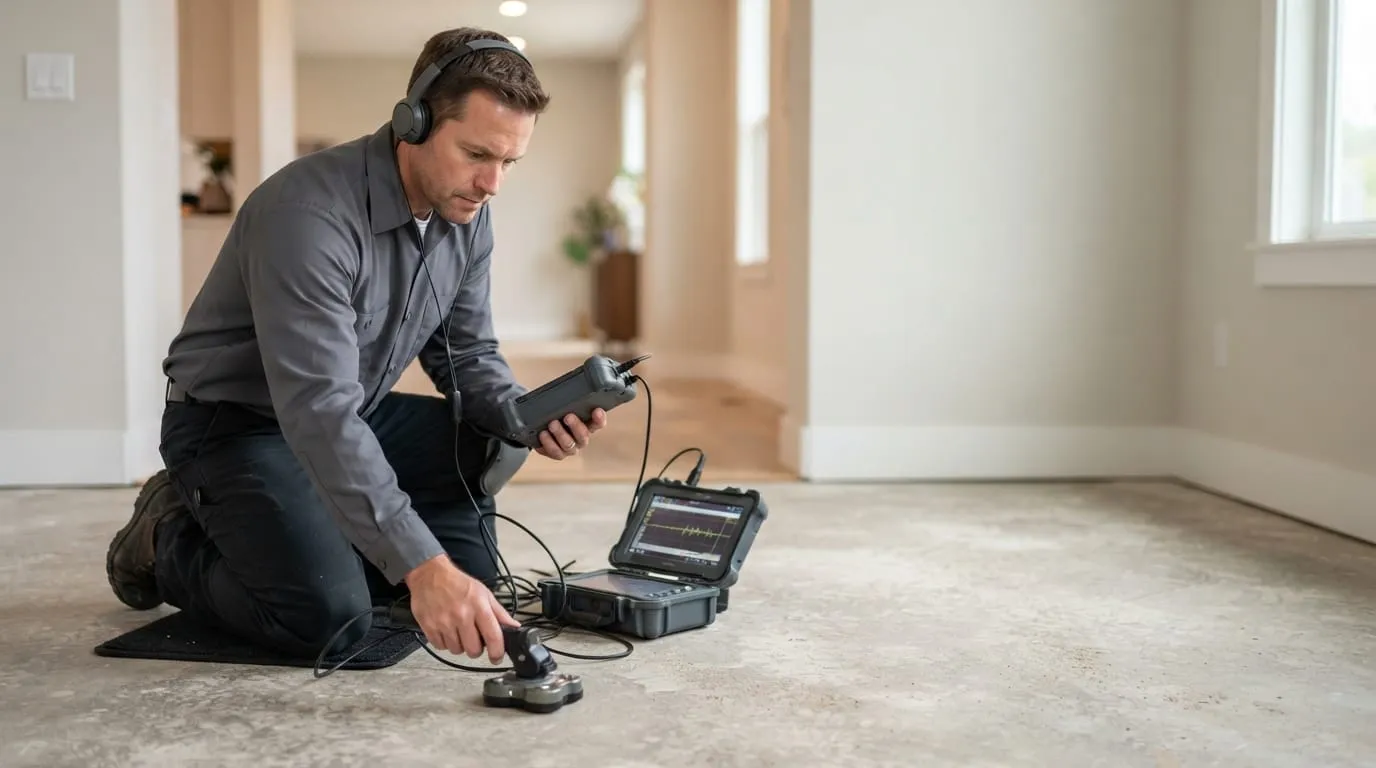
Locating a leak in pipework running beneath a concrete slab foundation, using acoustic and thermal equipment before any concrete is cut.
Free call-routing service. An independent licensed plumber does the work and quotes you directly.
- Licensed and insured
- Price agreed before work
- A plumber who works your area
Why this one gets treated seriously
A slab leak is not simply an inaccessible leak. It is water being injected into the ground your house sits on.
In soils that expand and contract with moisture, that causes movement, and movement under a foundation shows up as cracking in walls, doors that stop closing and floors that go out of level. The plumbing repair is often the smaller half of the eventual cost.
That is why the advice on a suspected slab leak is to find it now rather than watch it, which is unusual advice in plumbing.
Hot lines fail first
Most slab leaks are on the hot water side, and there are reasons for it.
Hot copper runs at a higher temperature, expands and contracts more with every draw, and carries water moving faster. All three attack the pipe wall from inside, so the hot line reaches failure years before the cold line beside it.
This gives you two practical things. A warm patch on the floor with no heating under it is a strong indicator, because a hot leak heats the slab above it. And isolating the water heater separates the systems: if the meter stops moving with the hot side shut off, the leak is on the hot line and half the search is already done.
Does this sound familiar?
Problems this service solves
- A warm patch on a floor with no heating beneath it
- The sound of running water with every tap closed
- A water bill rising in a slab-foundation house
- Flooring lifting or cracking in one area
- Unexplained damp at the base of a wall
Signs you need slab leak detection
If more than one of these is true, the problem is usually past the point a plunger or a store-bought cleaner will fix.
- One area of floor is noticeably warm underfoot
- You can hear water moving inside the slab
- Carpet or wood flooring is damp in a patch
- Water pressure has fallen without explanation
What to expect
How the visit works
Verify at the meter
The meter test confirms a leak exists before any specialist equipment comes out, which avoids paying to locate something that is not there.
Isolate hot from cold
Shutting off the water heater separates the two systems. A leak that stops when the hot side is isolated is on the hot line, which is where most slab leaks are.
Listen and image
Acoustic equipment picks up the sound of pressurised water escaping through concrete, and thermal imaging finds the warm signature of a hot line leak.
Mark the spot
The position is marked on the floor so the repair opens one small area rather than exploring.
What's included
What you get on every job, whoever we send.
- Located before any concrete is cut
- Hot and cold lines separated by isolation, not guesswork
- Acoustic and thermal methods used together
- The position marked so the opening is as small as possible
Questions
Slab Leak Detection questions
What is a slab leak and why is it different?
It is a leak in the water pipes that run within or beneath a concrete slab foundation, and it is different because you cannot see it, cannot get at it, and it does damage before it announces itself. Water escaping under a slab saturates the ground beneath the foundation, and in expansive soils that causes movement. So a slab leak is a foundation issue as much as a plumbing one, which is why it gets treated with more urgency than a dripping tap.
Why is the floor warm in one spot?
Because most slab leaks are on the hot water line, and a hot line leaking under concrete heats the slab above it. Copper hot lines fail earlier than cold ones: they run hotter, they expand and contract more, and the water moves through them faster. A localised warm patch on a floor with no underfloor heating is one of the more reliable indicators there is, and it also tells you roughly where to start looking.
Can a slab leak be found without breaking the floor?
Yes, and that is the whole point of detection. Acoustic equipment amplifies the sound of pressurised water escaping through concrete, which is distinctive enough to trace. Thermal imaging shows the heat signature of a hot line leak through the floor surface. Line tracing establishes where the pipe runs. Between them, the position is usually narrowed to a small area, which turns a repair from exploratory demolition into one targeted opening.
Related services
Slab Leak Repair
Repairing a located slab leak by spot repair through the concrete, rerouting the line above the slab, or repiping where the run has failed generally.
See what this coversLeak Detection
Locating hidden water leaks under slabs, inside walls, in yards and at the meter using acoustic, thermal and pressure-testing equipment, then repairing them.
See what this coversWater Leak Repair
Repairing leaks on supply pipework once the source is confirmed, from a weeping joint to a split in a buried line under pressure.
See what this coversWater Heater Repair
Diagnosis and repair of gas, electric and tankless water heaters, including no-hot-water calls, leaks, pilot problems and sediment flushing.
See what this covers

Get it fixed
Slab Leak Detection, handled locally
Call with your ZIP code and what you are seeing. We route you to a licensed plumber in your area who does slab leak detection every week.
Free call-routing service. An independent licensed plumber does the work and quotes you directly.
- Licensed and insured
- Answered 24/7
- Price before work