Los Angeles, California
Sewer Line Repair in Los Angeles, CA
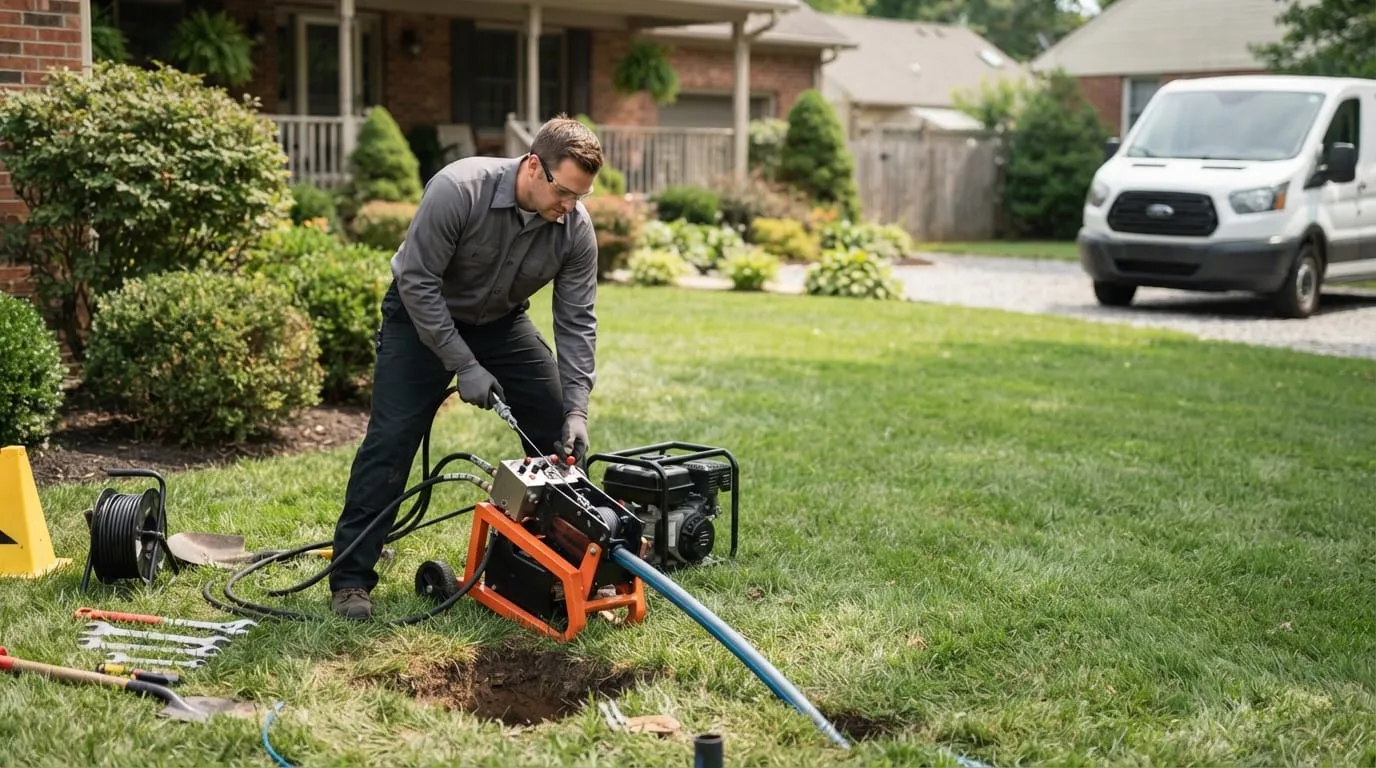
Across the older Los Angeles neighbourhoods, a large share of homes still run the clay sewer lateral they were built with. Clay cracks as it ages, comes in short sections with a joint every few feet, and sits under trees that have had decades to find those joints. Los Angeles sewer line repair plumbers in our network camera the line before recommending anything, because the repair depends entirely on what the pipe has actually done.
Free call-routing service. An independent licensed plumber does the work and quotes you directly.
Local problems
Sewer Line Repair problems we see in Los Angeles
Clay laterals cracked with age
Clay sewer pipe is widely reported as still in service across the city's pre-war neighbourhoods, including Boyle Heights, Echo Park and Mid-Wilshire. It becomes brittle over decades and cracks, and every crack is an entry point for roots and an exit point for waste.
Roots through joints in short pipe sections
Clay tile was laid in short lengths with a joint every few feet. Ground movement opens some of those joints slightly, roots find the moisture and expand into a mass that slows the line and eventually stops it. Cutting them buys a season; sealing the joints ends it.
Offsets from seismic and seasonal ground movement
Rigid pipe tolerates movement poorly. Earthquakes shift sections against each other, and the region's long dry summers and concentrated wet winters move soil in between. Offset joints catch waste on the lip and cause backups that return after every cleaning.
Bellies where a section has settled
Where a length of lateral has dropped, waste stands in the low spot rather than flowing through it and solids build up there. A belly is the one defect that cannot be lined, because a liner follows the sag, so it needs excavation and regrading at that point.
Backups that return after every cleaning
A line that blocks, gets cleared and blocks again in the same place is telling you the pipe has a defect rather than a build-up. Cabling treats the symptom. A camera shows whether it is roots, an offset, a belly or a collapse, which are four different repairs.
What is under the older neighbourhoods
The sewer lateral carries everything from the house to the public main, and across the pre-war parts of Los Angeles a great many of them are still the original clay tile.
Clay was a reasonable material and much of it has lasted a century, but it has two characteristics that decide how it fails. It becomes brittle with age and cracks. And it was laid in short sections, which means a joint every few feet along the whole run.
Above those joints, in neighbourhoods like Boyle Heights, Echo Park, Highland Park, Mid-Wilshire, West Adams and Silver Lake, are street trees and garden trees that have had fifty to a hundred years to grow. Roots do not attack sound pipe. They find moisture escaping from a joint that ground movement has opened slightly, and then they grow towards it and into it.
Los Angeles supplies plenty of that ground movement. Earthquakes shift sections against one another. The seasonal pattern of long dry summers and concentrated winter rain shrinks and swells soil in between. Rigid pipe with a joint every few feet is not well suited to either.
The result is a small number of distinct defects that all produce the same symptom, a backup that returns after cleaning, and which need completely different repairs.
Why the camera comes first
There are four things a camera typically finds, and confusing them is expensive.
Roots show as a mass growing through a joint or crack. The line can be cleared, but unless the opening is closed they return, usually within a year or two.
An offset is where two sections no longer line up, so there is a lip inside the pipe that catches waste. It is a structural defect, not a blockage, and cleaning does not change it.
A belly is a settled section that holds standing water. Solids drop out there and accumulate. This is the one defect that rules out lining, because a liner conforms to the pipe it is inside and would preserve the sag.
A collapse is a section that has lost its shape entirely and needs to be dug out and replaced.
Ask to see the recording. A plumber recommending a full replacement should be able to show you why lining will not do, and one recommending lining should be able to show you the pipe holds its shape and grade. If nobody has put a camera down the line, nobody knows which of the four you have.
Choosing between the repairs
A single broken or crushed spot in an otherwise sound line gets a spot repair through a small excavation. That is the cheapest outcome and it is a genuine one when the rest of the pipe checks out.
A line that is cracked or root-damaged along its length but still holds its shape and fall is a candidate for cured-in-place lining. A resin-saturated liner is drawn through the existing pipe and cured, leaving a jointless new pipe inside the old one. Because there are no joints, the root problem does not come back.
A lateral failing along its whole length can be replaced by pipe bursting, which pulls new pipe through the old route from two small access pits, breaking the old pipe outward as it goes.
Both trenchless methods matter more here than they would elsewhere, because of how the older neighbourhoods are laid out. Lots are narrow, driveways are often directly over the lateral, and mature landscaping and hardscaping sit on top of the run. The cost of a trench is not only the trench; it is the driveway, the patio and the trees that come with it. That is worth pricing properly against the trenchless option rather than assuming excavation is cheaper because the per-foot rate looks lower.
Bellies and collapses are the exceptions. Those need digging at that point regardless of what the rest of the line allows.
Permits, locating and the final camera
Sewer lateral work here needs permits and inspection, and any excavation needs utility locating first so that gas, electricity and communications are marked before a machine goes in the ground. Work that reaches into the parkway or the street brings its own requirements on top.
When the job is finished, a final camera run should confirm the repair and the flow through it, and you should be given that recording along with the one from the initial inspection. Those two files are what tell you, and any future owner, what is actually under the property.
Every plumber we dispatch in Los Angeles holds the California state licence and pulls city permits for the work that requires them.
Why sewer line repair matters in Los Angeles
- The pre-war housing stock across the older neighbourhoods carries a large amount of original clay lateral under mature street trees, which is the classic combination for repeat root intrusion.
- Seismic activity and the wet-dry seasonal cycle both move ground here, so offsets and separated joints are more common than they would be in stable soil.
- Lot layouts in the dense older neighbourhoods often put the lateral under driveways, hardscaping and mature landscaping, which is why trenchless methods are frequently worth the assessment.
Signs you need sewer line repair
- Backups that return within weeks of a professional cleaning
- Multiple drains in the house slow or gurgling at the same time
- Sewage odor in the yard, basement or near cleanouts
- Unusually green or soggy patches of lawn over the lateral route
- Sinkholes, depressions or cracks along the path of the sewer line
- Pest or rodent activity that suddenly increases around the house
What to expect
What happens when you call
Camera inspection and locating
A camera is run through the line to record the defect, its depth and its distance from the cleanout, so the repair is planned for the exact spot rather than a guess.
Options laid out with costs
Spot repair through a small excavation, cured-in-place lining, pipe bursting to install new pipe along the old route, or full replacement, each explained with what it fixes and what it does not.
Permits and utility locates
Sewer work requires a permit in most jurisdictions and utility locating before digging. The plumber handles both and coordinates any required inspection.
Repair, test and final camera
The repaired line is tested, inspected where required, and a final camera run confirms the defect is gone and flow is unrestricted.
Other plumbing services in Los Angeles
- Leak Detection in Los AngelesLocating hidden water leaks under slabs, inside walls, in yards and at the meter using acoustic, thermal and pressure-testing equipment, then repairing them.
- Drain Cleaning in Los AngelesProfessional clearing of slow or blocked kitchen, bathroom, laundry and floor drains using cabling, hydro jetting and camera inspection.
- Emergency Plumber in Los AngelesBurst pipes, sewage backups, no water and major leaks handled around the clock by licensed local plumbers who can be dispatched today.
- Water Heater Repair in Los AngelesDiagnosis and repair of gas, electric and tankless water heaters, including no-hot-water calls, leaks, pilot problems and sediment flushing.
Sewer Line Repair near Los Angeles
We also serve Alhambra, Burbank, Glendale, Pasadena, Santa Monica, Inglewood, Torrance, Long Beach, Culver City, Beverly Hills and the surrounding Los Angeles County area.
Questions
Sewer Line Repair questions from Los Angeles homeowners
Who is responsible for the sewer lateral in Los Angeles?
The property owner is responsible for the lateral running from the building to the connection at the public sewer main, which typically includes the portion crossing the parkway and under the street. The city maintains the main itself. The practical consequence is that almost everything a camera finds between your house and the main is yours to repair. If the camera shows the defect is at or beyond the main connection, that is the point to raise it with the city, and a plumber who has run the camera can tell you exactly where the problem sits relative to that boundary.
Can my sewer line be repaired without digging up the yard?
Frequently, yes, and in this city it is often worth the assessment because so many laterals run under driveways, patios and mature landscaping. Cured-in-place lining pulls a resin-saturated liner through the existing pipe and cures it into a new pipe inside the old one, with no trench. Pipe bursting pulls new pipe along the same path from two small access pits, replacing the run entirely. Both need the existing line to have adequate shape and slope, which the camera inspection establishes. A collapsed section or a belly still needs excavation at that point.
How do I know it is the sewer line and not just a blocked drain?
A blocked drain affects one fixture or one branch. A sewer line problem affects the lowest drains in the house first, often several at once, makes other fixtures gurgle when you run water, and comes back after cleaning. Other signs point the same way: sewer odour in the yard, unusually green or sunken patches following the line's route, and backups that coincide with heavy rain. A camera inspection settles it definitively, and it is worth doing before paying for a third cabling of the same line.
Why do the roots keep coming back after the line is cleared?
Because cutting roots does not close the way in. A cable or a cutting head removes the mass that is blocking the pipe, which restores flow, but the joint or crack the roots came through is still open and still leaking the moisture that attracted them. They regrow to the same place, typically within a season or two in a well-watered yard. The permanent fix is to close the opening, either by lining the pipe so there is no joint to enter or by replacing the section. If a line has been cleared more than once in the same spot, that is the conversation to have.
What is a belly, and why does it change the repair?
A belly is a section of pipe that has settled below the intended grade, creating a low point where waste stands instead of flowing. Solids drop out in the standing water and build up until the line blocks, and because the cause is the shape of the pipe rather than anything in it, cleaning gives only temporary relief. It matters for the repair choice because a liner conforms to the existing pipe, so lining a bellied section preserves the sag and the problem with it. Bellies have to be excavated and the pipe relaid at the correct fall.
Does sewer work in Los Angeles need a permit?
Yes. Sewer lateral repair and replacement require permits and inspection, and any excavation requires utility locating beforehand so that gas, electric and communications lines are marked. Work in the public right of way, which includes the parkway and the street, carries its own requirements. Plumbers in our network hold California licences and handle the permitting and locating as part of the job rather than leaving it to you.
Learn more about sewer line repair nationwide, or see all California plumbers.
Get it fixed
Sewer Line Repair in Los Angeles, ready now
Call with your Los Angeles ZIP code and what you are seeing. A licensed local plumber is dispatched and you get clear guidance in the meantime.
Free call-routing service. An independent licensed plumber does the work and quotes you directly.
- Licensed and insured
- Answered 24/7
- Price before work