24/7 · Los Angeles, California
Emergency Plumber in Los Angeles, CA
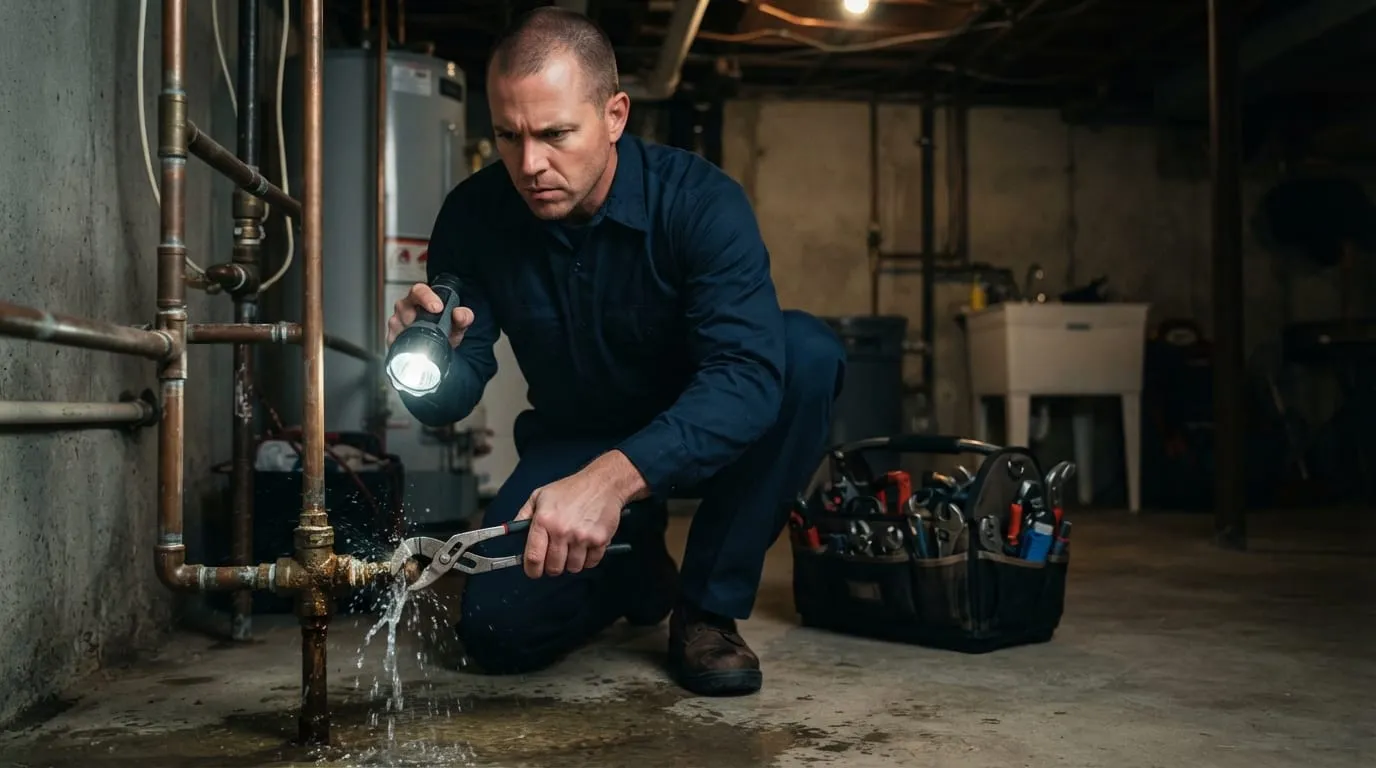
The first minute of a plumbing emergency in Los Angeles matters more than the next hour. Water running under a slab or through a wall does its damage while you look for the shutoff, so knowing where yours is before you need it is the single most useful preparation you can make. Los Angeles emergency plumbers in our network answer around the clock and will walk you through the shutoff on the call.
Free call-routing service. An independent licensed plumber does the work and quotes you directly.
Local problems
Emergency problems we see in Los Angeles
Slab leaks that surface as flooding
A slab leak that has been running quietly for weeks can break through as water appearing across a floor with no visible source. Shutting off the main stops it, but the water already under the slab and in the subfloor keeps causing damage until the leak is located.
Sewage backing up into the lowest fixtures
When a lateral blocks, waste comes back through whatever drain sits lowest, usually a shower or a floor drain. Stop running water anywhere in the house immediately, because every fixture used adds to what has nowhere to go.
Burst supply lines and failed connectors
Braided appliance connectors, angle stops and flexible supply lines fail without warning and deliver water at full pressure. In hillside areas where pressure runs high, these fail more often, and the fixture shutoff is usually closer and faster than the main.
Water heaters letting go
A tank that corrodes through empties its full contents and keeps refilling until the supply is closed. In a garage or an exterior closet, that can run for a long time before anyone notices, which is why knowing the heater's own shutoff matters.
Earthquake damage to gas and water lines
Ground movement can break rigid pipe and, in older homes, snap brittle gas connections. After significant shaking, a gas smell is an evacuate-and-call situation rather than a plumbing call, and the water main should be closed if lines are suspect.
Find the shutoff before you need it
The advice that matters most in a plumbing emergency has to be acted on before the emergency starts.
Water escaping under pressure does damage at a rate that has nothing to do with how fast a plumber can drive across Los Angeles. In the twenty minutes it takes to find a valve you have never looked for, a failed connector can put a great deal of water into a floor, and in a slab house most of it goes somewhere you cannot see or dry out easily.
There are usually two shutoffs worth knowing. The first is at the meter, typically in a covered box near the property line by the street, which normally needs a meter key or an adjustable wrench to turn. The second is on the house side where the supply enters the building, often on an exterior wall towards the front, sometimes in a garage or a utility closet.
Find both now. Confirm they turn, because a valve that has not been operated in twenty years frequently will not, and finding that out during a flood is a considerably worse moment to discover it. If yours is seized, replacing it is a small scheduled job rather than an emergency one.
For a fixture that is flooding, the fixture’s own stop is faster than the main: the small valve under a sink, behind a toilet, or on the cold inlet at the top of the water heater. Knowing those exist is what turns a flood into a spill.
Slab houses hide the damage
A great deal of Los Angeles housing sits directly on concrete, which changes what an emergency looks like here.
When a supply line under a slab fails, the water does not appear where the pipe is. It travels through the fill and along the underside of the concrete until it finds an edge, a crack or a penetration, which is why the first sign is often water coming up somewhere that makes no sense, or a floor that is warm in a patch, or simply a bill that has doubled.
By the time it is visible it has usually been running a while. That is not a reason to panic, but it is a reason to treat it seriously rather than watching it for another week. Shutting off the main stops the leak getting worse. It does not remove what is already underneath, which is why locating and drying matters and why a slab leak is worth a same-day call rather than a next-week one.
The reverse case matters too. If shutting the main stops the sound of running water, the leak is on your supply. If it does not, you are looking at a drain problem instead, and that is a different job.
Backups, and the instinct to keep using the house
Sewage coming back into the house is the emergency where the homeowner most often makes it worse without meaning to.
When a lateral is blocked, everything that goes down any drain in the house has to come out somewhere, and it comes out at the lowest opening, usually a ground-floor shower, a bathtub or a floor drain. Running a tap, flushing, or starting a washing machine or dishwasher adds directly to what is already backing up.
So the first move is to stop using water entirely, everywhere, and keep people and pets away from anything that has come up. Then call.
One detail is worth mentioning on the call: whether it is raining. A backup that arrives with heavy rain suggests water getting into the system, which is a different diagnosis from a dry-weather backup, and it points more towards a defective or infiltrated line than a straightforward blockage. Either way it usually needs a camera rather than a guess, but knowing which one you are dealing with shapes the visit.
After an earthquake
This region gives its plumbing a particular kind of test, and the aftermath has an order of operations.
Gas comes first and is not a plumbing call. If you smell gas, leave, take everyone with you, do not touch any switch on the way out, and call the gas utility’s emergency line or 911 from outside. Older houses here can still have rigid gas connections that do not tolerate ground movement well, so this is a real risk rather than a theoretical one.
Water comes second. If you suspect lines have been damaged, close the main until they can be checked, particularly in a slab house where a break underneath would not be visible. Then look at the obvious things: the water heater still upright and strapped, no water at its base, no damp appearing at wall bases or floor edges.
Every plumber we dispatch in Los Angeles holds the California state licence and pulls city permits for the work that requires them. Call (844) 644-7731 and the line is answered around the clock.
Why emergency plumbing matters in Los Angeles
- Much of the city's housing is slab-on-grade, so escaping water travels under concrete where it cannot be seen and damage accumulates before the leak becomes visible.
- High static pressure in the hillside and canyon areas causes connectors and fittings to fail suddenly rather than gradually, and those failures deliver water fast.
- Water heaters are commonly installed in garages and exterior enclosures where a failure is not noticed quickly, making the heater shutoff worth locating in advance.
Signs you need emergency plumbing
- Water is actively running where it should not be, and the main shutoff is the only thing stopping it
- More than one drain is backing up at the same time, which points to the main sewer line
- You hear water running inside walls or under the floor with every fixture off
- Ceiling drywall is sagging, bubbling or dripping
- The water meter keeps spinning after every fixture is closed
What to expect
What happens when you call
Call and describe what you see
Tell us what is leaking or backed up, where it is, and whether you have found the shutoff. That tells the dispatcher what kind of plumber and equipment to send.
Stop the damage first
While a plumber is on the way, we walk you through closing the main water valve, killing power to a leaking water heater, or keeping drains unused during a sewer backup.
On-site diagnosis and a price before work starts
The plumber isolates the failure, explains what repair is needed and what it will cost, and only then starts. Temporary fixes are offered when a permanent repair has to wait for parts or daylight.
Repair and pressure test
The line, valve or fixture is repaired or replaced, the system is refilled and tested, and you are told what caused it so it does not happen again.
Other plumbing services in Los Angeles
- Water Heater Repair in Los AngelesDiagnosis and repair of gas, electric and tankless water heaters, including no-hot-water calls, leaks, pilot problems and sediment flushing.
- Leak Detection in Los AngelesLocating hidden water leaks under slabs, inside walls, in yards and at the meter using acoustic, thermal and pressure-testing equipment, then repairing them.
- Sewer Line Repair in Los AngelesCamera-verified repair and replacement of cracked, collapsed, root-damaged or bellied sewer laterals, including trenchless lining and pipe bursting.
- Drain Cleaning in Los AngelesProfessional clearing of slow or blocked kitchen, bathroom, laundry and floor drains using cabling, hydro jetting and camera inspection.
Emergency Plumber near Los Angeles
We also serve Alhambra, Burbank, Glendale, Pasadena, Santa Monica, Inglewood, Torrance, Long Beach, Culver City, Beverly Hills and the surrounding Los Angeles County area.
Questions
Emergency Plumber questions from Los Angeles homeowners
What should I do first in a plumbing emergency?
Stop the water, then call. For anything flooding, the fastest option is often the fixture's own shutoff, the small valve under a sink or behind a toilet, or the valve on top of the water heater. If the leak is not at a fixture, or you cannot tell where it is, close the main. In most Los Angeles homes that is either at the meter near the street or where the supply enters the building, often on the side of the house near the front. Turn it clockwise until it stops. If the emergency involves a water heater or any electrical contact with water, cut the power to that circuit as well.
Where is my main water shutoff likely to be?
Two common places. There is a valve at the water meter, usually in a covered box at the property line near the street or the sidewalk, which needs a meter key or an adjustable wrench. And there is often a house-side valve where the supply line enters the building, frequently on an exterior wall near the front, sometimes in a garage or a utility closet. It is worth finding yours now, in daylight, and confirming it actually turns. A seized shutoff discovered during an emergency is a common and entirely avoidable problem.
Is a sewage backup an emergency?
Yes, and the most useful thing you can do is stop adding to it. Do not run taps, do not flush, do not run the washing machine or dishwasher. Every gallon that goes down a drain in a house with a blocked lateral has to come out somewhere, and that is usually the lowest fixture. Keep people away from standing sewage, because it is a genuine health hazard rather than just unpleasant. If the backup coincides with heavy rain, mention that when you call, because it points at a different cause than a dry-weather backup and can change what the plumber brings.
I smell gas. Should I call a plumber?
No, not first. Leave the building, take everyone with you, and do not switch anything on or off on the way out, including lights, because a switch can spark. Once you are outside and clear, call the gas utility's emergency line or 911. Do not go back in to open windows or look for the source. This matters here because older Los Angeles homes can retain rigid gas connections that are vulnerable to earthquake movement, so a gas smell after shaking should be treated with particular seriousness.
What counts as an emergency versus something that can wait until morning?
Call immediately for water you cannot stop, sewage entering the house, a gas smell, or any water near electrical equipment. Those get worse by the minute. A single blocked fixture where other drains still work, a dripping tap, a running toilet or a water heater producing lukewarm water are genuinely uncomfortable but they are not usually emergencies, and calling in normal hours will cost less. If you are unsure, describe what you can see when you call and you will get a straight answer about whether it needs someone tonight.
What will you need to know when I call?
Where you are, what you can see, and whether the water is stopped. Say which fixtures are affected and whether the problem is on the hot side, the cold side or both, because that narrows the cause considerably. Mention if the house is on a slab, if the water heater is in a garage or outside, and whether anything similar has happened before. If a backup coincides with rain, say so. None of this is a test; it decides what the plumber brings and how quickly they need to be there.
Learn more about emergency plumbing nationwide, or see all California plumbers.
Get it fixed
Emergency Plumber in Los Angeles, ready now
Call with your Los Angeles ZIP code and what you are seeing. A licensed local plumber is dispatched and you get clear guidance in the meantime.
Free call-routing service. An independent licensed plumber does the work and quotes you directly.
- Licensed and insured
- Answered 24/7
- Price before work