Los Angeles, California
Drain Cleaning in Los Angeles, CA
Most blocked drains in Los Angeles are exactly what they look like and clear in under an hour. The ones worth paying attention to are the drains that block again in the same place, because in this city that usually means an old clay lateral with roots in it rather than anything you put down the sink. Los Angeles drain cleaning plumbers in our network will tell you which of the two you have.
Free call-routing service. An independent licensed plumber does the work and quotes you directly.
Local problems
Drain Cleaning problems we see in Los Angeles
Kitchen lines closed by grease and scale
Cooking fat goes down warm and solidifies on the pipe wall as it cools, narrowing the line over years. Where the local supply is at the harder end of the city's range, mineral scale adds to the same restriction, and the two together leave very little bore.
Main line backups from roots in clay pipe
In the older neighbourhoods the lateral is frequently original clay with a joint every few feet, under trees that have had decades to find them. A main line that blocks, clears and blocks again in the same spot is a pipe problem rather than a build-up.
Bathroom drains blocked by hair and soap
Hair binds with soap residue into a mass that catches everything after it, usually within the first few feet of a shower or basin waste. It is the most common blockage in the city and also the easiest to prevent with a strainer.
Slow drains across several fixtures at once
One slow fixture is that fixture. Several going slowly together, with gurgling when another fixture runs, points at the shared line downstream and needs to be treated as a main line question rather than a series of separate blockages.
Disposals sending the wrong things down a narrow line
A garbage disposal grinds waste but does not change what happens next. Fibrous scraps, coffee grounds, rice and pasta pass the disposal and settle in the horizontal run beyond, particularly in older narrow kitchen lines.
The two kinds of blocked drain
There is a distinction worth making before anyone books a visit, because it decides whether you are buying a fix or a postponement.
The first kind is a blockage caused by what went into the pipe. Hair and soap in a shower waste. Grease in a kitchen line. Something a child posted down a toilet. These clear, and once cleared they stay clear for a good while, and preventing the next one is a matter of habit and a strainer.
The second kind is a blockage caused by the pipe itself. Roots growing in through a joint. A section that has dropped and now holds standing water. Two lengths that no longer line up, leaving a lip that catches everything passing. These also clear. Then they come back, in the same place, because nothing about the pipe changed.
In Los Angeles the second kind is more common than in most cities, for a specific reason. A large share of the older housing still runs its original clay sewer lateral, laid in short sections with a joint every few feet, under trees that have had many decades to grow over it.
If your main line has been cleared more than once in the same spot, you are in the second category, and continuing to buy cleanings is the expensive way to handle it.
What actually clears a drain
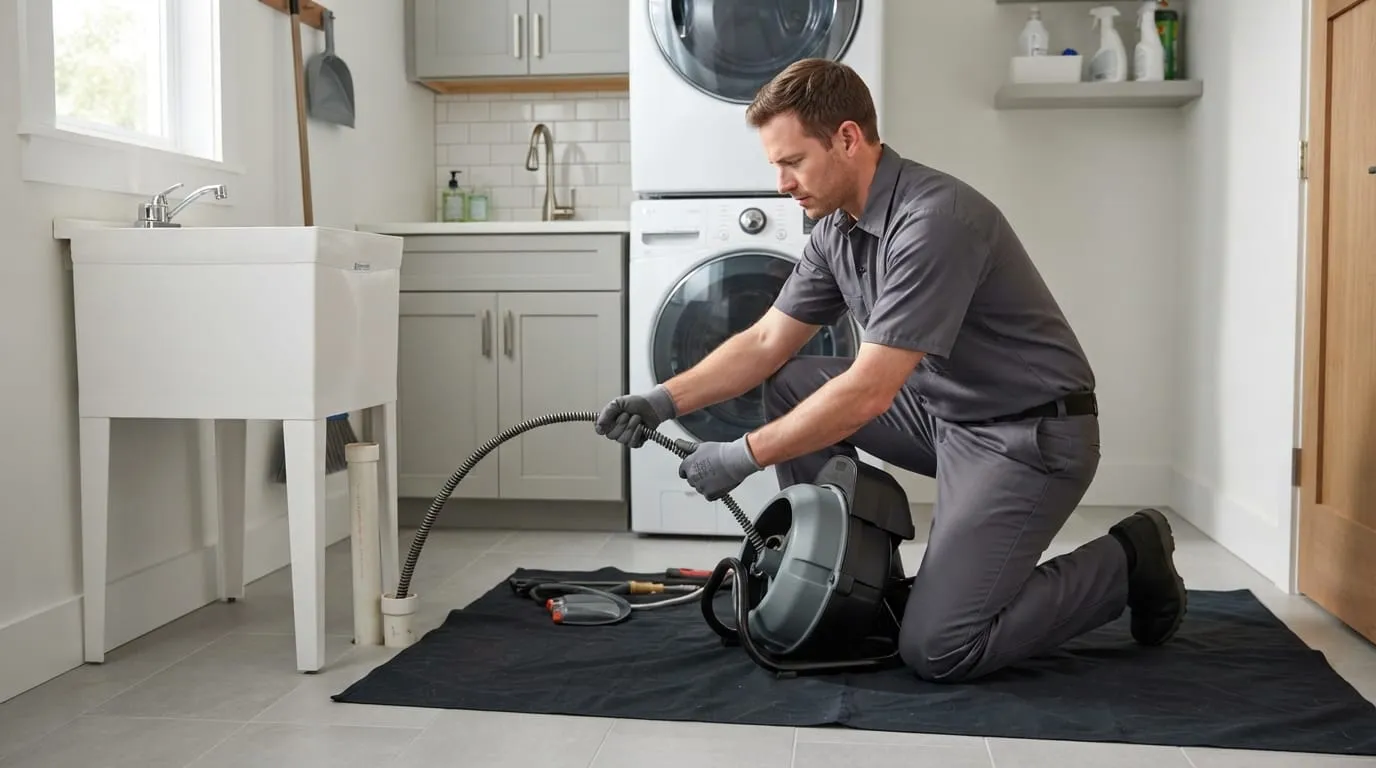
Cabling is the standard tool and the right first answer for most blockages. A motorised steel cable is driven into the line, and a head on the end breaks up whatever is in the way and restores flow. It is fast and it works on hair, grease plugs, paper build-up and root masses.
Hydro jetting is the heavier option. High-pressure water through a directional nozzle scours the full circumference of the pipe wall rather than boring a channel through the middle of the obstruction. For a kitchen line that has been narrowing with grease for fifteen years, jetting removes the accumulation properly where a cable would punch a hole through it and leave the rest in place.
The important caveat is that jetting applies real force to the pipe. In a line that is already cracked, corroded or structurally weak, and Los Angeles has plenty of those, it can convert a restriction into a failure. That is the argument for a camera inspection before jetting an old line, not as an upsell but as a check that the pipe can take it.
A camera is also what tells you whether you are in the first category or the second.
Kitchen lines, and why they close so slowly you do not notice
Kitchen blockages are usually years in the making.
Fat and oil leave the pan as a liquid and go down the drain warm. A few feet along, in cooler pipe, they cool and stick to the wall. Each time, a fractionally thicker layer. Running hot water after them does not solve it; it moves the problem further down the line to where the water has cooled anyway.
In parts of the city where the supply sits at the harder end of the local range, mineral scale builds on the same surfaces and the two accumulate together. In older narrow drain pipe the starting bore was not generous to begin with.
Which is why a kitchen line often gives no warning until it gives no drainage. The fix at that point is to remove the accumulation rather than open a channel through it, and the prevention afterwards is genuinely as simple as putting fat in the bin.
When it is the main line
The signs that the problem is downstream of everything rather than in one fixture are consistent and easy to read.
The lowest drains in the house go first, because that is where water finds its level. Several fixtures slow at the same time. A toilet bubbles when the washing machine empties. Running a basin brings water up in a shower. There may be sewer odour outside along the route of the line, or a strip of grass that is greener or more sunken than what is around it.
At that point a camera is worth more than another cabling. It distinguishes roots from an offset from a belly from a collapse, and those are four different repairs at four different prices. Roots through a joint can often be dealt with permanently by lining the pipe, which leaves no joint to grow back into. A belly cannot be lined at all and needs excavating. Knowing which you have is the difference between fixing it and renting a solution annually.
Every plumber we dispatch in Los Angeles holds the California state licence and pulls city permits for the work that requires them.
Why drain cleaning matters in Los Angeles
- The older neighbourhoods carry a large stock of original clay laterals under mature trees, so recurring main line blockages here more often mean root intrusion than misuse.
- Hardness varies across the city's supply areas, and in the harder parts scale contributes to the narrowing of kitchen and older galvanized lines alongside grease.
- The dense pre-war housing stock includes a lot of narrow original drain pipe, which tolerates less build-up before it stops draining than modern pipe does.
Signs you need drain cleaning
- Water drains noticeably slower than it used to in one fixture
- Gurgling sounds from a drain when another fixture is used
- Sewer or rotten-egg odor coming from a drain
- A clog that comes back within weeks of being cleared
- Standing water in a tub or shower during use
What to expect
What happens when you call
Identify which drains are affected
One slow fixture usually means a local clog in its trap or branch line. Several fixtures backing up together points to the main line, which is a different job with different equipment.
Choose the right method
A cable machine cuts through hair, grease and small root intrusions in branch lines. Hydro jetting scours the full pipe diameter with high-pressure water and is the right tool for heavy grease and scale.
Clear the line and verify flow
The plumber clears the blockage and runs water to confirm normal flow, watching for slow recovery that would indicate a second restriction further down.
Camera inspection when clogs repeat
If the same drain has clogged before, a camera run shows whether there is a belly, offset joint, root entry or pipe damage that cleaning alone will not fix.
Other plumbing services in Los Angeles
- Water Heater Repair in Los AngelesDiagnosis and repair of gas, electric and tankless water heaters, including no-hot-water calls, leaks, pilot problems and sediment flushing.
- Leak Detection in Los AngelesLocating hidden water leaks under slabs, inside walls, in yards and at the meter using acoustic, thermal and pressure-testing equipment, then repairing them.
- Sewer Line Repair in Los AngelesCamera-verified repair and replacement of cracked, collapsed, root-damaged or bellied sewer laterals, including trenchless lining and pipe bursting.
- Emergency Plumber in Los AngelesBurst pipes, sewage backups, no water and major leaks handled around the clock by licensed local plumbers who can be dispatched today.
Drain Cleaning near Los Angeles
We also serve Alhambra, Burbank, Glendale, Pasadena, Santa Monica, Inglewood, Torrance, Long Beach, Culver City, Beverly Hills and the surrounding Los Angeles County area.
Questions
Drain Cleaning questions from Los Angeles homeowners
Is a chemical drain cleaner worth trying first?
Generally not, and it can make the visit that follows worse. Caustic cleaners work on hair and soap in a partly open line, but if the drain is fully blocked the chemical sits in the pipe rather than draining through it, and that means whoever opens the trap afterwards is dealing with it. In older housing they are a poor idea for another reason: they generate heat, and they can damage old pipe, seals and the remaining wall of a corroded line. Boiling water and a plunger are safe first attempts. Beyond that, a cable clears the blockage properly rather than partly dissolving it.
Cabling or hydro jetting, and what is the difference?
Cabling drives a rotating steel cable through the blockage to break it up and restore flow. It is quick, effective on most common blockages and the right first tool. Hydro jetting uses high-pressure water through a specialised nozzle to scour the pipe wall clean along its full circumference, which is what you want for accumulated grease and for root cutting rather than root punching. Jetting does more, costs more, and is not appropriate for pipe that is already structurally weak. In an old, corroded or cracked line, jetting can turn a restriction into a failure, which is why a camera before jetting is sensible.
Why does my main line keep blocking in the same place?
Because a defect keeps catching things. Clearing a blockage restores flow but does not change the pipe, so if the cause is roots through an open joint, an offset where two sections no longer line up, or a bellied section holding standing water, the same spot fills again. In the older Los Angeles neighbourhoods roots in clay are the most common answer by a distance. A camera inspection identifies which it is, and at that point you can make a decision about repair rather than paying for the same cleaning every year.
How do I tell a local blockage from a main line problem?
Watch what else happens. A single slow or blocked fixture with everything else running normally is a local problem in that fixture's own waste. If the lowest drains in the house back up, if several fixtures slow together, if a toilet bubbles when the washing machine drains, or if water appears in a shower when you flush, the shared line downstream is the issue. That is a main line question and clearing one fixture will not help. The pattern is usually enough to tell, and a camera confirms it.
What should never go down the drain?
Cooking fat and oil, which are the leading cause of kitchen line blockages, and which should be cooled and binned rather than rinsed away with hot water, since the hot water only carries them further along before they set. Coffee grounds, rice, pasta and fibrous vegetable waste, all of which pass a disposal and then settle. Anything described as flushable, including wipes, which do not break down like paper. Paint, joint compound and grout rinse water, which set inside the pipe. And in a house with old narrow drains, being cautious about all of the above matters more than it does in newer pipe.
Can I prevent blockages rather than keep paying to clear them?
Largely, yes, and the measures are unglamorous. Strainers on shower and basin wastes catch hair before it enters the pipe and are the single highest-return thing you can do. Fat in the bin rather than the sink handles most kitchen blockages. Running plenty of cold water with a disposal rather than hot helps waste travel further before it settles. What none of that prevents is root intrusion, because that comes from outside the pipe rather than inside it. If your recurring problem is the main line, prevention is a repair decision rather than a habit.
Learn more about drain cleaning nationwide, or see all California plumbers.
Get it fixed
Drain Cleaning in Los Angeles, ready now
Call with your Los Angeles ZIP code and what you are seeing. A licensed local plumber is dispatched and you get clear guidance in the meantime.
Free call-routing service. An independent licensed plumber does the work and quotes you directly.
- Licensed and insured
- Answered 24/7
- Price before work