Service
Water Heater Replacement
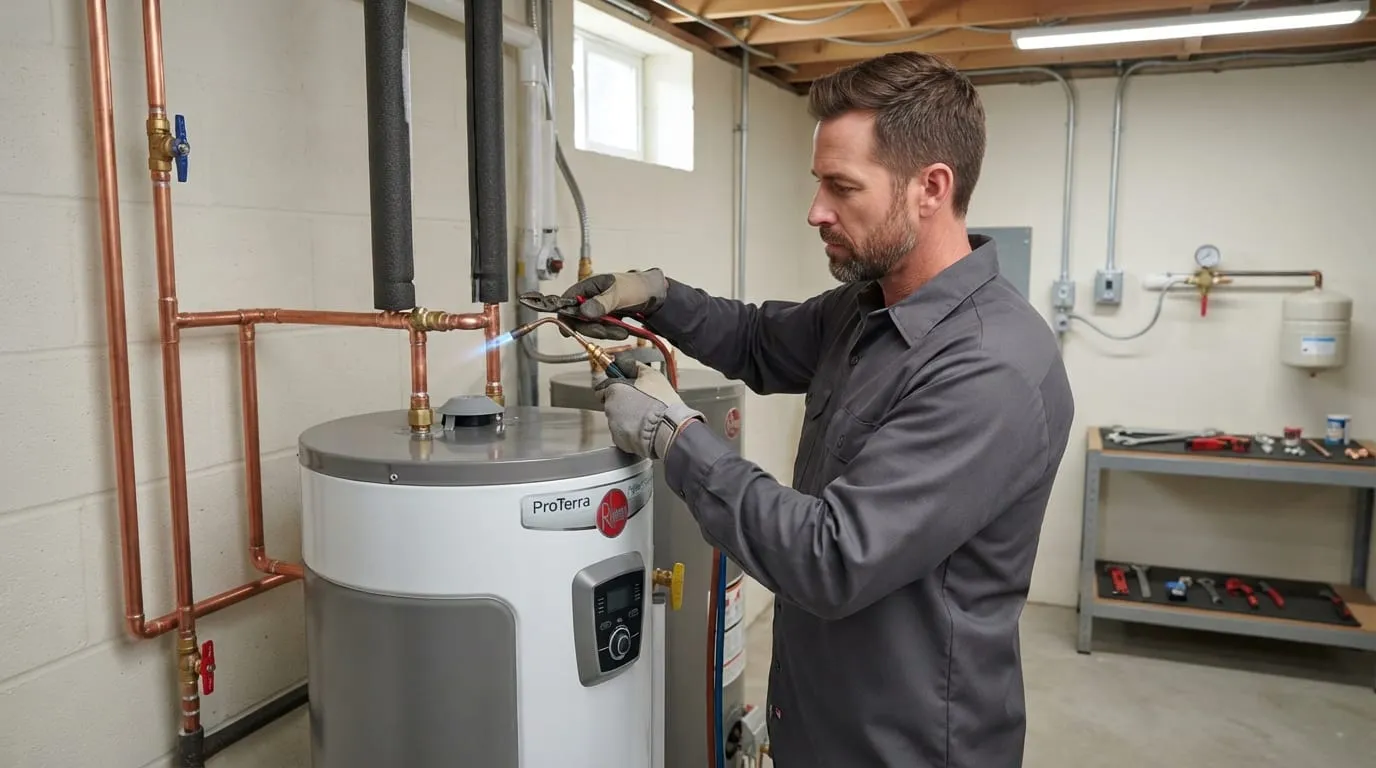
Replacing a water heater that has failed or is near the end of its life, including sizing, removal of the old unit and bringing the install up to code.
Free call-routing service. An independent licensed plumber does the work and quotes you directly.
- Licensed and insured
- Price agreed before work
- A plumber who works your area
Replacement is confirmed, not assumed
Before anything is priced, one question has to be answered: where is the water coming from.
A leak from a fitting, a valve, a connection or the relief line is a repair. A leak from the tank shell is not, because the steel has corroded through from the inside and there is nothing to seal against.
Those are very different outcomes and the difference is visible. Ask to be shown.
The moment to fix what was wrong before
A replacement is the one opportunity to correct things that a repair never touches.
Sizing. The existing tank reflects a decision made for a household that may not be yours. Undersized heaters that have been running out of hot water for years are common, and this is the point to size against how the house actually uses water.
The installation itself. Venting, combustion air, relief valve discharge, seismic strapping where it applies, a drain pan where the heater sits above living space, and a proper shutoff. Reproducing an old installation faithfully includes reproducing its faults.
A straight like-for-like swap with no conversation about either is the cheap version of this job, and it is cheap for a reason.
Does this sound familiar?
Problems this service solves
- A tank leaking from the shell, which cannot be repaired
- A heater beyond its expected service life
- A unit too small for the household's actual demand
- Repeated repairs stacking up on an old tank
- An installation that no longer meets current requirements
Signs you need water heater replacement
If more than one of these is true, the problem is usually past the point a plunger or a store-bought cleaner will fix.
- Water is coming from the tank body rather than a fitting
- The heater is more than about ten years old
- Hot water runs out much sooner than it used to
- Rust in the hot water or visible corrosion on the tank
What to expect
How the visit works
Confirm it is the tank
A leak from a fitting or valve is a repair. Replacement starts by confirming the tank itself has failed, not by assuming it.
Size for actual demand
The replacement is sized against how the household actually uses hot water, not against whatever happened to be there before.
Remove and install
The old unit is drained and taken away, and the new one connected with the correct fittings, expansion control and pan where needed.
Bring the install up to standard
Venting, seismic strapping, relief discharge and shutoffs are corrected to current requirements rather than reproducing the old installation.
What's included
What you get on every job, whoever we send.
- Replacement confirmed rather than assumed
- Sizing based on real demand, not on what was there
- The old unit removed and disposed of
- The installation brought up to current requirements, not just swapped
Questions
Water Heater Replacement questions
How long should a water heater last?
A conventional tank generally lasts around eight to twelve years, and tankless units considerably longer. Water quality is the biggest variable: in hard-water areas, sediment shortens tank life significantly unless the heater has been flushed regularly. A tank past ten years that has started leaking from the body has reached its end, and spending on it is buying weeks rather than years.
Should I replace like for like?
Not automatically. The existing size reflects a decision someone made about a household that may no longer resemble yours, and it is common to find a tank that has been undersized for years. Replacement is the natural moment to size against actual demand, and also to consider whether a tankless unit suits your pattern of use. What should not happen is a straight swap with no conversation about either.
Does replacing a water heater need a permit?
In most jurisdictions yes, and it exists for good reason: gas venting, combustion air, relief valve discharge and seismic restraint are all safety items that get checked. It also matters at resale, when unpermitted work on a gas appliance is the kind of thing that surfaces. A quote that is cheaper because it skips the permit is not a saving, it is a deferred cost.
Related services
Water Heater Installation
Sizing, permitting and installing replacement tank, tankless and heat pump water heaters, with proper venting, expansion tanks and code-required safety devices.
See what this coversWater Heater Repair
Diagnosis and repair of gas, electric and tankless water heaters, including no-hot-water calls, leaks, pilot problems and sediment flushing.
See what this coversTankless Water Heater Replacement
Replacing an existing tankless unit that has failed or been outgrown, reusing the gas, venting and condensate work already in place where it is suitable.
See what this coversLeak Detection
Locating hidden water leaks under slabs, inside walls, in yards and at the meter using acoustic, thermal and pressure-testing equipment, then repairing them.
See what this covers

Get it fixed
Water Heater Replacement, handled locally
Call with your ZIP code and what you are seeing. We route you to a licensed plumber in your area who does water heater replacement every week.
Free call-routing service. An independent licensed plumber does the work and quotes you directly.
- Licensed and insured
- Answered 24/7
- Price before work