Service
Tankless Water Heater Installation
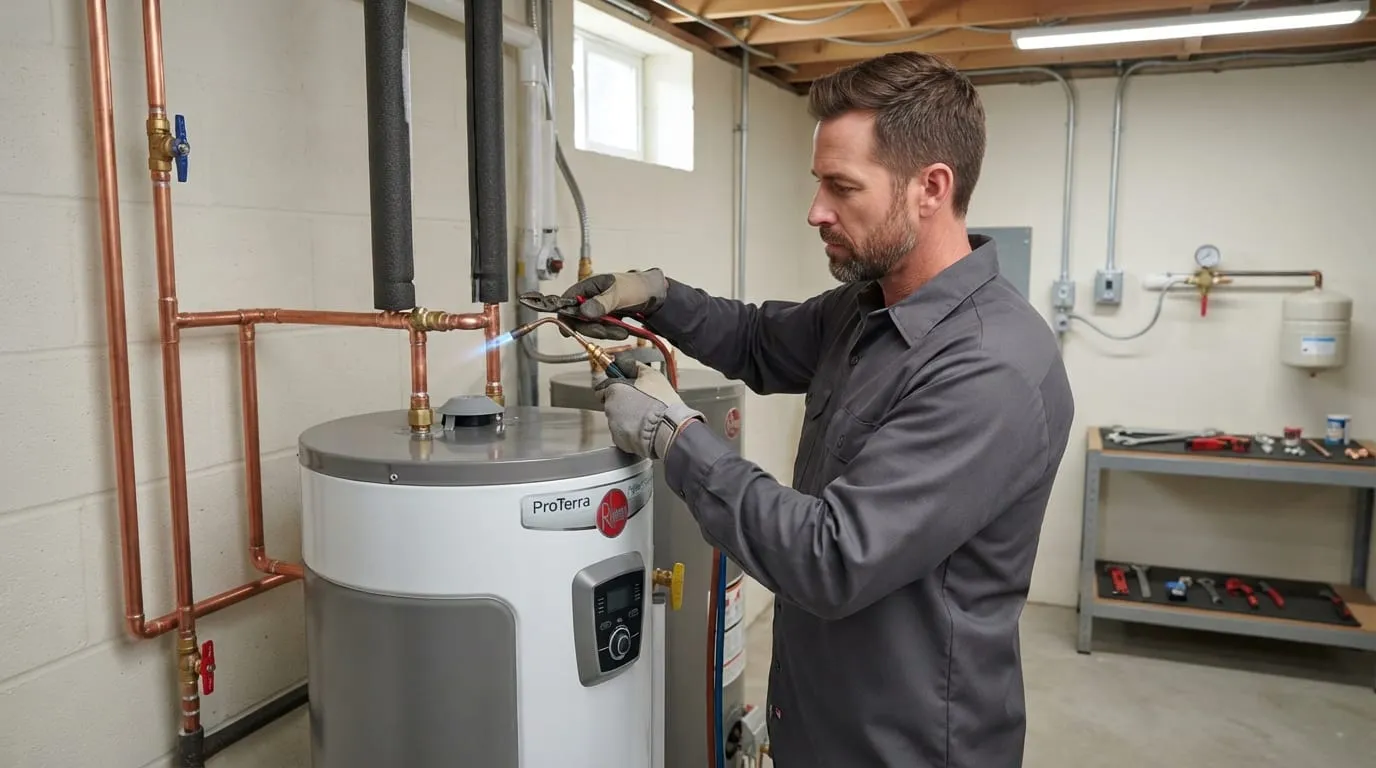
Installing on-demand water heaters, including the gas line sizing, venting and condensate handling that the unit itself does not come with.
Free call-routing service. An independent licensed plumber does the work and quotes you directly.
- Licensed and insured
- Price agreed before work
- A plumber who works your area
The unit is the cheap part
The most common surprise with tankless is that the appliance is a minority of the cost.
Gas. A tankless heater draws far more gas while firing than the tank it replaces. The existing line is frequently undersized, and correcting that can mean new pipe back toward the meter.
Venting. These units do not use the old flue. Condensing models in particular need their own venting arrangement.
Condensate. A condensing unit produces acidic condensate. It needs proper drainage and usually neutralisation, not a hose to the nearest floor waste.
Power. Condensing units need an electrical supply where the tank needed none.
A quote that covers only the unit and a day’s labour is not a quote for a working installation.
Size for winter, not for the brochure
The rating that matters is flow at a temperature rise, not a single headline number.
A tankless heater will supply hot water indefinitely, up to a maximum rate. Beyond that, temperature falls. So the sizing question is how many fixtures might realistically run at once.
And it has to be answered for winter. Incoming water in January is far colder than in July, which means a much greater temperature rise for the same output, which means substantially less available flow. A unit sized on summer figures will disappoint in the first cold month.
Does this sound familiar?
Problems this service solves
- Replacing a tank heater with an on-demand unit
- A household that runs out of hot water with a tank
- Wanting to recover the floor space a tank occupies
- A gas line that will not support a tankless unit as it stands
- New construction or a full bathroom addition
Signs you need tankless water heater installation
If more than one of these is true, the problem is usually past the point a plunger or a store-bought cleaner will fix.
- The existing tank cannot keep up with demand
- You are replacing a heater and reconsidering the type
- Floor space where the tank sits is needed
- Standby heat loss on an old tank is a concern
What to expect
How the visit works
Size for peak simultaneous demand
Tankless units are rated by flow at a given temperature rise. Sizing follows how many fixtures might run at once and how cold the incoming water is in winter.
Assess gas and electrical supply
The existing gas line frequently needs upsizing, and condensing units need power. This is where most of the real cost sits and it is established before anything is agreed.
Plan venting and condensate
Tankless units vent differently from tanks, and condensing models produce acidic condensate that needs correct drainage and neutralisation.
Install, commission and explain
The unit is installed, commissioned and set, and you are shown the descaling requirement, because that is what keeps it performing.
What's included
What you get on every job, whoever we send.
- Sized for peak simultaneous use, not a nominal rating
- Gas, venting and condensate priced up front rather than discovered
- Condensate handled correctly rather than run to the nearest drain
- The maintenance requirement explained at handover
Questions
Tankless Water Heater Installation questions
Why is installation more expensive than the unit?
Because a tankless heater rarely drops into the space a tank left. It draws far more gas when firing, so the existing line is often undersized and needs upgrading back to the meter. It vents differently, usually requiring new venting rather than the old flue. Condensing models produce acidic condensate that needs proper drainage and neutralisation, and they need an electrical supply. Those are the real costs, and a quote that ignores them is not a quote for a working installation.
Will a tankless unit really never run out of hot water?
It will not run out, but it can run short. A tankless heater delivers a maximum flow rate at a given temperature rise, so it can supply hot water indefinitely up to that rate. Ask it for more, two showers and a dishwasher at once in winter, and the temperature drops. Sizing is about peak simultaneous demand and the coldest incoming water you get, not about the headline rating on the box.
Do tankless heaters work in cold climates?
Yes, but sizing has to account for it, because the unit is rated on temperature rise rather than output temperature. Incoming water at five degrees needs far more work to reach a usable temperature than incoming water at twenty, so the same unit delivers considerably less flow in January than in July. A unit sized on summer conditions will disappoint in winter, and that is a specification error rather than a product fault.
Related services
Tankless Water Heater Repair
Diagnosis and repair of on-demand water heaters, including error codes, scaled heat exchangers, ignition faults and inadequate flow.
See what this coversWater Heater Installation
Sizing, permitting and installing replacement tank, tankless and heat pump water heaters, with proper venting, expansion tanks and code-required safety devices.
See what this coversGas Line Installation
Running new gas lines for ranges, dryers, water heaters, fire pits and generators, sized for the appliance and pressure tested before use.
See what this coversWater Heater Repair
Diagnosis and repair of gas, electric and tankless water heaters, including no-hot-water calls, leaks, pilot problems and sediment flushing.
See what this covers

Get it fixed
Tankless Water Heater Installation, handled locally
Call with your ZIP code and what you are seeing. We route you to a licensed plumber in your area who does tankless water heater installation every week.
Free call-routing service. An independent licensed plumber does the work and quotes you directly.
- Licensed and insured
- Answered 24/7
- Price before work