Service
Gas Line Installation
Running new gas lines for ranges, dryers, water heaters, fire pits and generators, sized for the appliance and pressure tested before use.
Free call-routing service. An independent licensed plumber does the work and quotes you directly.
- Licensed and insured
- Price agreed before work
- A plumber who works your area
Size the system, not the appliance
The most common mistake in gas work is sizing a new line for the appliance going on the end of it.
Gas pipe capacity depends on diameter, total length, and the combined demand of everything drawing from it. Adding a range to a line already serving a furnace and a water heater raises the load on every shared section upstream.
If that shared section is undersized, all three appliances underperform when they run together. The furnace struggles on a cold morning while the oven is on, and nobody connects the two events.
It is arithmetic and it has to be done for the whole system, every time something is added.
The pressure test is the job
Everything else in a gas installation is preparation for one step.
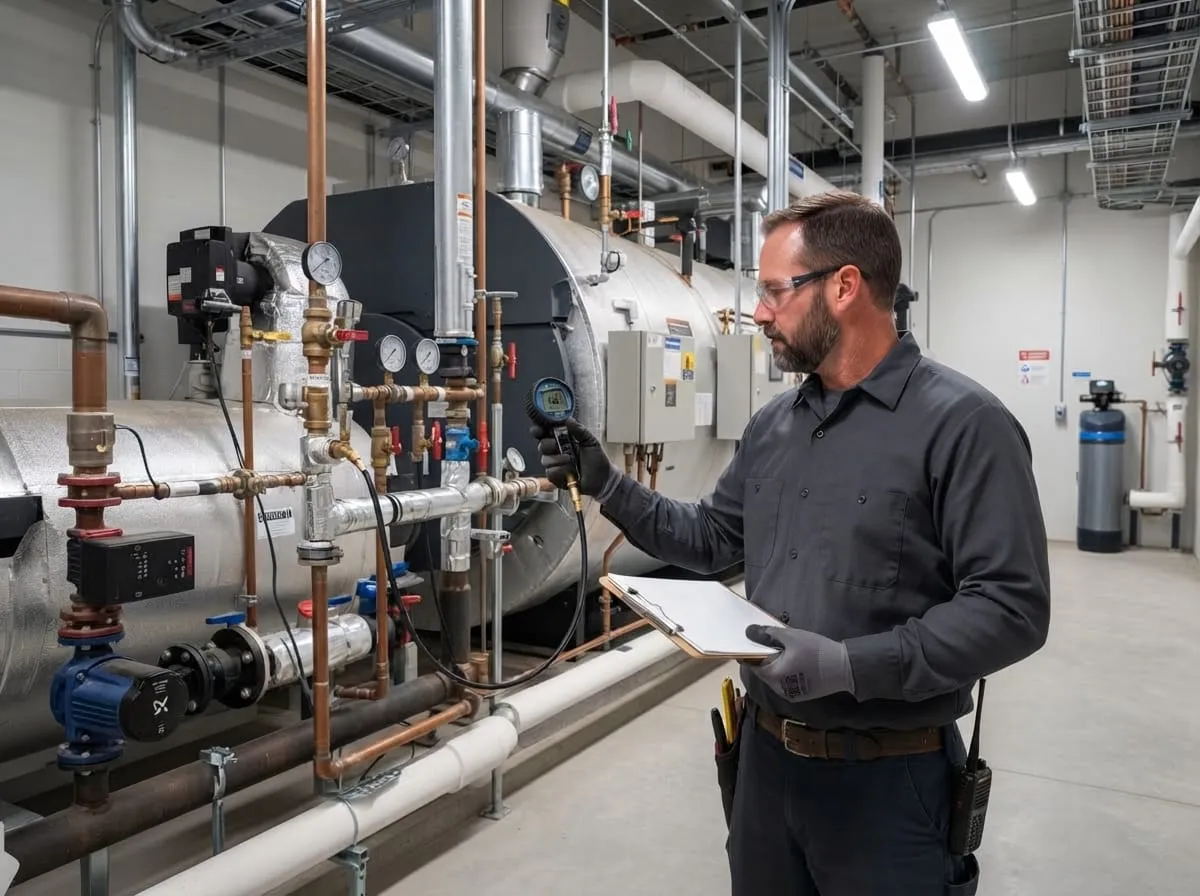
The completed line is isolated, charged with air to a specified pressure, and watched over a set period. If it holds, the system is sound. If it drops, there is a leak and it gets found before any gas enters the pipe.
That test, and the inspection that usually accompanies it, is the reason this work is permitted and licensed.
Any arrangement that skips it, however cheap, has produced a gas line that nobody has actually proven. That is the part worth paying for.
Does this sound familiar?
Problems this service solves
- Adding a gas range where only electric exists
- Running a line for a gas dryer or water heater
- Supplying an outdoor grill, fire pit or pool heater
- Connecting a standby generator
- An existing line too small for a new appliance
Signs you need gas line installation
If more than one of these is true, the problem is usually past the point a plunger or a store-bought cleaner will fix.
- A new gas appliance is going in with no line to it
- The existing line will not support another appliance
- An outdoor gas feature is being added
- A generator is being installed
What to expect
How the visit works
Calculate the load
Every appliance on the system is added up, because a line sized for one appliance can starve when a second runs. This is arithmetic, not estimation.
Plan the route and protection
The run is planned with the correct material, proper support, and protection wherever it passes through framing or is exposed.
Pressure test
The new line is isolated and pressure tested before any appliance is connected. This is the step that proves the work, and it is not optional.
Permit, inspect and commission
The work is inspected where required, the appliance connected, and the flame and operation checked.
What's included
What you get on every job, whoever we send.
- Sized against total load, not just the new appliance
- Pressure tested before anything is connected
- Permitted and inspected where required
- Appliance commissioned rather than just plumbed in
Questions
Gas Line Installation questions
Why does the whole system need sizing for one new appliance?
Because gas pipe sizing depends on total demand and the distance it travels, not on the appliance in isolation. Adding a range to a line already serving a furnace and a water heater increases the load on the shared section, and if that section is undersized every appliance on it underperforms when they run together. The symptom is a furnace that struggles when the oven is on, and it is a sizing problem rather than an appliance fault.
Is a permit needed for gas work?
In almost every jurisdiction, yes, and there is normally an inspection before the line is put into service. Gas work is regulated because the consequences of getting it wrong are severe rather than inconvenient. A quote that is cheaper because it skips permitting is skipping the inspection that would have caught a mistake, and unpermitted gas work is also a real problem at resale.
Can I run a gas line myself?
In most places it is not legal for an unlicensed person to do so, and it is one of the few areas where that restriction is straightforwardly justified. Beyond the joint quality, the work involves load calculation, correct materials for the location, proper protection where pipe passes through structure, and a pressure test that actually proves the system. This is work to have done by someone licensed, and to have inspected.
Related services
Gas Line Repair
Repairing gas lines and connections, with the leak isolated and the system pressure tested afterwards rather than simply tightened and left.
See what this coversGas Leak Detection
Locating gas leaks with detection equipment and a pressure test, including the small leaks that never produce a smell strong enough to notice.
See what this coversGas Line Replacement
Replacing gas pipework that has corroded, been outgrown by the appliances on it, or failed a test, with the load recalculated for what it now serves.
See what this coversWater Heater Repair
Diagnosis and repair of gas, electric and tankless water heaters, including no-hot-water calls, leaks, pilot problems and sediment flushing.
See what this covers

Get it fixed
Gas Line Installation, handled locally
Call with your ZIP code and what you are seeing. We route you to a licensed plumber in your area who does gas line installation every week.
Free call-routing service. An independent licensed plumber does the work and quotes you directly.
- Licensed and insured
- Answered 24/7
- Price before work