Service
Gas Line Repair
Repairing gas lines and connections, with the leak isolated and the system pressure tested afterwards rather than simply tightened and left.
Free call-routing service. An independent licensed plumber does the work and quotes you directly.
- Licensed and insured
- Price agreed before work
- A plumber who works your area
If you can smell gas, stop reading and leave
This is the one situation in plumbing where the correct first action is not diagnostic.
Get everyone out. Do not operate anything electrical, including light switches, and do not use a phone inside the building. Do not go looking for the source.
From outside and away from the property, call the gas utility’s emergency number. They attend gas calls urgently and at no charge, and they will make the situation safe.
Repair is a conversation for afterwards. Nothing about finding or fixing a leak is worth doing while people are inside a building that smells of gas.
Repairs get tested, not tightened
The difference between a gas repair and a water repair is that you cannot see whether it worked.
A water joint that still leaks tells you immediately. A gas joint that still leaks tells you nothing at all until something else happens.
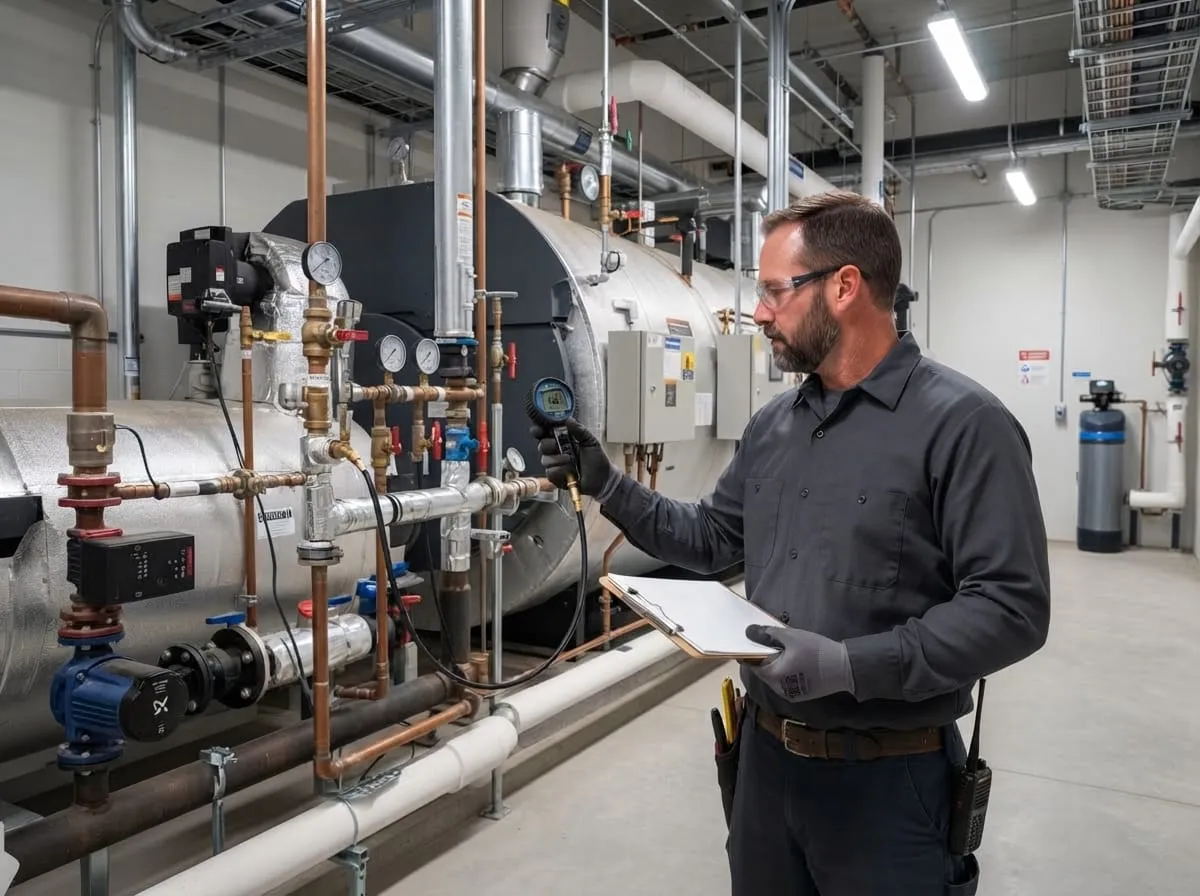
Which is why the method matters: the section is isolated, the failed joint or pipe is taken apart and remade with the correct materials, and then the whole system is pressure tested before gas is restored.
The test is what converts “it should be fine” into “it holds pressure”. A repair that ends with a spanner rather than a gauge has not been proven, and on gas that distinction is the entire point.
Does this sound familiar?
Problems this service solves
- A smell of gas near a line or appliance
- A corroded section of exposed gas pipe
- A leaking joint or appliance connector
- A line damaged during other work
- A gas line failing an inspection
Signs you need gas line repair
If more than one of these is true, the problem is usually past the point a plunger or a store-bought cleaner will fix.
- There is a smell of gas anywhere in or around the property
- Corrosion or rust on exposed gas pipe
- A gas appliance has stopped working correctly
- An inspection has flagged the installation
What to expect
How the visit works
Make it safe first
If gas is smelled, the priority is people out and the utility called. Repair comes after the situation is safe, not before.
Isolate the section
The affected run is isolated at the appropriate valve so the repair is made on a dead line.
Repair to standard
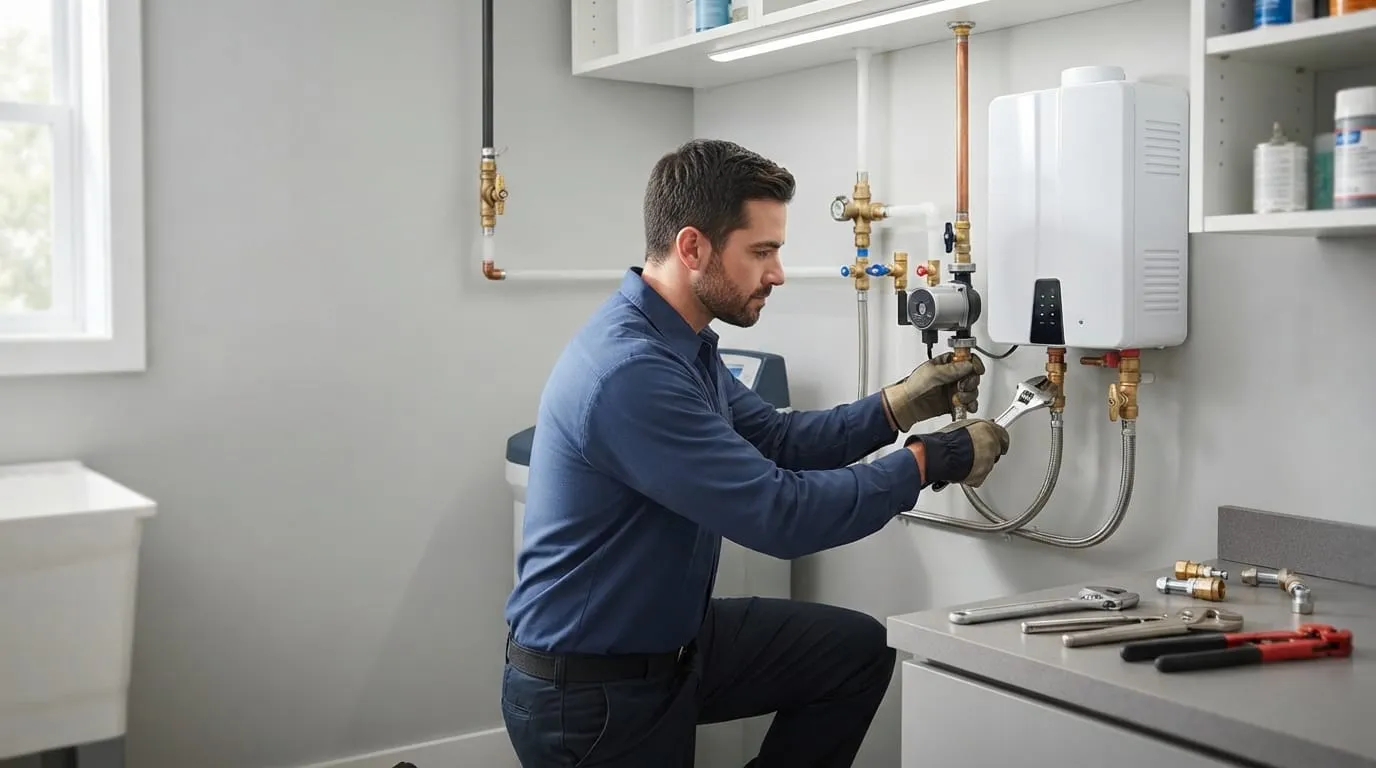
The failed section or connector is replaced with the correct material and fittings, not patched or sealed.
Pressure test before restoring
The system is pressure tested and appliances relit and checked before it is handed back.
What's included
What you get on every job, whoever we send.
- Safety handled before repair is discussed
- The line isolated and repaired dead
- Correct materials rather than a patch
- Pressure tested and appliances relit properly
Questions
Gas Line Repair questions
I can smell gas. What should I do first?
Leave, then call. Get everyone out of the property, do not switch anything electrical on or off including lights, do not use a phone inside, and do not look for the source yourself. Once outside and away, call the gas utility's emergency line and the fire service if the smell is strong. Utilities treat gas calls as emergencies and attend without charge. Everything else, including any repair, comes after that.
Can a leaking gas joint just be tightened?
Sometimes a connection can legitimately be remade, but not by tightening it in place and hoping. A joint that is leaking has failed, and the correct response is to take it apart, inspect it, remake it with the right compound or tape for gas, and pressure test the system afterwards. Tightening a live leaking joint without testing means nobody knows whether it is sealed, which is the whole problem.
Why does exposed gas pipe corrode?
Because it is steel in an environment with moisture. Outdoor runs, pipe in crawl spaces, and anywhere pipe passes through or sits against damp masonry are the usual places. Surface rust is not immediately alarming, but pipe that is pitted or flaking has lost wall thickness and needs replacing rather than painting. It is worth looking at exposed runs occasionally, because this is a slow failure with plenty of warning.
Related services
Gas Leak Detection
Locating gas leaks with detection equipment and a pressure test, including the small leaks that never produce a smell strong enough to notice.
See what this coversGas Line Installation
Running new gas lines for ranges, dryers, water heaters, fire pits and generators, sized for the appliance and pressure tested before use.
See what this coversGas Line Replacement
Replacing gas pipework that has corroded, been outgrown by the appliances on it, or failed a test, with the load recalculated for what it now serves.
See what this coversWater Heater Repair
Diagnosis and repair of gas, electric and tankless water heaters, including no-hot-water calls, leaks, pilot problems and sediment flushing.
See what this covers
Get it fixed
Gas Line Repair, handled locally
Call with your ZIP code and what you are seeing. We route you to a licensed plumber in your area who does gas line repair every week.
Free call-routing service. An independent licensed plumber does the work and quotes you directly.
- Licensed and insured
- Answered 24/7
- Price before work