Service
Gas Leak Detection
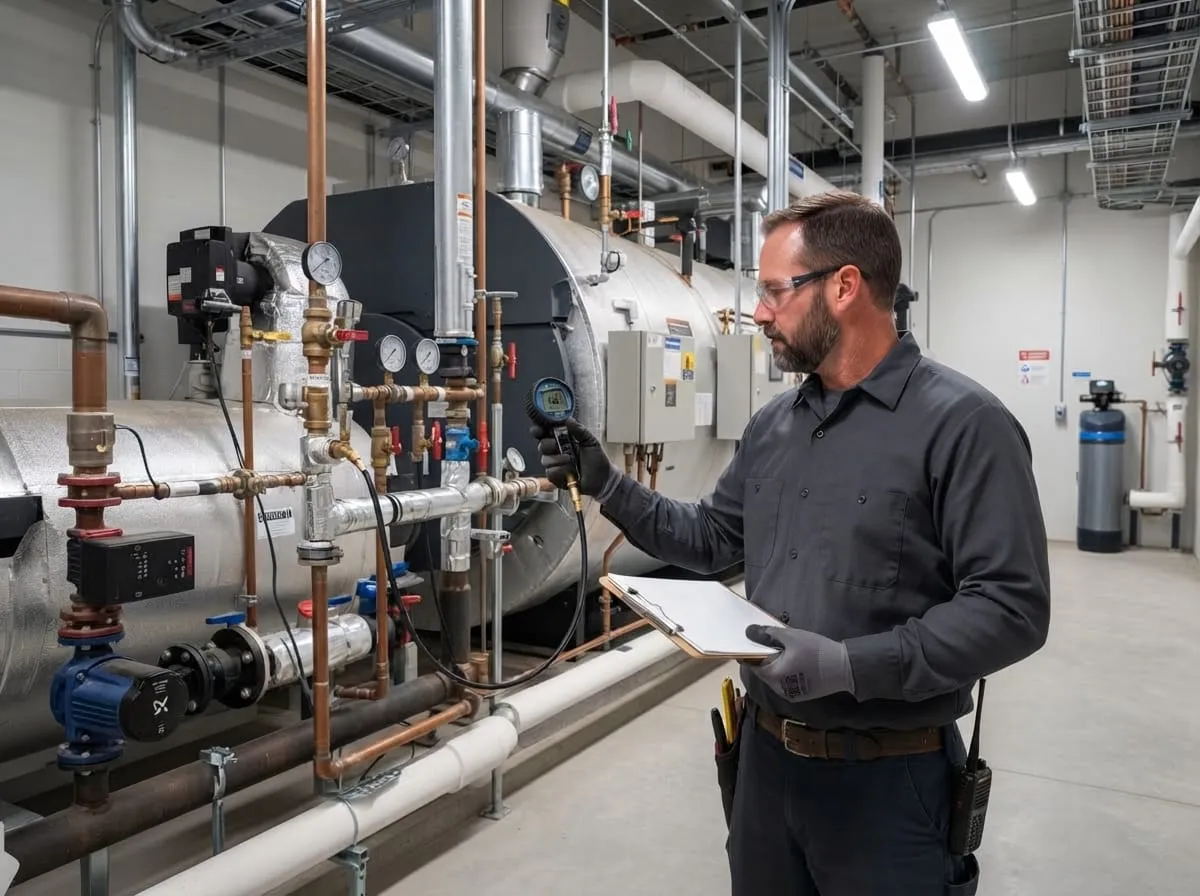
Locating gas leaks with detection equipment and a pressure test, including the small leaks that never produce a smell strong enough to notice.
Free call-routing service. An independent licensed plumber does the work and quotes you directly.
- Licensed and insured
- Price agreed before work
- A plumber who works your area
The leaks you never smell
Gas is odourised deliberately so that leaks announce themselves, and for a significant escape that works.
Small leaks are different. A slow escape in a ventilated space, outdoors, or into soil from a buried line can disperse well below the concentration anyone would notice. And people who live with a faint persistent smell stop registering it within days.
Those leaks continue indefinitely. They show up as gas usage that has crept up with no change in habits, or as nothing at all until they get worse.
A pressure test finds them, and it does not depend on anyone’s nose.
Prove it, then find it
The order matters and it saves money.
First, prove there is a leak. The system is isolated from the supply, charged with air to a set pressure, and the gauge watched over a specified period. Holding means sound. Falling means a leak, and the rate indicates the size.
Then find it. A combustible gas detector traces concentration back to its source, checked systematically along the run and at every joint, connection and appliance rather than only where a smell was noticed.
Starting with the detector and no test means walking a property with no idea whether there is anything to find. Starting with the test means you know before anyone spends an hour looking.
Does this sound familiar?
Problems this service solves
- An intermittent smell of gas with no obvious source
- A gas bill higher than the usage explains
- A suspected leak on a buried gas line
- Concern about an old gas installation
- A property purchase where the gas system is unknown
Signs you need gas leak detection
If more than one of these is true, the problem is usually past the point a plunger or a store-bought cleaner will fix.
- There is an occasional smell of gas
- Gas usage has risen with no change in habits
- Vegetation is dying in a line above a buried gas run
- The installation is old and has never been tested
What to expect
How the visit works
Handle a live smell as an emergency
A strong smell means evacuate and call the utility. Detection work is for confirming and locating, not for an active emergency.
Pressure test the system
Isolating the system and watching the pressure proves whether there is a leak at all, and roughly how large.
Locate electronically
Combustible gas detectors trace the concentration back to its source along the run and at every connection.
Confirm and report
The leak is confirmed at the point found, and you are told what the repair involves before it is started.
What's included
What you get on every job, whoever we send.
- A pressure test that proves whether a leak exists
- Electronic location rather than following a smell
- Every joint and connection checked, not just the obvious ones
- A clear report of what was found and what it needs
Questions
Gas Leak Detection questions
Would I not smell a gas leak?
Not always, and this is why detection exists. Gas is odourised specifically so leaks can be noticed, but a very small leak can disperse below the threshold anyone would register, particularly in a ventilated space, outdoors, or on a buried line where the gas escapes into soil. People also become accustomed to a faint persistent smell. A pressure test finds leaks too small to smell, which is exactly the ones that go on for years.
How does a pressure test work?
The gas system is isolated from the supply, charged with air to a set pressure, and the gauge is watched over a specified period. If the pressure holds, the system is sound. If it falls, gas is escaping somewhere and the rate of fall gives an idea of the size. It is a definitive answer rather than an opinion, which is why it is the starting point rather than walking around with a detector.
Can a buried gas line leak be found?
Yes, though it takes different methods. A pressure test on that section establishes there is a leak. Then bar-hole testing, where small holes are made along the route and gas concentration is measured at each, narrows the position without excavating the whole run. Dead or discoloured vegetation in a line above the route is sometimes a visible clue, since escaping gas displaces oxygen at the roots.
Related services
Gas Line Repair
Repairing gas lines and connections, with the leak isolated and the system pressure tested afterwards rather than simply tightened and left.
See what this coversGas Line Replacement
Replacing gas pipework that has corroded, been outgrown by the appliances on it, or failed a test, with the load recalculated for what it now serves.
See what this coversGas Line Installation
Running new gas lines for ranges, dryers, water heaters, fire pits and generators, sized for the appliance and pressure tested before use.
See what this coversWater Heater Repair
Diagnosis and repair of gas, electric and tankless water heaters, including no-hot-water calls, leaks, pilot problems and sediment flushing.
See what this covers

Get it fixed
Gas Leak Detection, handled locally
Call with your ZIP code and what you are seeing. We route you to a licensed plumber in your area who does gas leak detection every week.
Free call-routing service. An independent licensed plumber does the work and quotes you directly.
- Licensed and insured
- Answered 24/7
- Price before work