Service
Pipe Replacement
Replacing failed or failing sections of supply and waste pipework, where repeated repairs on the same run have stopped being worth the money.
Free call-routing service. An independent licensed plumber does the work and quotes you directly.
- Licensed and insured
- Price agreed before work
- A plumber who works your area
Why it failed decides how much to replace
The same leak has very different implications depending on the cause, and this is the conversation worth having first.
Physical damage, a nail through a pipe, a knock in a crawl space, is local. Replace the damaged length and the rest is as good as it was.
Freezing damages what was exposed. The fix includes addressing why that section froze, or it will happen again next winter.
Corrosion or water chemistry is systemic. The condition applies to the whole run, so replacing one section buys time rather than solving anything, and the honest scope is larger.
A quote that does not distinguish these is a quote for a length of pipe rather than for a solution.
Galvanised fails quietly before it fails visibly
Old galvanised steel has a failure mode that most people never connect to the symptom.
It corrodes from the inside. The corrosion builds as a rough, thickening layer that narrows the bore year after year, so an original half-inch opening ends up passing a fraction of what it should.
From outside, the pipe looks perfectly sound. What you notice is that showers have got weaker over a decade, that running a tap elsewhere kills the pressure, and that the first draw in the morning is discoloured.
No repair improves that, because nothing has broken. Only replacement restores the bore.
Does this sound familiar?
Problems this service solves
- A run that has leaked more than once
- Galvanised pipe restricting flow through corrosion
- Pipework damaged by freezing
- Corroded waste pipe in a crawl space or wall
- Pipe failing from the inside through water chemistry
Signs you need pipe replacement
If more than one of these is true, the problem is usually past the point a plunger or a store-bought cleaner will fix.
- The same run has been repaired before
- Water pressure at fixtures has fallen over years
- Rusty or discoloured water on first draw
- Visible corrosion along a length rather than at a point
What to expect
How the visit works
Establish why it failed
Corrosion, water chemistry, freezing and physical damage lead to different decisions about how much to replace.
Set the extent honestly
Replacement runs back to sound pipe at both ends. Stopping at a convenient joint leaves the next failure a foot away.
Choose the material for the job
Copper, PEX and CPVC each suit different situations, and the water in your area is part of that decision rather than an afterthought.
Install, test and reinstate
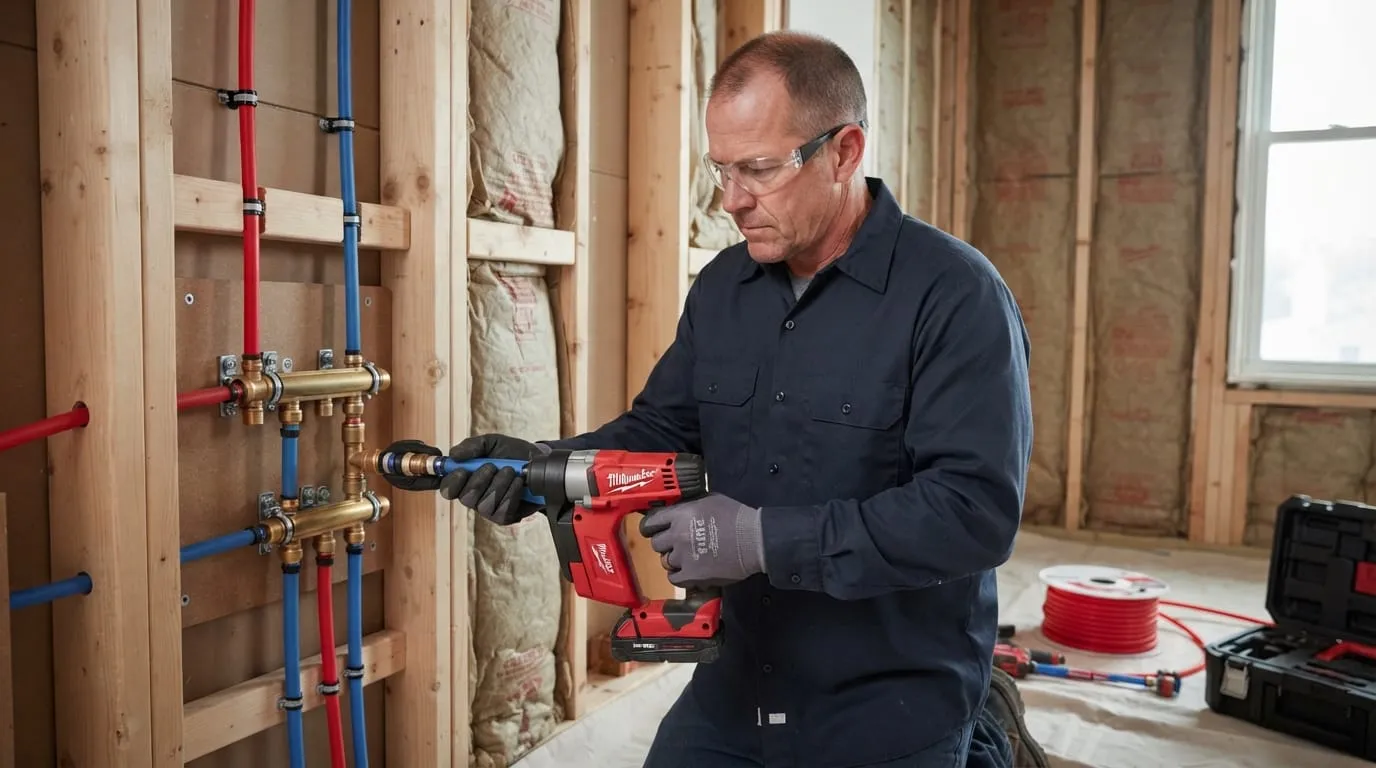
New pipe is supported properly, joined correctly at any material change, pressure tested, and the openings made good.
What's included
What you get on every job, whoever we send.
- The cause established before the extent is set
- Replacement taken back to genuinely sound pipe
- Material chosen against local water and the location
- Pressure tested before anything is closed up
Questions
Pipe Replacement questions
How do I know when to stop repairing and replace?
The second failure on the same run is the usual signal. One leak can be a specific cause. Two says the pipe is failing generally, and each future repair carries the same cost of opening a wall or a floor. Add up two or three of those against replacing the run and replacement usually wins, particularly where access is difficult. If the pipe is galvanised and old, the flow is also getting worse whether it leaks or not.
Should I use copper or PEX?
Both are legitimate and the right answer depends on the situation. PEX is flexible, so it can often be run through existing cavities with far less opening up, it tolerates freezing better because it can expand, and it is unaffected by the water chemistry that causes pinholes in copper. Copper is rigid, long-established, and preferred in some locations and for some exposed runs. In aggressive water, PEX avoids the failure mode that caused the problem in the first place.
Why is my water pressure low if nothing is leaking?
Old galvanised steel pipe. It corrodes from the inside, and the corrosion builds up as a rough layer that gradually narrows the bore. From outside the pipe looks fine. Inside, an original opening has closed to a fraction of it. That is why pressure declines slowly over years rather than suddenly, and why no amount of repair improves it. Replacing the run is the only thing that restores flow.
Related services
Pipe Repair
Repair and replacement of burst, leaking, frozen, corroded or noisy water pipes, from a single fitting to a whole-house repipe in copper or PEX.
See what this coversRepiping Services
Replacing the supply pipework through a property, planned as one job with a defined route, rather than paying for the same repair repeatedly.
See what this coversCopper Pipe Repair
Repairing copper supply pipework, including pinhole leaks, failed joints and the corrosion that happens where copper meets another metal.
See what this coversWater Heater Repair
Diagnosis and repair of gas, electric and tankless water heaters, including no-hot-water calls, leaks, pilot problems and sediment flushing.
See what this covers

Get it fixed
Pipe Replacement, handled locally
Call with your ZIP code and what you are seeing. We route you to a licensed plumber in your area who does pipe replacement every week.
Free call-routing service. An independent licensed plumber does the work and quotes you directly.
- Licensed and insured
- Answered 24/7
- Price before work