Service
Faucet Replacement
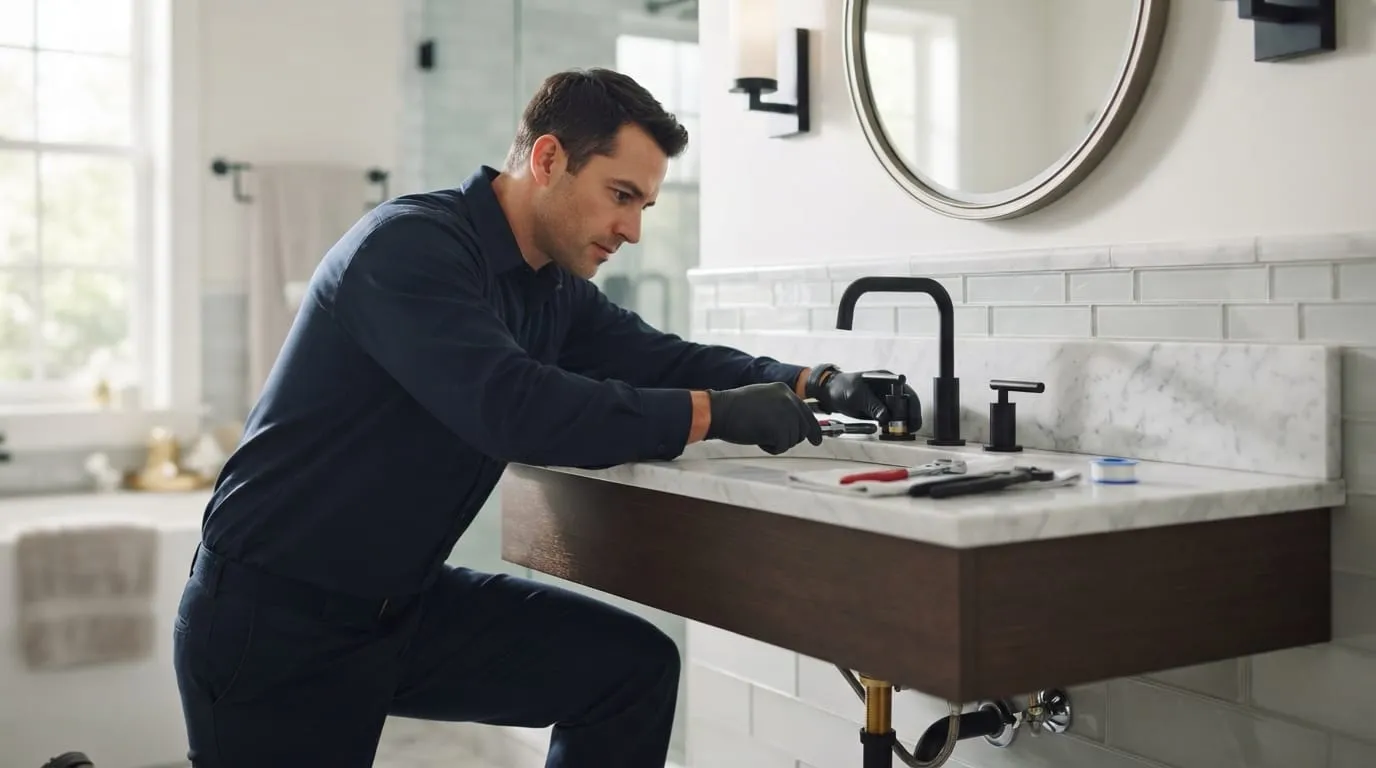
Replacing a worn or failed tap, including removing one that has corroded into place and dealing with what is found underneath.
Free call-routing service. An independent licensed plumber does the work and quotes you directly.
- Licensed and insured
- Price agreed before work
- A plumber who works your area
The difficulty is access, not plumbing
On paper a tap replacement is four connections. In practice most of the time goes on one thing.
The nuts securing a tap sit at the back of a cabinet, in a few inches of space, above head height when you are lying on your back, behind the sink bowl where you cannot see them. After twenty years of humidity they have usually corroded onto their studs.
That is what a basin wrench is for, and it is why the job sometimes involves cutting a nut off rather than turning it. Nothing about the plumbing is complicated. Reaching it is.
Clearing the cabinet out first, and disconnecting the trap if it blocks the way, makes a genuine difference.
Repair or replace
Repair where the body is sound and parts are available. A dripping tap is usually a cartridge, a washer or a seal, all cheap and quick. There is no virtue in replacing a good tap over a worn seal.
Replace where the model is old enough that parts have stopped being made, where the body itself is corroded or worn through, or where the finish has failed and you were going to change it anyway.
And replace where repairs have stopped lasting. A tap that has needed attention twice in a year is not going to be different the third time.
Does this sound familiar?
Problems this service solves
- A tap that drips despite new washers or cartridges
- Corroded or seized tap fixings underneath
- A tap body that has cracked or worn through
- A cartridge no longer available for an old model
- Wanting to change style during a bathroom or kitchen update
Signs you need faucet replacement
If more than one of these is true, the problem is usually past the point a plunger or a store-bought cleaner will fix.
- Repairs have stopped holding for long
- The handle is loose or the finish has failed
- Parts for the model are no longer sold
- There is corrosion at the base or underneath
What to expect
How the visit works
Isolate and clear access
Water off, the cabinet emptied and the trap disconnected if it is in the way, because most of the difficulty in this job is reach rather than plumbing.
Free the old fixings
Nuts under a tap corrode onto their studs. Penetrating oil, the right basin wrench and, where necessary, cutting them off rather than rounding them.
Renew what is exposed
Shutoff valves and supply connectors are replaced while everything is apart, since they are the parts that cause the next problem.
Fit, seal and test
The new tap is bedded and secured against twisting, connected, and run under pressure with everything checked before the cabinet goes back.
What's included
What you get on every job, whoever we send.
- Seized fixings dealt with properly rather than forced
- Valves and connectors renewed while access is open
- The tap secured so it does not rotate in use
- Tested under pressure before closing up
Questions
Faucet Replacement questions
Why is replacing a tap harder than it looks?
Because of where the fixings are. The nuts holding a tap down sit in a few inches of space at the back of a cabinet, upside down, behind the sink bowl, often corroded onto their studs after twenty years of damp. The plumbing itself is straightforward. Getting a wrench onto a seized nut you cannot see is the part that takes the time, and it is why a basin wrench exists.
Should I repair the old tap instead?
If parts are available and the body is sound, often yes. Cartridges, washers and seals are cheap and a drip is usually one of them. Replacement makes more sense when the model is old enough that parts are no longer sold, when the body itself is worn or corroded, or when repairs have stopped holding for long. A tap that has been repaired twice in a year is telling you something.
What else should be done while the tap is off?
Two things, and both are quick with the cabinet already open. Replace the shutoff valves if they do not turn freely, because a seized stop makes every future job harder. And fit new flexible supply connectors rather than reusing the old ones, since they age and their failure mode is a flooded cabinet. Together they add very little and remove the two most likely reasons anyone comes back.
Related services
Faucet Installation
Fitting new taps, including the hole configuration, the shutoff valves underneath and the supply connectors that decide whether it stays leak-free.
See what this coversFaucet Repair
Repair and replacement of dripping, leaking, low-pressure and stiff kitchen, bathroom, tub, shower and outdoor faucets, including cartridge and valve work.
See what this coversUnder Sink Leak Repair
Fixing leaks in the cabinet under a sink, where supply valves, flexible connectors, trap joints and the sink seal all fail in different ways.
See what this coversWater Heater Repair
Diagnosis and repair of gas, electric and tankless water heaters, including no-hot-water calls, leaks, pilot problems and sediment flushing.
See what this covers

Get it fixed
Faucet Replacement, handled locally
Call with your ZIP code and what you are seeing. We route you to a licensed plumber in your area who does faucet replacement every week.
Free call-routing service. An independent licensed plumber does the work and quotes you directly.
- Licensed and insured
- Answered 24/7
- Price before work