Service
Drain Snaking
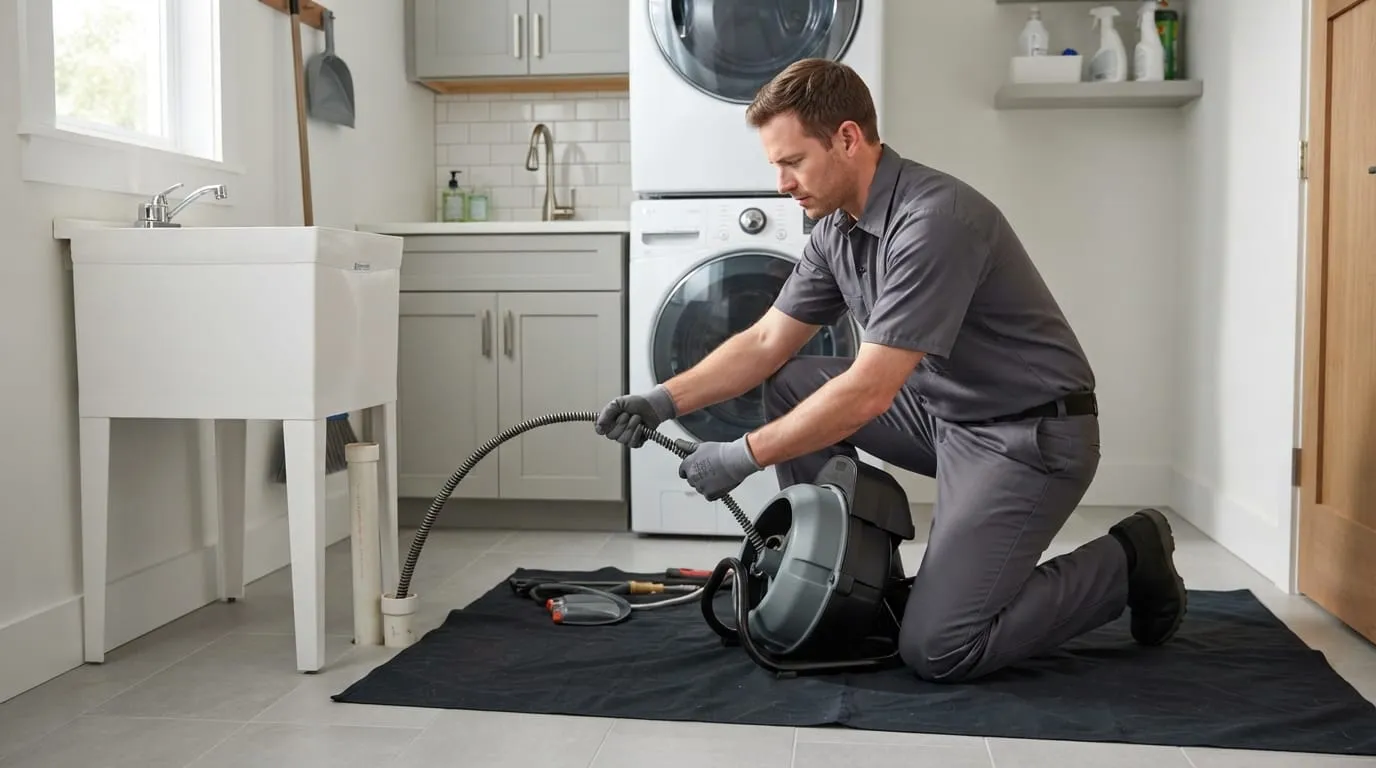
Mechanical clearing of blocked drains with a cable machine, sized to the pipe, for blockages caused by an object or a mass rather than a coating.
Free call-routing service. An independent licensed plumber does the work and quotes you directly.
- Licensed and insured
- Price agreed before work
- A plumber who works your area
The right tool for the right blockage
Snaking is the correct first response to most blockages, and the wrong response to some.
Where something is in the way, an object, a wad of wipes, a mass of hair, roots that have grown into the line, a cable deals with it directly. It is quick and it is the cheaper answer.
Where the pipe has been narrowed by years of grease or mineral coating, a cable makes a channel through the deposit. Flow returns and then closes again, which is why a drain cleared this way can be slow within weeks.
How long the last clearing lasted is the most useful thing you can tell a plumber.
Pull it back rather than push it on
A detail that separates a lasting clearance from a temporary one.
Pushing a blockage further down the line restores flow at the fixture and relocates the material to a point further along, often somewhere narrower or harder to reach. It will be back.
Retrieving it, so the material actually leaves the system, takes longer and is what should happen wherever the blockage allows it.
One detail on toilets: a closet auger, not a general drain snake. The sleeve on an auger is there to stop the cable chipping the porcelain, and a chipped trap is an expensive way to save a few minutes.
Does this sound familiar?
Problems this service solves
- A drain blocked by an object or a mass of material
- A toilet blocked beyond what a plunger reaches
- A branch line stopped by a wad of wipes or paper
- Roots that need cutting back to restore flow
- A first-time blockage in an otherwise healthy line
Signs you need drain snaking
If more than one of these is true, the problem is usually past the point a plunger or a store-bought cleaner will fix.
- The drain has stopped rather than slowed
- Plunging has had no effect
- The blockage is a first occurrence, not a pattern
- Something identifiable went down before it stopped
What to expect
How the visit works
Use the right access
A machine goes in through a cleanout or the fixture waste as appropriate, not through a toilet bowl where it can chip porcelain.
Match cable to pipe
A small branch and a main line need different machines. Using an undersized cable on a main is what produces a clearance that lasts a fortnight.
Clear and retrieve
Where possible the material is pulled back rather than pushed on, so the blockage leaves the system instead of moving to a narrower point.
Judge whether it will hold
A clean pull on a first blockage usually holds. A clear that meets resistance at the same distance every time is a defect, and you get told so.
What's included
What you get on every job, whoever we send.
- A machine sized to the line rather than whatever is nearest
- Material pulled back where possible rather than pushed downstream
- Porcelain protected by using proper access
- An honest read on whether the clearance will last
Questions
Drain Snaking questions
Is snaking the same as jetting?
No, and they suit different problems. Snaking is mechanical: a rotating cable breaks up or retrieves what is in the way, and it is the right tool for an object, a wad of material or a first-time blockage. Jetting uses high-pressure water to scour the pipe wall, which is what you need when the line has been coated by years of grease or scale. Using a cable on a coated line gives you a channel through it, not a clean pipe.
Can I use a hardware store drain snake myself?
For a basin or a shower waste, often yes, and it is a reasonable thing to try. For a toilet, use a closet auger rather than a general snake, because it has a sleeve that protects the porcelain from being chipped. For a main line, a hand snake will not reach and will not have the power, and forcing one can leave the cable stuck in the line, which turns a blockage into a retrieval job.
The drain cleared but blocked again a month later. Was the snaking done badly?
Not necessarily. If the cable met resistance at the same distance each time, the line has a defect: roots through a joint, an offset section, or a belly holding water. Snaking clears what has collected there and does nothing about why it collected. That is not a failure of the method, it is the method reaching its limit, and the next step is a camera rather than another cable.
Related services
Clogged Drain Repair
Clearing blocked drains at any fixture, and establishing whether the blockage is local to that trap or somewhere in the shared line downstream.
See what this coversHydro Jetting
High-pressure water cleaning that scours the full circumference of a drain, removing grease, scale and root growth rather than boring a channel through it.
See what this coversMain Drain Cleaning
Clearing the main line that every fixture drains into, using a cleanout access and camera verification where the blockage keeps returning.
See what this coversWater Heater Repair
Diagnosis and repair of gas, electric and tankless water heaters, including no-hot-water calls, leaks, pilot problems and sediment flushing.
See what this covers

Get it fixed
Drain Snaking, handled locally
Call with your ZIP code and what you are seeing. We route you to a licensed plumber in your area who does drain snaking every week.
Free call-routing service. An independent licensed plumber does the work and quotes you directly.
- Licensed and insured
- Answered 24/7
- Price before work